

Ronnie Scott & Tubby Hayes (Couriers of Jazz)
Lady Madonna – The Beatles (Hey Jude)
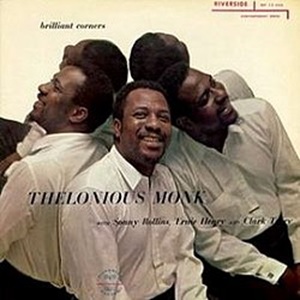
Brilliant Corners – Thelonious Monk (Brilliant Corners)
Well You Needn’t – Ray Bryant Trio (Ray Bryant Trio)
Slinky – John Scofield (Past Present)
Moon Love – Chet Baker (The Trumpet Artistry of Chet Baker)
Bad Luck Blues – Ma Rainey (Mother of the Blues)
Bags Groove – Oscar Peterson (Night Train)
Bemsha Swing – Thelonious Monk (Brilliant Corners)
Away in a Manger – Kenny Burrell (Have Yourself a Soulful Little Christmas)
What Are You Doing New Year’s Eve – Ella Fitzgerald (Ella Wishes You a Swinging Christmas)

Thelonious Monk | Brilliant Corners | Riverside | 19
Despite many attempts to avoid the word ‘groovy’ at all costs, it appears to be the only adjective that ever springs to mind whenever I hear Jimmy Smith and his trusty Hammond B3. Bucket is the organist’s 24th album release on Blue Note, recorded in the winter of 1963 and not released until 1966. Bluesy in places, most notably on Smith’s reading of “Careless Love” and the almost swinging “3 for 4”, the seven tracks also include one or two more uptempo ‘groovers’, including the opening title track. Smith is joined here by Quentin Warren on guitar and Donald Bailey on drums, the trio offering a more stripped down sound to that of, let’s say, the unpredictable Mr Smith’s earlier Bashin’. There’s also a surprising conclusion to the album, as the trio ponder on the old Civil War anthem “John Brown’s Body”, which serves as a fine finisher. Leonard Feather’s generous liner notes point out that the trio’s original sound of ten years earlier was unprecedented at the time, though by the time of Bucket, Smith and Co had become more of an institution. Sadly, many of the ‘..and that’s jazz’ crowd, really do think that this is all it is.


Delta Lady – Joe Cocker (Joe Cocker)
May Lady – Mountain (Nantucket Sleighride)
All Along the Watchtower – Bob Dylan (John Wesley Harding)
Sisters of Mercy – Leonard Cohen (Songs of Leonard Cohen)
I’ve Got a Feeling – Pentangle (Sweet Child)
Gimme Shelter – Rolling Stones (Let it Bleed)
The Song of the Sea Goat – Pete Sinfield (Still)
Ship – Gnidrolog (Lady Lake)
I’ll Be Your Baby Tonight – Bob Dylan (John Wesley Harding)
How Can a Man Stand Such Times and Live – Ry Cooder (Ry Cooder)
Checkmate – Gryphon (Red Queen to Gryphon Three)

Bob Dylan | John Wesley Harding | CBS | 196

Recorded between October and November 1967 and released just after Christmas in the same year, Dylan’s eighth studio album saw the Hibbing Bard return to his acoustic roots, with an album of new songs, presumably written during the Basement Tapes sessions. After recuperating from a motorbike accident, which effectively put him out of the public gaze for a short period of time, Dylan found himself holed up in a basement with his touring band, which in turn prompted a rethink in his musical direction. Dylan and the group of musicians who would later be known simply as The Band, worked on a series of songs which would bridge the gap between his previous album Blonde on Blonde and his next studio album. Having recorded several songs with The Band, most of which wouldn’t be officially released until the mid-1970s, Dylan took an unexpected move and relocated to Nashville with just a handful of musicians, Charlie McCoy on bass, Lenny Buttrey on drums and Pete Drake on steel guitar on just a couple of tracks, and with Bob Johnson producing, recorded a collection of sparsely arranged new songs, “I’ll Be Your Baby Tonight”, “I Pity the Poor Immigrant” and “All Along the Watchtower” amongst them. As with much hippy trippy nonsense at the time, the cover soon became the subject of speculation, with The Beatles in the trees etc.


Jacqui McShee | The Great British Folk Festival | 04.12.11
It was late one December night when I caught up with the British folk singer and guitar player Ralph McTell, on the eve of his 67th birthday, who was only too happy to chat about his long and fruitful career, not least his relationship with old friend Bert Jansch, who we lost just a matter of weeks before. One of the great troubadours on the folk revival, Ralph McTell has had an interesting and varied career both as a performer, recording artist and television personality, especially in the field of children’s television. Warm and personable, Ralph made time for this chat before seeing in his birthday, presumably with something strong at the bar.

 MY NORTHERN SKIES