
401-600
409 | Family | Music in a Doll’s House | Reprise 6312 | 1968
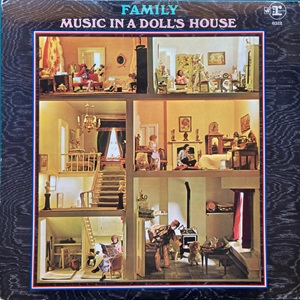
Though I’d already read several articles and features on the Leicester-based band Family, their music didn’t really reach me until the band released the single “The Weaver’s Answer”, the lead track to their second album ‘Family Entertainment’, which was released the following year. Roger Chapman’s rasping voice was an acquired taste back then and if I were to be perfectly honest, I’m still not convinced that I actually ever fully acquired it, all these years on. Despite these reservations, the musicians Chapman surrounded himself with were second to none, including John “Charlie” Whitney, Jim King, Ric Grech and Rob Townsend. Produced by Dave Mason, ‘Music in a Doll’s House’ is a bold debut, incorporating complex rhythms and textures, some Classical elements, and even o bona fide jazz band, courtesy of Tubby Hayes, whose band effectively jammed with Family during the latter half of “Old Songs, New Songs”. There are one or two moments that could be considered examples of early Progressive Rock, though the use of the blues harp keeps the band within the realms of the blues bands of the day. Curiously, the title has its place in Beatles mythology, in that ‘The Doll’s House’ was the intended title of what subsequently became the ‘White Album’, Family effectively beating them to it.
408 | Dave Brubeck Quartet | Time Out/Time Further Out | CBS 22120 | 1976
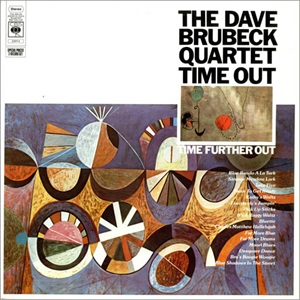
“Take Five” might well be the only familiar tune in the entire Modern Jazz catalogue to some, Paul Desmond’s composition having enjoyed much radio play in its day and continues to be a firm favourite to many still. Its quirky 5/4 time signature went on to influence a myriad of subsequent compositions, from such diverse artists as Nick Drake (“Riverman”), Radiohead (“15 Step”), Pentangle (“Light Flight”) and even the ‘Mission Impossible’ theme by the late Lalo Schifrin. Despite the edited version being released as a single in 1959 with “Blue Rondo a la Turk” on the flip side, it’s the fully realised, almost improvisational version on Brubeck’s ‘Time Out’ LP that makes its mark on the jazz world. Coming in at five and a half minutes, the arrangement features a lengthy drum solo, which because of its time signature, surprisingly keeps the customer satisfied throughout. Coupled with Brubeck’s later release ‘Time Further Out’, the two albums make perfect bedfellows with this mid-1970s release, complete with its abstract artwork courtesy of both S. Neil Fujita and Joan Miró. ‘Time Further Out’ continues to explore the 5/4 time signature with “Far More Blue” and “Far More Drums”, both composed by Brubeck, rather than Desmond, with other explorations in time being “Maori Blues” (6/4) and “Blue Shadows in the Street (9/8), with “Charles Matthew Hallelujah” settling for something as straightforward as 4/4. Essential for all jazz collections
407 | Tim Buckley | Happy Sad | Elektra EKS 74045 | 1969
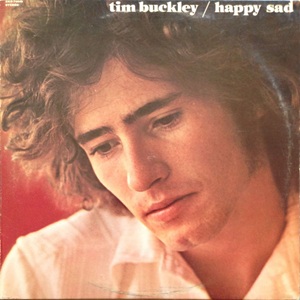
Tim Buckley’s third studio album ventures into jazz territory by incorporating certain motifs, most notably on “Strange Feeling”, the Miles Davis modal jazz feel being instantly evident. Produced by the Lovin’ Spoonful’s Zal Yanovsky and Jerry Yester, ‘Happy Sad’ features some empathetic guitar playing courtesy of Lee Underwood, with John Miller on bass and Carter CC Collins and David Friedman taking care of the percussion department, most notably the latter’s warm vibraphone sound. The absence of lyricist Larry Beckett, who had worked with Buckley on his two previous albums ‘Tim Buckley’ and ‘Goodbye and Hello’, allowed Buckley to further advance his own songwriting, all six songs here written in full by Buckley. There’s little doubt that “Strange Feeling” owes a huge debt to “All Blues” from the classic Miles Davis album ‘Kind of Blue’, though it’s probably “Buzzing Fly” that fully grabs the listener’s attention midway through the first side. If modal jazz was referenced in “Strange Feeling”, then Jazz Funk was the inspiration behind the spirited “Gypsy Woman”, its percussive quality driving the song along through its sprawling twelve minutes. The album also includes “Dream Letter”, a song Buckley written by way of an apology to his ex-wife and abandoned son Jeff Buckley, who would make his short-lived contribution to rock music a couple of decades later. Sadly, both father and son would die under tragic circumstances, the former from a drug overdose, the latter from drowning. One can’t help but feel that the Buckley’s were cursed.
406 | Paul Desmond | Take Ten | RCA LPM 2563 | 1963
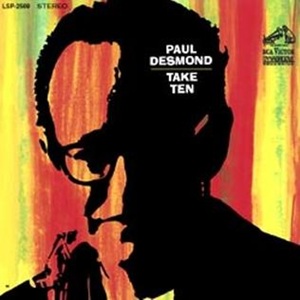
So vital was the playing of Paul Desmond to the sound of the Dave Brubeck Quartet, that one or two would be under the impression that Brubeck himself was the sax player, and some may have even thought that Brubeck’s classic number “Take Five” was from his own pen. On the contrary, the genius behind the alto sax playing and that particular composition, was in fact Paul Desmond, whose gentle tonality provided what some refer to as ‘Cool Jazz’ with one of its most recognisable sounds. The Californian musician released ‘Take Ten’ in 1963, four years after Brubeck’ landmark ‘Time Out’ album, which features the aforementioned “Take Five”. On ‘Take Ten’, the title track is loosely based around the same time signature and feel of the earlier composition, which has become something of a signature sound for the musician. Desmond is joined by the ever reliable Jim Hall on guitar and Connie Kay on drums, with three bass players contributing their parts accordingly, those being Gene Cherico, Eugene Wright and George Duvivier. Strangely, this album has something in common with both the Rolling Stones and the Velvet Underground, which could be a good pub quiz question; they each have album covers designed by the pop artist Andy Warhol, ‘Take Ten’ being Desmond’s.
405 | Nick Drake | Five Leaves Left | Island ILPS 9105 | 1969
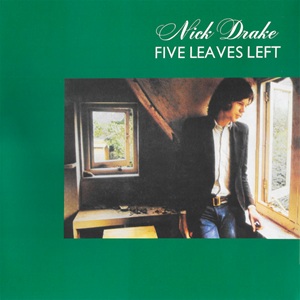
I may have bored people with this observation previously, so do bear with me. I count myself as one of those Nick Drake fans who hung onto the coat tails of the revivalist cult movement that arose in the mid-1990s, as a plethora of acoustic guitar players, both male and female (and those in between) began to hero worship this doomed songwriter, who left the world a couple of decades earlier after releasing just three albums in his lifetime. The difference being, I’m from a generation who first heard the singer in his heyday, though I also must confess, I didn’t care for his music, being a dyed-in-the-wool Progger, who skipped all these pastoral Keatsian musings with slick orchestral accompaniment for the nearest King Crimson track. After hearing Danny Thompson’s BBC radio documentary ‘Fruit Tree’ one warm Saturday afternoon in 1998, everything changed. I went out and bought the box set of the same name and reacquainted myself with Drake’s catalogue. ‘Five Leaves Left’ was the first of Drake’s album releases, which came out to little fanfare at the beginning of July, 1969. In a way, the sleeve almost describes the music within, you knew immediately this wasn’t going to be Black Sabbath. Joined by Richard Thompson and Danny Thompson, together with not one but two classical bods, mainly Robert Kirby on four of the songs, “Way to Blue”, “Day is Done”, “The Thoughts of Mary Jane” and “Fruit Tree”, whilst Harry Robertson tackled the stunning “Riverman”, ‘Five Leaves Left’ includes all the ingredients for mid-90s teens frantically searching for something more soul searching than Oasis in their bedrooms.
404 | Louie Bellson | Cool Cool Blue | Pablo 2310 899 | 1983
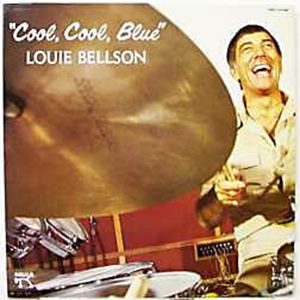
Luigi Paolino Alfredo Francesco Antonio Balassoni is not the sort of name you would normally see on a billboard, not back then and certainly not now, though the much shortened Louie Bellson was a much more usable moniker for this Illinois-born drummer. Cool Cool Blue is one of the musician’s later albums, having already released a good few dozen by the time of its release in the early 1980s. A seasoned player, Bellson had worked with both Duke Ellington and Count Basie, as well as such notables as Ella Fitzgerald and Sarah Vaughan, and even on two albums by Linda Ronstadt. For this album Bellson gathered together a handful of musicians from his much larger orchestra, namely George Duvivier on bass, Frank Strazzeri on piano and both Matt Catingub and Ted Nash on either alto, tenor or soprano sax. The bulk of the compositions were written by Bellson and Strazzeri, with the one Duvivier offering, the soothing “Wanderlust”, his bass runs prominent throughout. Produced by Alan Freeman, the British record producer and engineer and not the fluffy pop DJ, Cool Cool Blue captures the band on fine form.
403 | The Mothers of Invention | Freak Out | Verve V-5005 | 1966
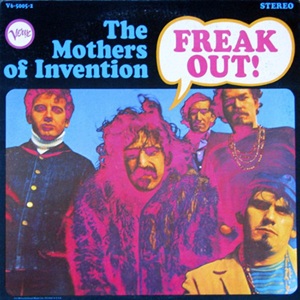
When we think of some of the albums released in 1966, we immediately see that bold strides were being taken in popular music with the likes of Bob Dylan’s ‘Blonde on Blonde’, the Beatles’ ‘Revolver’, the Rolling Stones’ ‘Aftermath’, the Beach Boys’ ‘Pet Sounds’ and the first Incredible String Band album, yet it was this debut album by The Mothers of Invention that stood out as the game changer in what direction the genre could take. This double album was decidedly odd, and was dressed accordingly. Look no further than the cover with its early nod to psychedelia, to understand that we’re dealing with something very different from the Beatles, the Beach Boys el al. Frank Zappa’s musical vehicle set out simply as The Mothers, though the powers that be considered the moniker far too risky, hence the addition of the two words ‘of invention’ to prevent unnecessary nose bleeds in the boardroom. Zappa’s early influences in rhythm and blues, doo wop, classical and blues is all here, though delivered in a decidedly satirical fashion. Producer Tom Wilson was under the impression he was about to record a standard blues band at the first recording session and was soon alerted to the fact that “Who Are the Brain Police?” was something entirely different. Zappa would later ask the question “Does Humour Belong in Music?”, which could quite easily have been posed during these sessions, with one or two light hearted songs such as “Wowie Zowie”, though ‘Freak Out’ does include one or two more serious questions, certainly on “Trouble Every Day”, which could easily have been included on ‘Blonde on Blonde’, another double album released just one week earlier. Also like the Dylan album, the set concludes with one single song, which takes up an entire side, in this case “The Return of the Son of Monster Magnet”, a freaky little number that manages to pack so little into its twelve minutes, with its introduction to Suzy Creamcheese and its sound collage of voices that pre-dates “Revolution #9” by a good couple of years. Though ‘Freak Out’ failed to impress a homegrown audience, the album did quite well over here in the UK, as it set out to challenge our perceptions of what pop culture generally, and rock music in particular, was all about.
402 | Bill Evans | Waltz for Debby | Riverside RLP 9399 | 1962

It was tragedy that ensured a short life for this fine trio, with the fatal accident involving the young bassist Scott LaFaro on 6 July, 1961, just ten days after this historic recording was made at the Village Vanguard in New York. The trio had already released three albums on the Riverside label leading up to this, Portrait in Jazz (1960), Explorations (1961) and Sunday at the Village Vanguard (1961), essentially the first part of this date at the venue. The six selections, recorded in the relatively quiet ambience of the famous club, showcases precisely what these three musicians could deliver on a good night, each of them providing the vital ingredients for the finished dish. The inventive bass runs in particular reveal a musician who you could well imagine being much missed after LaFaro’s tragic accident. Named for Evans’ niece, the title composition dominates the first side, sandwiched between the much shorter opener “My Foolish Heart” and the slightly longer “Detour Ahead” before we even consider flipping the record over. Once that particular chore is done, the good news continues with a fine reading of the Rogers/Hart number “My Romance” before venturing into Leonard Bernstein’s “Some Other Time”, from the earlier musical On the Town, which is so close to the slow ballads on Kind of Blue, it wouldn’t have been out of place on that landmark album. Tipping his hat to his recent collaborator and band leader Miles Davis, Evans rounds things off with a delicate rendition of “Milestones”, which loses none of the power demonstrated by Miles’ first great quintet version recorded three years earlier for the album of the same name.
401 | Bob Dylan | Blonde on Blonde | CBS 66012 | 1966
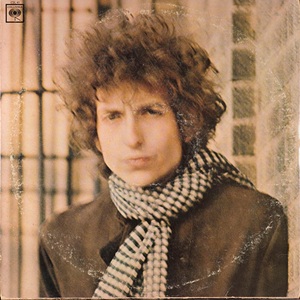
If Timothy Leary’s oft-quoted slogan ‘Turn on, tune in, drop out’ was a thinly disguised call to mass substance abuse back in 1966, then Dylan’s opening song on Blonde on Blonde was perhaps much less ambiguous. “Rainy Day Woman #12 and 35” almost demands that the hoards attend the party. Like Dylan’s two previous releases, Bringing it All Back Home and Highway 61 Revisited, Blonde on Blonde has an immediately memorable opener, though the bar had perhaps been raised staggeringly high on the previous release, “Like a Rolling Stone” being Dylan’s definitive statement. Had Dylan hung around and stuck that song on this album, his first double set, then we might be talking of a near perfect album here. As the size of the album suggests, there’s a lot to go at, with one or two immaculate songs included, certainly “Just Like a Woman” and “Visions of Johanna”, with many of the others occupying their rightful place on Dylan’s set list for some time to come. Listeners tend to remember “Sad Eyed Lady of the Lowlands” for one reason, that of being an over-long rambling ballad, but at just over ten minutes, it’s not quite as long as we tend to remember. The fact that it occupies an entire side is probably why we remember it in this way. I don’t mind long Dylan songs as long as they’re performed by Dylan himself. If Adele had recorded “Highlands”, “Tempest” or indeed “Murder Most Foul”, then I probably wouldn’t remember them with quite as much fondness as “Make Me Feel Your Love”. Recorded in both New York and Nashville, Blonde on Blonde is not just an essential Dylan album, it’s an essential album period.
 MY NORTHERN SKIES