
201-400
370 | Little Feat | Waiting for Columbus | Warner Bros K 66075 | 1978
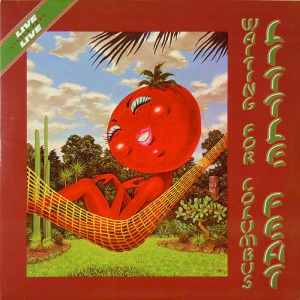
Audiences who witnessed Little Feat on stage back in the early 1970s insist they were watching the best live band in the world, some even complaining that the band should never have played second fiddle to the Doobie Brothers, who they joined on the infamous Warner Brothers package tour at the time. There’s no question that the band could be tight, could be musically adventurous and could demonstrate several different sides to their approach to their music, which probably led to their later demise. Recorded for the main part at London’s Rainbow Theatre, with extra material gathered from tapes of their later shows in Washington DC, Little Feat included songs originally released on their earlier albums up to this point, ‘Willin’ from both their first and second albums Little Feat (1971) and Sailin Shoes (1972), ‘Dixie Chicken’ and ‘Fat Man in the Bathtub’ from their third album Dixie Chicken, (1973), ‘Oh Atlanta’ and ‘Spanish Moon’ from their fourth Feats Don’t Fail Me Now (1974) and ‘All That You Dream’ and ‘Mercenary Territory’ from their fifth The Last Record Album (1975). In places the band are on fire, especially on the lengthy ‘Dixie Chicken’ coupled with ‘Tripe Face Boogie’, which includes some incendiary guitar duelling between Lowell George and Paul Barrere, plus a little Dixieland brass courtesy of the Tower of Power horn section, just to sprinkle a little New Orleans into the mix, possibly their finest moment on record. Rolling Stones completists might also be interested in Mick Taylor’s contribution to ‘A Apolitical Blues’.
369 | Paul Kossoff | Back Street Crawler | Island ILPS 9264 | 1973
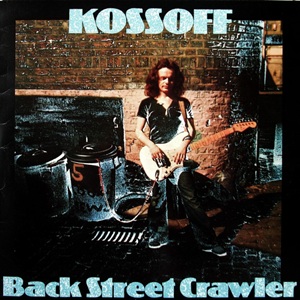
For some reason, possibly ageing memory, we tend to think that Paul Kossoff’s demise came during his tenure with the band Free, but of course there was still life after this remarkable band for the guitarist, albeit a brief one. When Free decided to call it a day in 1971 after the release of the band’s fourth album Highway, fans probably thought that that was it for the musician, yet there was still more to come with a band reunion, which spawned another album in 1972, Free at Last. There was one further album by Free, though without the unreliable Kossoff, who was at the time dealing with problematic addiction. Later the same year, Kossoff managed to get himself sufficiently together to record his debut solo album Back Street Crawler, which featured one song in particular, ‘Molten Gold’, which is often mistakenly thought of as a brief reunion by his former band, though the track is in fact a left-over song from Free’s final album with Kossoff (with additional overdubs). Back Street Crawler provides some interesting moments, not least the side long ‘Tuesday Morning’, a sprawling instrumental, which in its rawness (and its studio patter at the beginning) could easily be mistaken for a loose jam with a band made up of Trevor Burton on bass, Alan White on drums and John ‘Rabbit’ Bundrick on keyboards. This still wasn’t yet the end for Kossoff, with yet another couple of albums to come, fronting his band named for this album, Back Street Crawler, The Band Plays On (1975) and Second Street (1976). Kossoff finally died of a pulmonary embolism during a flight from LA to New York in March 1976. I suppose listeners come to a Kossoff album to hear the guitar in particular and with Back Street Crawler, that’s precisely what they get here.
368 | King Crimson | Red | Island ILPS 9303 | 1974
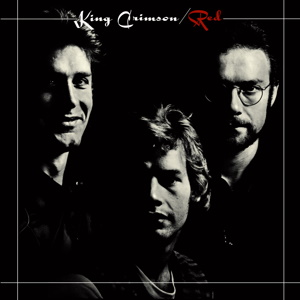
By the time of the release of King Crimson’s seventh studio album, the band had been reduced from several quintets, a quartet and now a trio, featuring founder member Robert Fripp, John Wetton and Bill Bruford, yet their sound was much harder, louder and forceful, especially on the lead track ‘Red’ and ‘One More Red Nightmare’. Having said that, there were one or two ex-band mates on hand to contribute in places, such as David Cross on violin and Ian McDonald on sax, together with one or two others, including Mel Collins, Robin Miller and Mark Charig amongst one or two uncredited musicians. Strangely, this remarkable album, often cited as the band’s best, sold not as well as their previous releases, which may have had something to do with the general trend of holding anything under the progressive rock banner with some degree of disdain. By the time of its recording, violinist David Cross had been fired from the band, a decision withheld from the musician until the end of that year’s US tour, yet a live performance of the experimental ‘Providence’, featuring Cross, appears on the album. I can imagine sparks flying across the boardroom table. Left out of its intended place on King Crimson’s previous album Starless and Bible Black, the lengthy ‘Starless’ is probably Red’s finest moment and a fine conclusion to a fine album.
367 | Various Artists | Charisma Disturbance | Charisma TSS1 | 1973
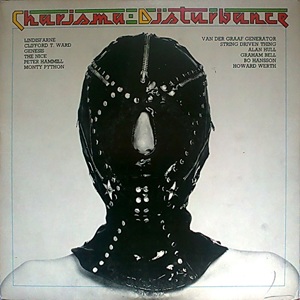
The first sampler to be released on Tony Stratton Smith’s famous Charisma label, was this double LP set, that features no fewer than 19 acts, covering a wide range of styles from progressive rock to classical, comedy to spoken word. Opening with what could only be described as a fanfare, the Sinfonia of London, conducted by one Joseph Egar, provide a right old regal kick start to proceedings with ‘Sonata Pian E Forte’ and is swiftly followed by something equally strange, for what is essentially a Prog album, ‘The Unanswered Question’ read by the Shakespearean actor John Neville, specifically for this release. Tony Stratton Smith obviously had some sway when it came to these things. As the record continues though, more conventional stuff is added, though not before we hear further classical adventures courtesy of The Nice, with a track from the band’s album Five Bridges, ‘Intermezzo Karelia Suite’, which you may remember was also used at the time, as the theme tune to the current affairs TV programme, This Week. Perhaps the inclusion of Monty Python’s ‘Spam Song’ might’ve been considered a bizarre addition, though it has to be said, fans of Genesis, Van Der Graaf Generator, Capability Brown and the like, were by definition, also fans of the popular comedy team. The selections are divided equally amongst most of the acts on the Charisma roster, such as Bell +Arc, String Driven Thing and Rare Bird, though why they chose to include two songs by Lindisfarne, together with one from the band’s leader on the same side, remains a mystery. The other slightly awkward thing about Charisma Disturbance is the slightly disturbing Hipgnosis sleeve design, which continues to baffle me all these years on, though with Hipgnosis, nothing really surprises me. Having said all this, the sampler was a crucial addition to any 15 year-old’s record collector back in ’73.
366 | Michael Chapman | Window | Harvest SHVL 786 | 1970
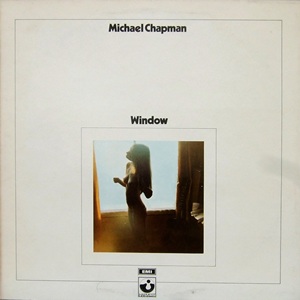
Michael Chapman released no fewer than 58 albums in a career that spanned 55 years, yet we seem to remember most of all the handful of early releases on the Harvest label, which included ‘Rainmaker’ (1969), ‘Fully Qualified Survivor’ (1970), ‘Window’ (1970) and finally ‘Wrecked Again’ (1971), most favourably. Being signed to the famous EMI imprint that catered for forward thinking progressive music did a musician’s career no harm and Chapman soon found himself rubbing shoulders with such songwriting contemporaries as Roy Harper, Kevin Ayers and Syd Barrett, as well as such notable bands as Pink Floyd, Deep Purple and Edgar Broughton Band. Chapman was also championed by John Peel and Charles Shaar Murray, which again, did the musician no harm. The Gus Dudgeon produced album ‘Window’ demonstrates the work of a confident artist, whose reputation by this time was becoming more proven, with comparisons to other notably contemporaries such as John Martyn. There’s a similar slurring vocal style, though Chapman’s slightly more rugged, augmented by some fine finger-picked guitar passages, notably on “In the Valley” and “A Scholarly Man”, the latter a showcase for some of Chapman’s experimental; Eastern influences. With a small gathering of sidemen, including the utterly reliable Rick Kemp on bass, together with P Harold Fatt on guitar, Alex Atterson on piano, Richie Dharma on drums and Johnny Van Derek on violin, ‘Window’ has one or two fine moments, though the closer “She Came In Like The “6.15” And Made A Hole In The Wall” might not be one of them. The album’s gatefold sleeve shows a centre spread photo of a broadly smiling Chapman, a warm reminder of the late musician.
365 | Various Artists | Picnic: A Breath of Fresh Air | Harvest SHSS 1/2 | 1970
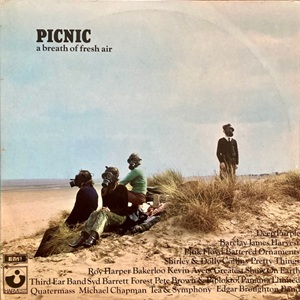
By narrowing it down, I have to say that if Hipgnosis were responsible for the best album sleeve designs in the late 60s and early 70s, then the one they did for the Harvest compilation sampler ‘Picnic: A Breath of Fresh Air’ is probably my favourite. Just considering the thought processes that must have gone into it still intrigues me; as they said back then, something was definitely in the air, and in this case, something possibly sinister. The compilers of this double sampler had much to go at, even in the early days of Harvest, the EMI subsidiary created mainly to cater for progressive rock, though the label also ventured into folk music (Shirley & Dolly Collins) as well as the more straight forward rock music of the day (Deep Purple, The Move) and the then current singer songwriter troubadour roster, such as Roy Harper and Michael Chapman. There seemed to be something for everyone. Pink Floyd completists back in 1970 would certainly have been drawn to the inclusion of “Embryo”, a track considered not even good enough for the ‘Ummagumma’ album, let alone a sampler whose very purpose was to attract potential album buyers. When I picked up ‘Picnic’, I was intrigued to know more about Quatermass, Tea & Symphony and The Battered Ornaments, but came away a life-long enthusiast of the Edgar Broughton Band, Kevin Ayers and Third Ear Band. To this day I consider the sampler albums of the early 1970s as important as John Peel or the then popular weekly music press.
364 | Gene Clark | No Other | Asylum SYL 9020 | 1974
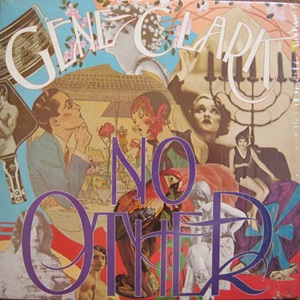
Ironically, Gene Clark’s undoing as a Byrd, was his chronic fear of flying, though the usual petty infighting that goes with a band of giant egos didn’t help either. After all, Gene Clark was the chief songwriter in the band and as is always a case with these things, the additional income a songwriter receives always has consequences. So, having penned some of the best Byrds’ original work, “Eight Miles High”, “I’ll Feel a Whole Lot Better” and “Set You Free This Time” amongst them, Clark was released to embark on a number of projects, a solo career being one of them. After a fairly good start with the acclaimed ‘Gene Clark and the Gosdin Brothers’, followed by the even better “White Light”, Clark met with a critical and commercial stumbling block with ‘No Other’, the album failing to impress, most notably the label boss David Geffen. The apathy at the record shop counter was probably due to the fact that Asylum failed to promote the album sufficiently, therefore ‘No Other’ immediately became ‘No Sales’. As with other such solo careers in the early 1970s, notably that of Nick Drake, Gene Clark’s popularity came posthumously and with it, the interest in this album. Clark’s move from country influenced folk rock, largely due to the influence of both Stevie Wonder and the Rolling Stones, namely their respective albums ‘Innervisions’ and ‘Goat’s Head Soup’, was probably the reason initial interest suffered, though ‘No Other’ is now considered a classic album and a worthy inclusion in anyone’s record collection.
363 | JJ Cale | 5 | Shelter ISA 5018 | 1979
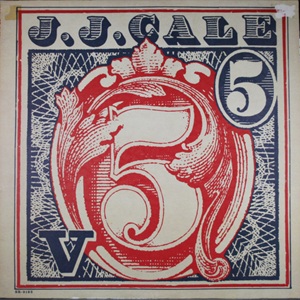
Just before the close of the 1970s, JJ Cale released his fifth album, simply entitled ‘5’, which was recorded at various studios in Nashville, with an array of key session players. The Oklahoma-born songwriter had by this time become a familiar name, at least in brackets beneath such song titles as “Crazy Mama”, “After Midnight” and “Cocaine”, which appeared on the sleeves and labels of Eric Clapton albums, yet Cale always managed to shun the limelight himself. Known for his economic use of words in the titles of each of his albums, such as ‘Naturally’, ‘Really’, ‘Okie’, ‘Troubadour’, Cale also employed economy in his delivery, always unimposing as a guitar player and certainly as a singer, his songs occupying a rightful place in the story of rock, though at the same time, somehow remaining somewhere in the background. Dire Straits fans would definitely recognise Cales’s influence if they took the time to investigate Cale’s first five albums. Those same fans of the CD age would perhaps also notice a strange anomaly, in that though still credited as “Katy Kool Lady” on the CD, the actual song that appeared on the original LP was curiously replaced by a more recent song “Out of Style”. Clapton once again recorded and included “I’ll Make Love to You Anytime” on his ‘Backless’ album a few months prior to this release, once again declaring his appreciation of Cale’s music. Just one of many Cale albums you should try.
362 | Small Faces | Playmates | Atlantic SD 19113 | 1977
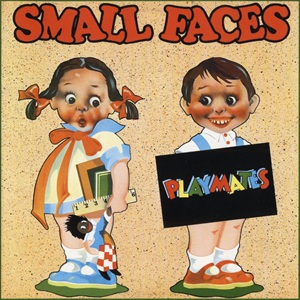
It was after the breakup of both Humble Pie and Faces in the mid-1970s that the idea of a Small Faces reunion was placed on the table, essentially spurred on by the filming of a promo video for one of the band’s biggest hits “Itchycoo Park”, which had been a hit eight years previously. For this video, all four original members of the band reconvened for this reissue of the hit single. Apparently, the Small Faces made an attempt at a full band reunion, but Ronnie Lane left after their first rehearsal after an almost predictable squabble. Steve Marriott, Ian McLagan and Kenney Jones soldiered on without their former band mate, who was suffering from the early stages of multiple sclerosis, to record their comeback album ‘Playmates’, bringing in the ex-Roxy Music bassist Rick Wills as Lane’s replacement. ‘Playmates’ was the first of two albums Small Faces would release during their brief comeback period, and both on the Atlantic label. Despite the success of both Humble Pie and Faces, not to mention the earlier success of Small Faces, neither of these two albums met with any success and are now considered failures. Calling on the help of singer PP Arnold, who had worked with the band previously, adding to the band’s soulful sound, together with Vicky Brown, former Humble Pie bassist Greg Ridley and Dave Hynes, not to mention Joe Brown, the reformed band couldn’t be accused of riding on their reputation, ‘Playmates’ being a rather fine album in the end, suffering from the usual apathy at the dawn of Punk. Perhaps the inclusion of “Saylarvee”, a kind of Jerry Lee pastiche, was misjudged, though the King of Pastiche Ringo Starr also went on to borrow one of the songs from the LP, “Tonight” and popped it on his 1978 album release ‘Bad Boy’. In the end, I don’t think of ‘Playmates’ as a continuation of the Small Faces legacy, but rather that of Humble Pie, a firm favourite Seventies rock outfit.
361 | Jim Capaldi | Oh How We Danced | Island ILPS 9187 | 1972
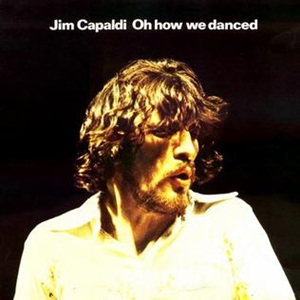
Jim Capaldi had already released five albums with his band Traffic by the time he released this, his debut solo album for Island Records in 1972. The sessions took him to Muscle Shoals in Alabama for much of the album, working with an array of studio musicians as well as Traffic buddies Steve Winwood, Chris Wood and Rebop Kwaku Baah, together with former band mate Dave Mason and other such notables as Paul Kossoff and Ric Gretch. Steve Winwood was dealing with his peritonitis problems at the time and was forced into a break from the band, giving the opportunity for the rest of the band to branch out and make some noises on their own. It was the beginning of a semi-successful solo career for the drummer, who had the ability to serve as front man, eventually releasing no fewer than thirteen solo albums over a thirty-year career, his biggest achievement being a UK top ten hit with a cover of Boudleaux Bryant’s “Love Hurts”, which had already achieved success for the Every Brothers and Gram Parsons and a the Scots band Nazareth a year earlier. If there should’ve been earlier success for Capaldi, then it might’ve been for this album’s opener “Eve”, a mid-tempo ballad featuring a lead guitar solo by the Free guitarist Paul Kossoff, which was released as a single with little success. There’s some fine soulful performances here, which is only to be expected from an album recorded in Muscle Shoals, such as “Big Thirst”, “Don’t Be a Hero” and the title song, all featuring the Muscle Shoals Rhythm Section.
360 | Jonathan Edwards | Jonathan Edwards | Atlantic ATL 40282 | 1971
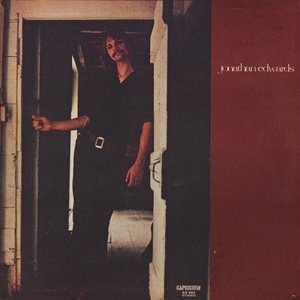
After several support slots for the Allman Brothers Band in the late 1960s, Jonathan Edwards signed to Capricorn Records, the band’s own label, and released his self-titled debut LP in November 1971. The Minnesota-born, Virginia-raised singer/songwriter touched a nation that was still going through the latter stages of a messy war in South East Asia, a dodgy leader at the helm, with the release of the jaunty country single “Sunshine”, a song of possible hope and optimism. The song appeared to resonate with an audience hungry for good news, the single going on to reach number four on the Billboard chart around the same time. Curiously, my introduction to the singer was via the sampler LP ‘The New Age of Atlantic’, which featured the song “Everybody Knows Her”, the opening song to this album. Having played in a band with Joe Dolce on lead guitar, Edwards joined a plethora of singer/songwriters across the US, at one point joining Emmylou Harris for her album ‘Elite Hotel’, which led to a deal with Warner Bros and two further albums ‘Rockin’ Chair’ and ‘Sailboat’. Edwards continues to write, record and tour and calls Portland, Maine home.
359 | Family | Music in a Doll’s House | Reprise 6312 | 1968
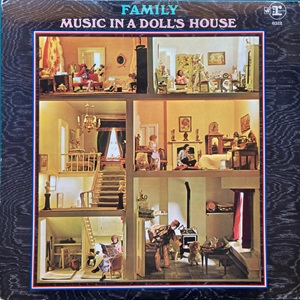
Though I’d already read several articles and features on the Leicester-based band Family, their music didn’t really reach me until the band released the single “The Weaver’s Answer”, the lead track to their second album ‘Family Entertainment’, which was released the following year. Roger Chapman’s rasping voice was an acquired taste back then and if I were to be perfectly honest, I’m still not convinced that I actually ever fully acquired it, all these years on. Despite these reservations, the musicians Chapman surrounded himself with were second to none, including John “Charlie” Whitney, Jim King, Ric Grech and Rob Townsend. Produced by Dave Mason, ‘Music in a Doll’s House’ is a bold debut, incorporating complex rhythms and textures, some Classical elements, and even o bona fide jazz band, courtesy of Tubby Hayes, whose band effectively jammed with Family during the latter half of “Old Songs, New Songs”. There are one or two moments that could be considered examples of early Progressive Rock, though the use of the blues harp keeps the band within the realms of the blues bands of the day. Curiously, the title has its place in Beatles mythology, in that ‘The Doll’s House’ was the intended title of what subsequently became the ‘White Album’, Family effectively beating them to it.
358 | Tim Buckley | Happy Sad | Elektra EKS 74045 | 1969
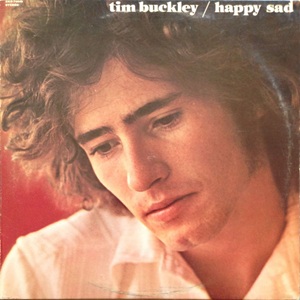
Tim Buckley’s third studio album ventures into jazz territory by incorporating certain motifs, most notably on “Strange Feeling”, the Miles Davis modal jazz feel being instantly evident. Produced by the Lovin’ Spoonful’s Zal Yanovsky and Jerry Yester, ‘Happy Sad’ features some empathetic guitar playing courtesy of Lee Underwood, with John Miller on bass and Carter CC Collins and David Friedman taking care of the percussion department, most notably the latter’s warm vibraphone sound. The absence of lyricist Larry Beckett, who had worked with Buckley on his two previous albums ‘Tim Buckley’ and ‘Goodbye and Hello’, allowed Buckley to further advance his own songwriting, all six songs here written in full by Buckley. There’s little doubt that “Strange Feeling” owes a huge debt to “All Blues” from the classic Miles Davis album ‘Kind of Blue’, though it’s probably “Buzzing Fly” that fully grabs the listener’s attention midway through the first side. If modal jazz was referenced in “Strange Feeling”, then Jazz Funk was the inspiration behind the spirited “Gypsy Woman”, its percussive quality driving the song along through its sprawling twelve minutes. The album also includes “Dream Letter”, a song Buckley written by way of an apology to his ex-wife and abandoned son Jeff Buckley, who would make his short-lived contribution to rock music a couple of decades later. Sadly, both father and son would die under tragic circumstances, the former from a drug overdose, the latter from drowning. One can’t help but feel that the Buckley’s were cursed.
357 | Nick Drake | Five Leaves Left | Island ILPS 9105 | 1969
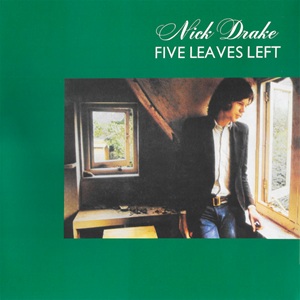
I may have bored people with this observation previously, so do bear with me. I count myself as one of those Nick Drake fans who hung onto the coat tails of the revivalist cult movement that arose in the mid-1990s, as a plethora of acoustic guitar players, both male and female (and those in between) began to hero worship this doomed songwriter, who left the world a couple of decades earlier after releasing just three albums in his lifetime. The difference being, I’m from a generation who first heard the singer in his heyday, though I also must confess, I didn’t care for his music, being a dyed-in-the-wool Progger, who skipped all these pastoral Keatsian musings with slick orchestral accompaniment for the nearest King Crimson track. After hearing Danny Thompson’s BBC radio documentary ‘Fruit Tree’ one warm Saturday afternoon in 1998, everything changed. I went out and bought the box set of the same name and reacquainted myself with Drake’s catalogue. ‘Five Leaves Left’ was the first of Drake’s album releases, which came out to little fanfare at the beginning of July, 1969. In a way, the sleeve almost describes the music within, you knew immediately this wasn’t going to be Black Sabbath. Joined by Richard Thompson and Danny Thompson, together with not one but two classical bods, mainly Robert Kirby on four of the songs, “Way to Blue”, “Day is Done”, “The Thoughts of Mary Jane” and “Fruit Tree”, whilst Harry Robertson tackled the stunning “Riverman”, ‘Five Leaves Left’ includes all the ingredients for mid-90s teens frantically searching for something more soul searching than Oasis in their bedrooms.
356 | The Mothers of Invention | Freak Out | Verve V-5005 | 1966
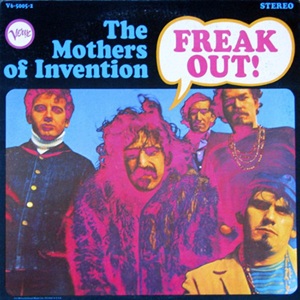
When we think of some of the albums released in 1966, we immediately see that bold strides were being taken in popular music with the likes of Bob Dylan’s ‘Blonde on Blonde’, the Beatles’ ‘Revolver’, the Rolling Stones’ ‘Aftermath’, the Beach Boys’ ‘Pet Sounds’ and the first Incredible String Band album, yet it was this debut album by The Mothers of Invention that stood out as the game changer in what direction the genre could take. This double album was decidedly odd, and was dressed accordingly. Look no further than the cover with its early nod to psychedelia, to understand that we’re dealing with something very different from the Beatles, the Beach Boys el al. Frank Zappa’s musical vehicle set out simply as The Mothers, though the powers that be considered the moniker far too risky, hence the addition of the two words ‘of invention’ to prevent unnecessary nose bleeds in the boardroom. Zappa’s early influences in rhythm and blues, doo wop, classical and blues is all here, though delivered in a decidedly satirical fashion. Producer Tom Wilson was under the impression he was about to record a standard blues band at the first recording session and was soon alerted to the fact that “Who Are the Brain Police?” was something entirely different. Zappa would later ask the question “Does Humour Belong in Music?”, which could quite easily have been posed during these sessions, with one or two light hearted songs such as “Wowie Zowie”, though ‘Freak Out’ does include one or two more serious questions, certainly on “Trouble Every Day”, which could easily have been included on ‘Blonde on Blonde’, another double album released just one week earlier. Also like the Dylan album, the set concludes with one single song, which takes up an entire side, in this case “The Return of the Son of Monster Magnet”, a freaky little number that manages to pack so little into its twelve minutes, with its introduction to Suzy Creamcheese and its sound collage of voices that pre-dates “Revolution #9” by a good couple of years. Though ‘Freak Out’ failed to impress a homegrown audience, the album did quite well over here in the UK, as it set out to challenge our perceptions of what pop culture generally, and rock music in particular, was all about.
355 | Bob Dylan | Blonde on Blonde | CBS 66012 | 1966
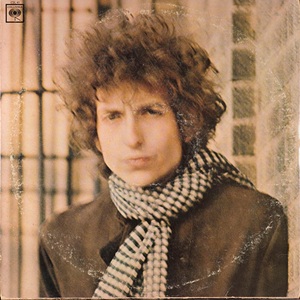
If Timothy Leary’s oft-quoted slogan ‘Turn on, tune in, drop out’ was a thinly disguised call to mass substance abuse back in 1966, then Dylan’s opening song on Blonde on Blonde was perhaps much less ambiguous. “Rainy Day Woman #12 and 35” almost demands that the hoards attend the party. Like Dylan’s two previous releases, Bringing it All Back Home and Highway 61 Revisited, Blonde on Blonde has an immediately memorable opener, though the bar had perhaps been raised staggeringly high on the previous release, “Like a Rolling Stone” being Dylan’s definitive statement. Had Dylan hung around and stuck that song on this album, his first double set, then we might be talking of a near perfect album here. As the size of the album suggests, there’s a lot to go at, with one or two immaculate songs included, certainly “Just Like a Woman” and “Visions of Johanna”, with many of the others occupying their rightful place on Dylan’s set list for some time to come. Listeners tend to remember “Sad Eyed Lady of the Lowlands” for one reason, that of being an over-long rambling ballad, but at just over ten minutes, it’s not quite as long as we tend to remember. The fact that it occupies an entire side is probably why we remember it in this way. I don’t mind long Dylan songs as long as they’re performed by Dylan himself. If Adele had recorded “Highlands”, “Tempest” or indeed “Murder Most Foul”, then I probably wouldn’t remember them with quite as much fondness as “Make Me Feel Your Love”. Recorded in both New York and Nashville, Blonde on Blonde is not just an essential Dylan album, it’s an essential album period.
354 | Steve Miller Band | Brave New World | Capitol EST 184 | 1969
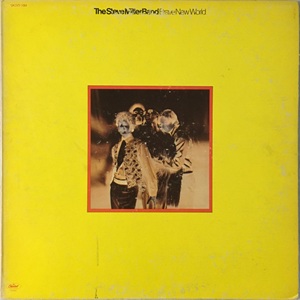
In 1974, I was involved in a theatrical group with several students then currently studying drama at High Melton Teacher’s Training College, putting on plays at the college and rehearsing in an upstairs room at Elmfield House, before moving to our own space in an old disused church on the corner of Broxholme Lane. During this time, I hung out with the two directors of the group, the group curiously named ‘Arthur’, who were both avid fans of the Steve Miller Band. At the time, I recall the two of them pooling their resources to buy an import of one of the band’s albums that at the time wasn’t available in the UK. That album was either Brave New World or the follow up Your Saving Grace, my memory is hazy. All I know is that I couldn’t wait to hear the album having already devoured all the others up to that point. This all coincided, rather coincidentally, with the release of the band’s breakthrough album here, The Joker, which I snapped up as soon as it was released. I still listen to the band quite regularly and couldn’t possibly say which is may favourite album. Brave New World is certainly a contender if only for both “My Dark Hour” and “Kow Kow”, both of which might find their way into my desert island box.
353 | Fairport Convention | Rising for the Moon | Island ILPS 9313 | 1975
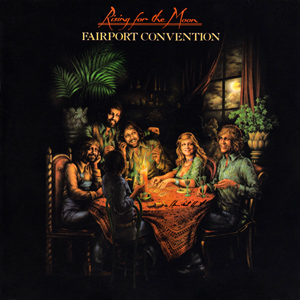
I don’t suppose anyone really saw Sandy Denny returning to the fold, certainly after the string of solo albums she made after leaving Fairport, together with a brief stint in her own band Fotheringay, yet return she did, for Fairport Conventions’ tenth studio album, whose line-up at that moment in time featured not one single original member, the last one having left the band in 1971 after the Babbacombe Lee album. Though the newly formed band would hear the odd ‘Fotheringport Confusion’ joke, each of the members had in fact served time in Fairport previously, with the exception of drummer Bruce Rowland, who shared drum duties on this album with long time Fairport drummer Dave Mattacks. Marion Appleton’s cover painting appears to blend the band’s debut album cover shot with the caricatures featured on the cover of the debut Fotheringay album, which seems a fitting image for the newly formed Fairport. If the feel of the album is different from any of the previous nine Fairport albums, then it might be due to the absence of John Wood at the controls, the respected engineer having been replaced on this occasion by the equally respected Glynn Johns, who brought a little more polish to the legendary unpolished band. As we would expect by the time of this album’s release, the songwriting was second to none, with Swarb chirping in with “White Dress”, Lucas delivering “Restless” and “Iron lion” and Denny dominating proceedings with the fabulous “One More Chance” as well as the title track. Rising for the Moon would be Sandy Denny’s swansong with the band and the singer would leave the rest of us just under three years later.
352 | Pink Floyd | Obscured by Clouds | Harvest SHSP 4020 | 1972
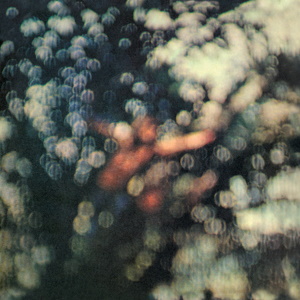
This could hardly be considered the band’s best effort, though it has its moments. Obscured by Clouds is a curiosity sandwiched between the superior Meddle (1971) and the ultra-superior Dark Side of the Moon (1973), and next to those two giants, remains historically insignificant. Perhaps it’s simply because the album began its life as a soundtrack for a film by Barbet Schroeder, who previously employed the band for the earlier More. To be honest I can’t think of a single movie soundtrack that comes close to the best work of any rock band, and certainly not in the case of the music for La Vallée, though having said that, taken on its own merit, as albums often should be, it’s not a bad little album. One track in particular wouldn’t have been out of place on either Meddle or Dark Side, the tender “Stay”, clearly the album’s finest song, written by Richard Wright. There again, when you’re seventeen and looking for love, and you don’t necessarily want to have the Chi-Lites as a soundtrack, then your highly dependable Floyd boys can offer something suitable with a fine vocal performance courtesy of Wright and a delicious wah-wah guitar solo served up by Gilmour. If this song is lost on such a mediocre album, then would it be too much trouble to ask that we turn the clock back momentarily and stick “Stay” on Meddle as a replacement for either “Seamus” or “San Tropez”?
351 | Sandy Denny | Rendezvous | Island ILPS 9433 | 1977

After releasing three solo albums in the early 1970s, Sandy Denny rejoined Fairport Convention, the band she first joined back in 1968 and stayed with until the following year, helping to create what was to be labeled British Folk Rock, with the release of the album Liege and Lief. Sandy’s second run with the band was also short lived with the release of one live album, followed by her final album with the band, Rising for the Moon, before she left once again, this time with husband and fellow band member Trevor Lucas, to pick up the pieces of her solo career. Unfortunately, this too was short lived, as tragedy interveined, with the death of Sandy in April 1978, the result of one of her many falls. Rendezvous was produced by Lucas and would become Sandy’s final album, released in May 1977, an album that features many of her former band mates, including Richard Thompson, Jerry Donahue, Dave Pegg and Dave Mattacks, but also other such notables as Steve Winwood, John (Rabbit) Bundrick, Gallagher & Lyle and Clare Torry, you know, the “Great Gig in the Sky” singer. Lucas’s over-production has been criticised over the years, with perhaps too much going on, though there are one or two magic moments, not least Denny’s gorgeous “One Way Donkey Ride”. The album’s not really up there with The North Star Grassman and the Ravens (1971) or Sandy (1972) but with Sandy’s voice all over it, it still has credibility in hindsight. Even Sandy’s reading of Elton John’s “Candle in the Wind” couldn’t rescue the project from its critics. A sad swansong then, from one of England’s finest voices.
350 | 10cc | Deceptive Bends | Mercury 9102 502 | 1977
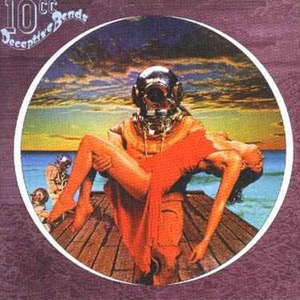
There are some, if not many among us who probably thought the band was over after the departure of Lol Creme and Kevin Godley, who went on to make their own mark in the world of pop video production as well as enjoying a successful period as a duo in their own right. However, Graham Gouldman and Eric Stewart were no push overs and decided to soldier on without their erstwhile partners in crime and recorded and released a thoroughly enjoyable fifth album, Deceptive Bends. Proving their credentials as fine songwriters and musicians, Gouldman and Stewart managed to squeeze out three singles from this set, the opener “Good Morning Judge”, the top ten hit “Things We Do For Love” and the slightly lesser known “People in Love”, a minor hit in the US. With a memorable sleeve design by Hipgnosis, the new line-up, augmented by Paul Burgess on all manner of percussion, were only too keen on proving that they were not simply 5cc, but a worthy successor to the original quartet. The album closer, the sprawling “Feel the Benefit (Parts 1, 2 and 3)”, might well have fitted on the end of Abbey Road.
349 | Bell + Arc | Bell + Arc | Charisma CAS 1053 | 1971
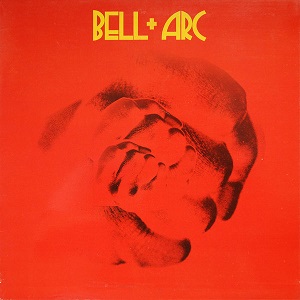
After an initial album release by the band Every Which Way, singer Graham Bell joined forces once again with his fellow Skip Biffery band mates to record this album for the famous Charisma label. Comprising the collective talents of John Turnbull on guitar, Mickey Gallagher on keyboards, Tom Duffy on bass and John Woods on percussion, augmented by such notables Ken Craddock on various instruments and Alan White on drums, the band’s only album release is perhaps most remembered for the two covers, Leonard Cohen’s “So Long Marianne” and Dylan’s “She Belongs to Me”, the remainder being pretty much Graham Bell originals. Soulful from the start, Bell + Arc demonstrates such slick musicianship that it’s little wonder that both Turnbull and Gallagher would soon find themselves within the ranks of Ian Dury’s Blockheads before the end of the decade. Mostly a band effort, the album does include the one Bell solo effort, the acoustic “Dawn”, which loses none of the soulfulness found in the band tracks. Graham Bell’s career, like many of his generation, was affected by the onslaught of Punk, not to fully recover or relinquish a his rightful place in British rock music. He died at the age of 60 from cancer.
348 | Joni Mitchell | For the Roses | Asylum K 53007 | 1972
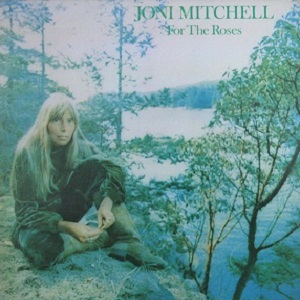
For the Roses is perhaps best remembered for the song “You Turn Me On I’m a Radio”, a tongue-in-cheek attempt at a commercial single, something Joni hardly needed at the time. Anyone under the impression that Joni was still a folk singer might have been very much mistaken with the release of this, her fifth studio album, which includes moments of rock and jazz, disparate influences creeping into the mix, certainly on “Cold Blue Steel and Sweet Fire”, a song that addresses drug addiction, her former boyfriend James Taylor having been a heroin addict. Once again, Joni writes on a highly personal level, notably on the title song, which looks at the struggles between personal freedom and celebrity. Despite Joni’s credentials as a fine guitar player, utilising a myriad of open tunings, the piano comes to the fore in places, notably the album closer “Judgement of the Moon and Stars (Ludwig’s Tune)”, a nod to the influence of Beethoven. Joni is joined by such notable musicians as Tom Scott, Russ Kunkel, James Burton, Graham Nash and Stephen Stills.
347 | Van Morrison | Saint Dominic’s Preview | Warner Bros K 46172 | 1972
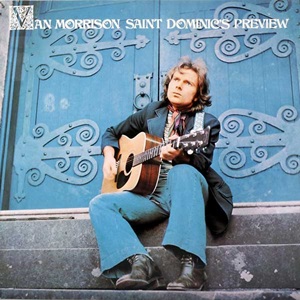
Who could possibly erase from their memory the edition of Top of the Pops, when some bright spark projected a picture of the deliriously smiling Scots darts player Jocky Wilson as a backdrop to Dexy’s Midnight Runners’ performance of the band’s then current hit “Jackie Wilson Said”. The song’s author Van Morrison must’ve been seething, as his song underwent such merciless ridicule on the popular weekly TV show. “Jackie Wilson Said (I’m in Heaven When You Smile)” opens Morrison’s sixth album Saint Dominic’s Preview, with a nod to one of his R&B heroes from a previous era. Soulful, yet folky at the same time, the song is a superb opener to a particularly eclectic album, considered by many as one of Morrison’s finest. There’s echoes of the earlier Astral Weeks in the sprawling “Listen to the Lion”, which features one of Morrison’s most primal vocal performances, half lion roar, half soulful moan, with a little of Arthur Janov’s curious therapy thrown in, ala John Lennon. Saint Dominic’s Preview has one or two memorable performances, not least the title song which opens the second side and the mammoth closer, “Almost Independence Day”. Half a century on, the album still stands on its own two feet and Van’s ripped jeans remain for all to see.
346 | Roger McGuinn | Roger McGuinn | CBS 65274 | 1973
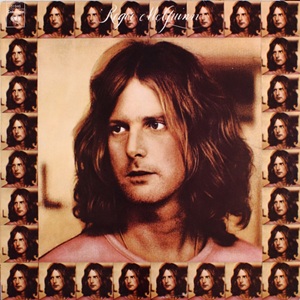
I had hair pretty much like Roger McGuinn when he appeared on the cover of his debut solo album, an album I bought upon its release in 1973. This was an image that appeared no less than twenty-nine times on the front cover and a further twenty-eight times on the back. It was Bob Dylan once again who attracted me to this album, who provided the harmonica on the heavily Dylan influenced opening song “I’m So Restless”. It was difficult to escape the West Coast influence at the time, with several albums being almost simultaneously released by The Byrds, The Flying Burrito Brothers, The Steve Miller Band and Little Feat, whilst daytime radio in the UK concerned itself with The Osmonds, David Cassidy and Mud. Roger McGuinn surrounded himself with a handful of key session players, including Hal Blaine, Spooner Oldham, Jim Gordon and Leyland Sklar, as well as reuniting with David Crosby and Gene Clark, his former Byrds bandmates. Writing in partnership with Jacques Levy, one or two of the songs are strong, but it’s probably David Weffen’s “Lost My Driving Wheel” that brings me back to the album every now and then. A couple of years after this album’s release, Roger would be out on tour with his Bobness himself, helping to roll his thunder.
345 | Ry Cooder | Boomer’s Story | Reprise REP 44 224 | 1972
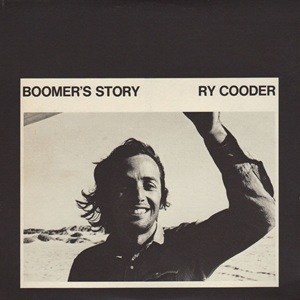
Ry Cooder’s third solo album covers some ground in terms of influence, as he searches through the great American songbook, the real American songbook that is, as opposed to the lounge music version subsequently plundered by the likes of Harry Nilsson, Rod Stewart and Bob Dylan. These are songs from the other side of the tracks, from Skip James and Sleepy John Estes, to Dan Penn and Chips Moman, closing with the traditional “Good Morning Mr Railroad Man”. The songs are strong, with each one treated to some good down home arrangements, along with Cooder’s highly distinctive guitar and mandolin playing, effectively working their magic throughout. The highlight is unquestionably the gorgeous reading of the old Bob Russell and Lorenzo Barcelata tune, “Maria Elena”, which features some dreamy acoustic guitar and piano interplay. “Dark End of the Street” is also presented as an instrumental, with some of Cooder’s trademark bottleneck licks. Boomer’s Story is one of the few albums where the instrumentals are equally as important as the songs and in the case of “Maria Elena” and “Dark End of the Street”, even more so. The stark black and white sleeve shows a rare smiling Cooder, though it appears somehow unrepresentative of the music that can be found inside.
344 | Deep Purple | Machine Head | Purple TPSA 7504 | 1972
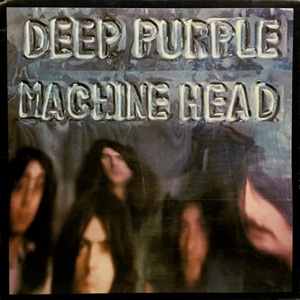
Waiting for the release of Deep Purple’s sixth album was a little like waiting for Led Zeppelin’s fourth, in that they both followed a slightly disappointing album, which in turn had come directly after a masterpiece. Although I grew to love Led Zeppelin III, the follow up to Led Zeppelin II, one of the best albums in rock music, it was the band’s untitled fourth album that has become known as their greatest achievement. The same could probably be said of Machine Head, after the hugely disappointing Fireball, that bridged the gap between the band’s two major released, Deep Purple in Rock and this outstanding album release, which features not only the band’s most famous song, but probably rock’s most famous riff. Machine Head isn’t just another Deep Purple album, it’s an album that arrived just at the right time, and the penultimate album to feature the band’s classic line-up of Richie Blackmore, John Lord, Ian Paice, Ian Gillan and Roger Glover before Gillan and Glover jumped ship to make way for David Coverdale and Glenn Hughes, who would take the band through their next phase. “Smoke on the Water” came as a surprise to many, a rock anthem that tells the true story of the band’s near miss, when the venue they chose to record this album was burnt down during a Frank Zappa gig, just before the sessions were due to begin. Machine Head not only featured “Smoke on the Water”, but also such memorable songs as “Lazy”, Highway Star” and “Never Before”, each of which were released as singles. Seeing the band at the City Hall in Sheffield during this tour was an invigorating and unforgettable experience. Thanks for the sip of Guinness John Lord.
343 | Bert Jansch | LA Turnaround | Charisma CAS 1090 | 1974
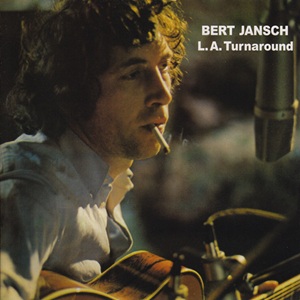
In 1974, the British folk singer and highly influential guitar player Bert Jansch, found himself in a most unusual setting. He was out in California recording his ninth solo album with an ex-Monkee. By this time of course, Michael (Mike) Nesmith was a noted figure on the Country scene with seven albums under his belt, notably Magnetic South, Loose Salute and Nevada Fighter among them. For LA Turnaround, Nesmith took on the role of producer and helped pull together a handful of rather tasty musicians, including steel player Red Rhodes, fiddle player Byron Berline, guitarist Jesse Ed Davis and Beatle chum Klaus Voormann on bass. The album features mostly Jansch originals, such as “One for Jo”, “Of Love and Lullaby” and the gorgeous “Fresh as a Sweet Sunday Morning”, but also includes a much older song “Needle of Death”, which originally appeared on his 1965 debut record, together with a take on his old pal John Renbourn’s instrumental “Lady Nothing”. Perhaps the album show-stopper is the highly inventive instrumental “Chambertin”, which leaves us with no doubt as to the guitar playing credentials of this remarkable and much missed musician.
342 | Emerson, Lake & Palmer | Emerson, Lake & Palmer | Manticore K 43503 | 1970
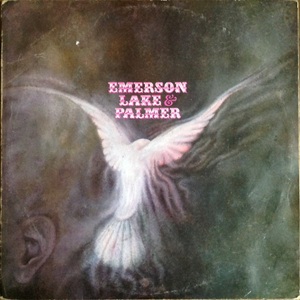
In the age of the so-called supergroup, it must have come as a highly anticipated event when the Nice keyboard player Keith Emerson (I refer here to the band he’d recently left, rather than hinting at his personality), King Crimson’s Greg Lake and former Atomic Rooster drummer Carl Palmer, got together to form a trio that would soon become abbreviated ELP. The trio’s self-titled debut was well received both critically and by those eager to engage with anything that fell under the banner of Progressive Rock at the time. Like many of the early Prog releases, the musicians, and mainly the keyboard players at that, looked to their Classical training and borrowed (or stole) from their predecessors, in the case of this album’s opener, “The Barbarian”, which was based on Béla Bartók’s Allegro Barbaro, though the band chose to keep that particular credit to themselves until the composer’s widow had words. With further musical quotations from the likes of Bach and Janáček, together with one or two completely original tunes, courtesy of Lake, notably “Take a Pebble” and “Lucky Man”, Emerson, Lake and Palmer remains the band’s least excessive and pretentious album, something that would grow more apparent in later releases.
341 | James Taylor | One Man Dog | Warner Bros K 46185 | 1972
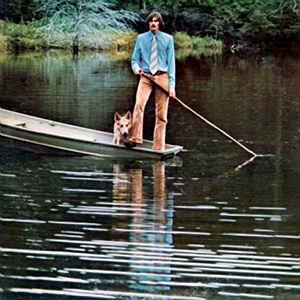
This fourth studio album by James Taylor met with some anticipation after the success of the two previous releases Sweet Baby James and Mud Slide Slim and The Blue Horizon, both of which had received much praise. It really couldn’t have possibly met with the expectations and some might say it didn’t really try. Why would there have been instrumentals on an album by a performer who defined the term ‘singer-songwriter’? Though dismissed as a poor follow-up to Mud Slide Slim, the album in a way separates the so-called singer-songwriter from the more pop oriented artist that followed, almost drawing a line under the ‘sweet baby’ of yore. The groove on the opening track “One Man Parade” is almost the same as Eric Burdon’s “Spill the Wine” but devoid of the necessary soul, “Nobody But You” is cocktail bar fodder and the instrumentals are pretty much forgettable. One Man Dog does however include the traditional song “One Morning in May”, which perhaps, in hindsight, is the direction the album should’ve gone. The final insult to a James Taylor fan circa 1972, is that he’s wearing a sodding tie with the traditional blue shirt on the cover shot.
340 | Wishbone Ash | Locked In | CA MCF 2750 | 1976
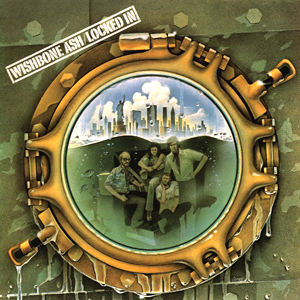
The sixth album by the British rock band Wishbone Ash couldn’t possibly match up to the earlier albums such as Argus, Pilgrimage or indeed the band’s masterful debut, though the band’s distinctive sound still comes through in places. Locked In is the second Wishbone Ash album to feature Laurie Wisefield, who not only continues his role as second guitarist (after Andy Powell), but also has a hand in the writing, contributing “No Water in the Well”, together with a few co-credits. Like most good rock albums, or albums of any genre really, the album kicks off with a memorable opener, “Rest in Peace”, which sets the bar too high for the rest to follow perhaps, although even this track fails slightly in my book simply due to the inclusion of the dreadful voice box contraption that was the scourge of many an otherwise decent number in those days. The familiar guitar sparring is present though with Powell and Wisefield keeping the trademark torch alight, though there’s no “Phoenix” here, nor “The King Will Come”, nor would I expect there to be. One trump card Martin Turner makes here is to have the soulful trio of Cissy Houston, Sylvia Shemwell and Eunice Peterson appear on his song “She Was My Best Friend”, which can only help.
339 | Rickie Lee Jones | Rickie Lee Jones | Warner Bros K 56628 | 1979
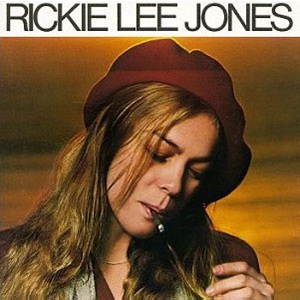
Having a hit single on your debut album is never a bad thing and in the case of Rickie Lee Jones, that single was the jazz-tinged “Chuck E.’s in Love”, which was played on the radio almost constantly back in the summer of 1979. The titular character in the song happens to be Check E Weiss, a friend of Jones and then current boyfriend Tom Waits, the title quoted directly from a Waits comment after being told that his friend had moved to Denver to be with his cousin. Rickie Lee Jones marked the beginning of a five-decade career, which in turn spawned no fewer than fifteen albums, though probably none as accessible as this fine debut. Perhaps it’s the easy on the ear lounge jazz feel of “Easy Money”, or the engaging streetwise jive talking of “Danny’s All-Star Joint”, together with the sheer passion in the delivery of “Last Chance Texaco”, the title of her 2021 memoir (which is a highly recommended read), or a mixture of all three and more that has helped the album maintain its broad appeal. With a working title of The Real Thing is Back in Town, a line from “Coolsville”, another potentially fruitful title, the singer simply left it at Rickie Lee Jones.
338 | Black Sabbath | Vol 4 | Vertigo 6360 071 | 1972
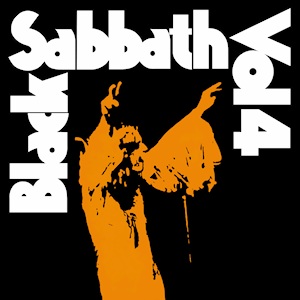
Despite more than half a century having passed under the bridge, I can still remember precisely where I was when I first heard Black Sabbath’s fourth album. I was drinking a Guinness at a friend’s house as he dropped the needle on the first side of his newly acquired platter. We were big fans of the previous three albums, each of which had shared the same turntable over the previous couple of years. Fortunately, the band’s fourth outing, imaginatively entitled Vol 4, continued in much the same vein as those previous three releases, stretching their doom-laden darkness right to the edge of town, that town being Birmingham in the heart of dear Old Blighty. Of course, up in Donny, we shared a similar working class background and could find empathy through what was essentially the beginning of the Heavy Metal genre, before it all became much of a muchness. By this time, the four members of the band had travelled the world, whilst taking their beloved Brummy roots with them, Ozzy Osbourne, Toni Iommi, Geezer Butler and Bill Ward, each contributing their own idiosyncratic musical chops to the band’s immediately recognisable sound. It’s not all ear-blasting speaker-pulsating noise here, with a couple of delicate acoustic numbers included, the Spanish guitar-inspired “Laguna Sunrise” and the timeless “Changes”, a song Ozzy later returned to with a duet with his daughter Kelly in 2003. It was around the time of this album’s release that I got on the bus to Sheffield to see the band at the City Hall, only to find a miasma of youths, predominantly male and each wearing a black great coat and over-sized silver crucifix around their necks, sitting on the venue’s grand steps after hearing the news that Ozzy was unwell and the gig unfortunately cancelled. I never did get to see Black Sabbath live.
337 | The Rolling Stones | Sticky Fingers | Rolling Stones Records COC 59100 | 1971
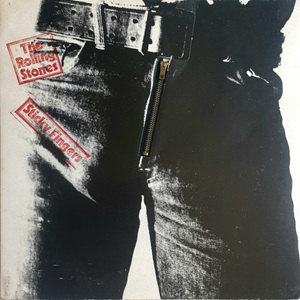
Sticky Fingers is probably my favourite of all Rolling Stones records and for a variety of reasons. It might be that it came along just at the time I was beginning to really take notice of the band. It could also have something to do with the superb opening track “Brown Sugar”, one of rock’s great album openers. Then again it might have something to do with the highly inventive sleeve design by Pop Artist Andy Warhol, an image of a pair of jeans complete with a real zipper, but perhaps most of all, it might have something to do with the outstanding material on the album, such as “Can’t You Hear Me Knocking”, “Wild Horses” and “Moonlight Mile”. What’s not to like? The album may be packed with drug references, but if you’re not specifically looking for those references, it’s easy to ignore them, perhaps in the same manner as some are more than happy to think that “Lucy in the Sky with Diamonds” is about a girl called Lucy, flying in the sky, with a bunch of diamonds. One such song “Sister Morphine”, which can’t really escape from its obvious references, was in fact written by Marianne Faithfull, but Messer’s Jagger and Richard thought it necessary to withhold this information, crediting themselves instead. A very noble rock and roll gesture.
336 | Barclay James Harvest | Once Again | Harvest SHVL 788 | 1971
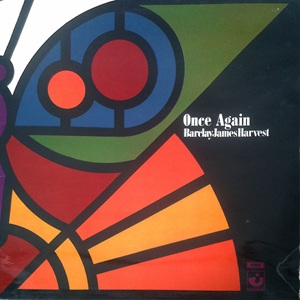
Oldham’s very own Progressive Rock outfit Barclay James Harvest always seemed to be shoving out albums as if they were going out of fashion in the early 1970s, having no less than four out between 1970 and 1972, each released on EMI’s progressive imprint Harvest. The truth is, they were about to go out of fashion big time. Once Again, as the title might suggest, is the second release by the band, memorable for its stained glass butterfly gatefold, which was not, surprisingly enough, the work of those lovely Hipgnosis people, but rather, the artistic flair of one Latimer Reeves. Recorded with a full orchestra, as was done far too often in those days, Once Again finds the band in experimental mode, with John Lees, Les Holroyd, Stuart ‘Woolly’ Wolstenholme and Mel Pritchard keeping the mellotron use to a reasonable level. Perhaps the best remembered song on this album, and any of their others come to think of it, is the gorgeous “Mocking Bird”. No, not the ‘Mock’ (‘yeah’), ‘Ing’ (‘yeah’) version, but something entirely different and far more sublime.
335 | Tir Na Nog | A Tear and a Smile | Chrysalis CHR 1006 | 1972
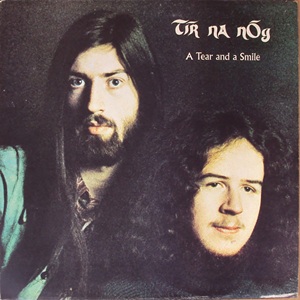
I reacquainted myself with this LP after being separated from it for over 40 years. In the days of swapping records with friends or with the man at the local ‘swap shop’, this was one of the LPs that drifted off for a while, and aside from a copy of the subsequent CD release, it’s pretty much evaded rediscovery, until a visit to Music in the Green in Bakewell a few years ago, where I managed to pick up the LP and return it to its rightful home. I’m undecided whether Leo O’Kelly and Sonny Condell look so much relaxed on the gatefold sleeve or positively alarmed, Condell looking particularly at home surrounded by all manner of early 1970s paraphernalia in the centre spread. A Tear and a Smile, the duo’s second album, was produced by Tony Cox (Caravan, Françoise Hardy, Family), and features contributions by Larry Steele on bass and Barry de Souza on drums with some fine string arrangements by Nick Harrison. It has to be said, these songs always sound much better on a long playing record.
334 | Steely Dan | Can’t Buy a Thrill | ABC ABCL 5024 | 1972
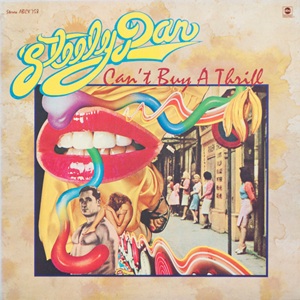
Once again, it was the ever-trusted Old Grey Whistle Test that brought Steely Dan to my attention way back in the early 1970s, via a live clip of the band performing “Reeling in the Years”. Aesthetically, this album had nothing going for it really, with its garish Pop Art lips, its sleazy row of 1950s hookers and foetus-like nymph straddling the shoulder of a shirtless Terry Wogan lookalike and let’s not forget the band is named after a sex aid (courtesy of William S Burroughs), yet the music almost literally jumps out of the speakers upon first hearing “Do it Again”, “Reelin’ in the Years” and “Fire in the Hole”. The album also offers a couple of highly melodic wistful moments in the soulful “Dirty Work” and the country-inflected “Brooklyn (Owes the Charmer Under Me)”, both of which include a fine vocal courtesy of the outgoing David Palmer. These days, whenever I see OGWT anniversary shows, I always expect to see Donald Fagen and the late Walter Becker, reeling in those years.
333 | Grateful Dead | Terrapin Station | Arista SPARTY 1016 | 1977
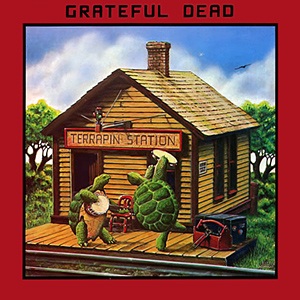
By the summer of 1977, when bands like the Grateful Dead had allegedly become old hat to some, in order to make way for the short-lived noise and attitude of ‘Punk’, the band had already reorganised itself, signed to a new label, Arista, and had picked up where they had left off on the touring front. Jerry Garcia was still very much at the helm of the band with his old chums Bob Weir, Phil Lesh and Micky Hart etc., and with a brand new set list to chew over. Terrapin Station is basically made up of a fairly good opener, “Estimated Prophet”, followed by a handful of fillers, such as the dreadful cover of the old Motown hit “Dancing in the Street”, and concludes with an ambitious, almost epic closer, the sprawling sixteen-minute “Terrapin Station Part I”, basically a seven-part opus made up of four songs and three instrumentals, incorporating lavish strings and Orffian choral parts. To be honest, in places it don’t sound like the Dead, but it’s highly entertaining nonetheless.
332 | Beach Boys | Holland | Reprise Records MS 2118 | 1973
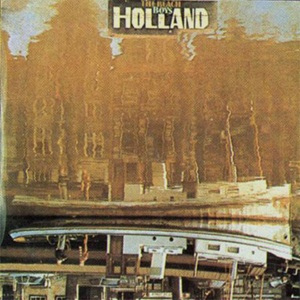
By the time this album arrived, the Beach Boys had put some mileage behind them, both in terms of the road and the surf. Named after the country the LP was recorded, their nineteenth album Holland includes one or two memorable songs, certainly “Sail on Sailor”, later a single release, written Van Dyke Parks and Brian Wilson with Ray Kennedy, Tandyn Almer, and Jack Rieley, though Wilson would later pretty much disown the song. Nonetheless, the song is perhaps the only viable opener, many of the other songs being rather too eccentric. “Steamboat” plods on before side one concludes with what is essentially a suite of songs celebrating the band’s home state of California. Mike Love’s contribution to the California Saga, “Big Sur” is largely forgettable, though “The Beaks of Eagles” includes some of the old Beach Boys magic, though much of it is delivered in the spoken word. Side two, brings to the fore the voice of Carl Wilson on “Trader” and possibly the album’s best song “Leaving This Town”, co-written by a future Rutle, Ricky Fataar, concluding with Brian Wilson’s only other composition, “Funky Pretty”, with lyrics by Mike Love. Far from the Beach Boys finest moment, Holland has a place in the summer canon, perhaps the band’s last hurrah, though we should perhaps not mention the awful fairy tale EP that comes with it.
331 | Stealers Wheel | Ferguslie Park | A&M 68209 | 1973

Ferguslie Park is one of only three LPs I can think of to feature a cow on the sleeve, the others being Pink Floyd’s Atom Heart Mother and the other being Vashti Bunyan’s Just Another Diamond Day. There could be more. My name happens to be scribbled on the inner sleeve of this Stealers Wheel LP, along with ‘73’, the year I must have bought it. Despite a slightly hazy memory from this period, I do actually recall picking this album up immediately after its release as if it were yesterday. Bearing in mind I was a huge fan of the earlier single “Stuck in the Middle”, a song which appeared on the band’s debut album the year before and many years before Quentin Tarantino chose the song for the soundtrack to his infamous Van Gogh routine in Reservoir Dogs, it would be just a matter of course that this LP would find its way onto my shelf. The celebrated American songwriting team of Leiber and Stoller produced the LP, which featured amongst other things “Star”, a wonderfully melodic song and possibly one of the most underrated pop songs in the history of underrated pop songs, that in a perfect world should really have taken the top spot in the charts instead of the awful “Tiger Feet” back in February 1974. Ferguslie Park is named for a housing estate in Paisley, Scotland, where both Gerry Rafferty and Joe Egan (effectively Stealers Wheel) grew up, together with the man who designed all three Stealers Wheel album covers, the artist John Byrne.
330 | Bob Dylan | John Wesley Harding | CBS 63252 | 1967

Recorded between October and November 1967 and released just after Christmas in the same year, Dylan’s eighth studio album saw the Hibbing Bard return to his acoustic roots, with an album of new songs, presumably written during the Basement Tapes sessions. After recuperating from a motorbike accident, which effectively put him out of the public gaze for a short period of time, Dylan found himself holed up in a basement with his touring band, which in turn prompted a rethink in his musical direction. Dylan and the group of musicians who would later be known simply as The Band, worked on a series of songs which would bridge the gap between his previous album Blonde on Blonde and his next studio album. Having recorded several songs with The Band, most of which wouldn’t be officially released until the mid-1970s, Dylan took an unexpected move and relocated to Nashville with just a handful of musicians, Charlie McCoy on bass, Lenny Buttrey on drums and Pete Drake on steel guitar on just a couple of tracks, and with Bob Johnson producing, recorded a collection of sparsely arranged new songs, “I’ll Be Your Baby Tonight”, “I Pity the Poor Immigrant” and “All Along the Watchtower” amongst them. As with much hippy trippy nonsense at the time, the cover soon became the subject of speculation, with The Beatles in the trees etc.
329 | Emitt Rhodes | Emitt Rhodes | Dunhill DS 50089 | 1970

This is actually the second album release by singer songwriter Emitt Rhodes, essentially a homemade album with Rhodes playing all of the instruments, which Dunhill released after Rhodes agreed to re-record the vocals to adhere to strict music union rules, that albums released on major labels must be recorded in proper studios. Well of course these songs were recorded at home and Rhodes was pretty determined to make sure the listener was well aware of this, inscribing in decorative banners on the runout groove the words ‘Recorded at Home’. Rhodes had also originally pencilled in Homecooking as the album title. However, the record label changed this to just the singer’s name before the album’s release. On the inner gatefold sleeve, Rhodes is quoted to say ‘I have to say the things I feel, I have to feel the things I say.’ The album is chock full of highly melodic McCartney-like songs, notably “Somebody Made for Me” and “She’s Such a Beauty”, among others. Rhodes released just four solo albums in the early 1970s, plus one initial release with The Merry-Go-Round before disappearing off the scene altogether, a casualty of internal record company wrangling. He made a brief comeback in 2016 with the album Rainbow Ends, before dying in his sleep in the summer of 2020.
328 | John Lennon | John Lennon/Plastic Ono Band | Apple PCS 7124 | 1970

The debut solo album by the recently departed Beatle, provides a glimpse into the mind of Lennon, something that was originally attempted in such songs as “Help” a good five years earlier. A cry for help indeed. With the production team of Lennon, Yoko Ono and Phil Spector, and an additional contribution from one Arthur Janov, his dubious primal scream therapy, it always promised to be an interesting affair. Initially frowned upon (as anything would’ve been post Beatles), the album has become a firm favourite among the Lennon community of fans. If “Glass Onion” and “I am the Walrus” had hidden clues as to Lennon’s thinking, then the songs on this album present an open book, where Lennon finally speaks out. We are left under no illusions as to Lennon’s beliefs in the show-stopping “God”, nor how he feels when addressing lingering thoughts of the mother who left him when he was a child. Themes of abandonment and reassurance are fully realised through the words and music of one of our very best. It’s a shame that the album is chiefly remembered for an expletive in the Dylan inspired “Working Class Hero”, but that’s how it goes.
327 | Wishbone Ash | Wishbone Ash | MCA MKPS 2014 | 1970
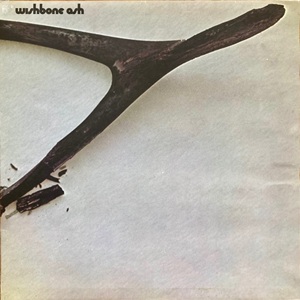
The first track I ever heard from the debut album by Wishbone Ash was without question “Lady Whiskey”, which John Peel played one night on his Top Gear show sometime in the early 1970s, in fact it was quite possibly 1970 itself. It was one of those frustrating moments where I didn’t manage to catch the name of either the band nor the title of the track. Bear in mind that we didn’t have the luxury of the internet to scour back then, so I spent the subsequent weeks attempting to hum the iconic riff to friends, who in turn thought I was completely barking. I then heard the song in a friend’s flat in the early hours of the morning after a good party and discovered the rest of the album, including the iconic Wishbone Ash staple “Phoenix”. Wishbone Ash became one of my favourite bands of the 1970s and joined the list of great bands I got to see at the Sheffield City Hall, bands that included Led Zeppelin, Deep Purple, Stone the Crows and Curved Air. I would later meet up with original member Martin Turner for a chat, who I found to be a perfectly cop-operative individual, bonkers too.
326 | Spirit | Twelve Dreams Of Dr. Sardonicus | Epic 64191 | 1970

I’m not quite sure when I first heard Spirit’s fourth album release Twelve Dreams of Dr Sardonicus, certainly sometime in the early 1970s and no doubt during my ‘psychedelia’ period. I would have been attracted to the sleeve first of all no doubt, with its dark psychedelic and distorted portrait of the band attired in all manner of weirdness, quite possibly as spaced out as you could get, even by 1970s standards. Although popular at the time, Spirit never achieved the sort of popularity enjoyed by the likes of such contemporary rivals as Jefferson Airplane or the Grateful Dead, yet the band has pretty much maintained its cult status, certainly when it was alleged that guitarist Randy Wolfe’s instrumental “Taurus”, from an earlier Spirit album, was plagiarised by Jimmy Page for the opening few bars of Led Zeppelin’s “Stairway to Heaven”. Signs in guitar shops should perhaps now read “No Taurus!” The album is perhaps best remembered for Randy California’s “Nature’s Way”, despite “Mr Skin” doing slightly better on the charts when the two songs were released as singles.
325 | Livingston Taylor | Liv | Warner Bros K 46131 | 1971

In those magical days of youth, when I would often be seen gazing at record sleeves in Foxes Records, I would always feel like the proverbial kid in a candy store, knowing full well that my paper round money could afford me little other than a small fraction of LPs available. I therefore contented myself with window shopping and making myself familiar with the small details of the sleeves, which it has to be said was much easier in those days with a full 12” square to gaze upon. I would then cross reference those details with the articles I would find in either the New Musical Express (long before the shortened NME), the Melody Maker or my particular favourite at the time, Sounds. Then, hopefully, some of those tracks might appear on one of the very few decent radio programmes over at the BBC, more often than not, on John Peel’s Top Gear, or of course, the Whistle Test. One such record sleeve I drooled over, featured a single seated figure in a garden with the simple word ‘Liv’ emblazoned on the cover. What was a Liv? I asked myself. Who was this man? It wouldn’t be until I eventually heard Livingston Taylor’s voice that it actually twigged, that this must be someone related to James Taylor, his kid brother in fact. Despite a growing aversion to record shop people scribbling on post-it notes ‘if you like so and so, you’ll like this’, I have to say if you’ve enjoyed James’s output over the years, there’s a good chance you might also dig this, man. These days, when Liv isn’t flying his planes, he can still be found writing songs and making records, his most recent being a 5 disc box set of live recordings made over a 50 year period.
324 | The Sensational Alex Harvey Band | Next | Vertigo 6360 103 | 1973
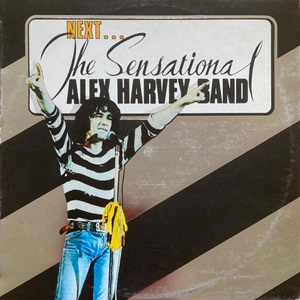
There’s no question that the Sensational Alex Harvey Band was an exciting live band during the period we now remember as Glam Rock, where abundant playfulness was second nature, a band fronted by an enigmatic Glaswegian, who looked like he’d just escaped from the Big Hoose up the road. With his trademark black and white hooped shirt, leather jacket and jeans, the dark-eyed, gap-toothed frontman injected anger, sometimes seething rage, into each syllable he uttered. Could there be a more visceral performance of Jacques Brel’s “Next”, the title track to this, SAHB’s second album, a song memorably performed on the Old Grey Whistle Test in 1973, accompanied by a trio of eerily masked violinists? Harvey wasn’t new to performing at this point, having been a key player on the Scottish rock and blues scene from as early as 1958 until 1965, when he led Alex Harvey’s Big Soul Band. Though loaded with some fine heavy duty rock songs such as “Swampsnake”, “Faith Healer” and “Giddy Up a Ding Dong”, Next has it’s ‘best swept under the carpet’ moments, such as “Gang Bang”. Yes, this album does have its creepy moments. Like many of the contemporary bands of the time, the focus on the leader could often be diverted by the antics of another band member, Led Zeppelin springs to mind (Jimmy Page) or Roxy Music (Eno), and in the case of SAHB, it has to be guitarist Zal Cleminson, who would dress in the mime artist style, complete with green/yellow jumpsuit. Harvey died tragically young at just 46, as did his younger brother Les, who died on stage after being electrocuted at a Stone the Crows gig ten years earlier at just 27. A sad footnote to Scots musical history.
323 | Elton John | Madman Across the Water | DJM DJLPH 420 | 1971

With a title said to refer to the unpopular Richard Nixon, which Bernie Taupin flatly repudiated, Madman Across the Water was the fourth album to be released by Elton John and the third to be released in 1971 after his self-titled second and Tumbleweed Connection. Once again this album featured Elton John’s touring band, including Dee Murray on bass and Nigel Olsson on drums, although most of the tracks feature studio musicians due to producer Gus Dudgeon’s insistence that the touring band wasn’t up to the job. Magna Carta’s Davey Johnstone was also brought in for the sessions, who would become Elton’s regular guitarists, though there does exist an earlier version of the title song that features Mick Ronson, which would later turn up on a reissue CD. One of the album’s key songs is the brilliant “Tiny Dancer”, famously performed on the Old Grey Whistle Test at the time, helping Elton John’s meteoric rise to fame and stardom.
322 | Tim Buckley | Sefronia | Discreet K 49201 | 1974

I first became aware of Tim Buckley via the Elektra sampler LP Begin Here, which I bought specifically for the Incredible String Band song “Mercy” I Cry “City”, or possibly even the track by Love, but certainly not the David Peel and the Lower East Side opener “Alphabet Song”. Unless you were really up on your tortured white soul singers of the day, Buckley may have passed you by in ’69, yet an appearance on The Monkees TV show might have given you an early glimpse of the 12-string player doing a rather nice “Song to the Siren”, while This Mortal Coil’s Liz Frazer was still in nursery. In May 1974, Buckley appeared on The Old Grey Whistle Test and performed the opening song on this album, a fine reading of Fred Neil’s “Dolphins”, which is possibly still the go-to song on the album, released a few months earlier. Buckley also covered Tom Waits’ “Martha”, with some sumptuous strings, a song that first appeared on Waits’ debut Closing Time, released earlier in the same year. Sadly, Buckley had only one more album in him before he died under tragic circumstances in the summer of 1975. If Buckley remained pretty much an unknown figure in the UK over the next few years, a new generation discovered the singer through the success of his estranged son Jeff Buckley, whose life also ended tragically young.
321 | Traffic | Shoot Out at the Fantasy Factory | Island ILPS 9224 | 1973

By the time of Traffic’s sixth album release, Shoot Out at the Fantasy Factory, the rock press had begun to grow slightly weary, though the band continued to achieve chart success, this album earning a place in the top ten of the Billboard album chart. Steve Winwood, Chris Wood and Jim Capaldi were all still very much in the band at the time, joined here by one or two key Muscle Shoals session men, including David Hood on bass, Roger Hawkins on drums, Barry Beckett on keyboards and Jimmy Johnson on guitar. Like the band’s previous album, the sleeve resembles a cube, albeit a flatpack cube, the sleeve’s corners clipped to allow for the illusion. With some heavy on the wah-wah pedal guitar licks on the opening title track, the album continued to compete with some of the contemporary rock albums of the day. “Roll Right Stones” is a lengthy song, written by Capaldi and Winwood and focuses on Winwood’s soulful vocals. If anything, Shoot Out at the Fantasy Factory remains a poor second to the much superior John Barleycorn Must Die and The Low Spark of High Heeled Boys, though the acoustic guitar-led “Evening Blue” is a fine Winwood performance, which would signal the sort of material the singer would later record on a string of solo albums that would look after him through the 1980s. Perhaps, as the rock critic Robert Christgau alluded to at the time, the closing song “(Sometimes I Feel So) Uninspired” might be a ‘giveaway’ sign that the album lacked the sort of inspiration found in the band’s earlier albums.
320 | Jonathan Kelly | Wait Till They Change the Backdrop | RCA SF 8353 | 1973

For the circle of faithful fans who once gathered around Jonathan Kelly upon the release of his breakthrough LP Twice Around the Houses, this follow-up album, once again released on the RCA label, would’ve been eagerly anticipated. Presented in a smart gatefold sleeve, Wait Till They Change the Backdrop appears to continue where the previous LP left off, with more of the same strongly melodic songs, such as the crowd-pleasing “Godas”, featuring guest singers Gavin and Iain Sutherland, whose own success in the Sutherland Brothers was just around the corner. The song became a feature at live shows at the time and then again more recently, when Jonathan continued to invite members of the audience to get up on stage with him to play the Bandits in the song. Guitarist Tim Renwick also lent his unmistakable talents on both electric and acoustic guitars, a sound that would become more prominent in the later Sutherland Brothers and Quiver sound. The country-tinged “Down on Me” is perhaps the highlight here, not only the album stand out, but a career stand out too. Produced by Ken Scott, Wait Till They Change the Backdrop remains noteworthy almost fifty years on, with some fine performances throughout. Unfortunately, there’s little evidence of the extraordinary mark this charismatic musician made during the early 1970s folk club and festival days, but his albums still stand up. We sadly lost Jonathan Kelly in 2020 after a long illness, so perhaps a resurgence of interest is now due.
319 | Sandy Denny | Sandy | Island ILPS 9207 | 1972

I first became aware of Sandy Denny purely by accident when I came across a non-fiction book in the school library, which featured the only picture in the entire school of Led Zeppelin. Sitting against a stone monument on what looked like a hot sunny day, I recognised the familiar faces of John Bonham, Robert Plant and Jimmy Page, but surely this other figure in the middle of the group wasn’t bassist John Paul Jones, but rather a woman. I was curious enough to visit the library at regular intervals, just to confirm how feminine John Paul Jones appeared. I had no one to confirm either way, me being the only Led Zeppelin fan in the school. It was some time afterwards that I discovered that the woman was in fact the folk singer Sandy Denny, who was about to appear on the band’s next album. This led me to investigate the folk singer further and I soon discovered that she was the former singer with Fairport Convention, Fotheringay and for a brief stint, The Strawbs. With an iconic cover shot by David Bailey, Sandy Denny’s second LP release confirmed her credentials as one of the most outstanding singer/songwriters of her generation. Produced by husband Trevor Lucas, the album features mainly self-penned songs together with a couple of non-original songs by Bob Dylan and Richard Farina, many of the songs loved as much today as they were back in 1972.
318 | John Prine | John Prine | Atlantic SD 8296 | 1971

Like many of us, John Prine came to us once again through the Old Grey Whistle Test and specifically the song “Sam Stone”, whose working title was the slightly more cumbersome “Great Society Conflict Veterans Blues”, with its instantly memorable chorus of ‘There’s a hole in daddy’s arm, where all the money goes’. Whether there was a rush to go out the next day to buy Prine’s self-titled debut is anyone’s guess, but the song certainly pricked up many an ear. There’s no mention of the Vietnam war in the song’s lyrics, though arriving at a crucial point in the conflict, it was hard to think otherwise. The cover sees Prine perched upon a bale of hay, something he’d not done prior to this photograph and in effect, having the country hick foisted upon him unwittingly. A more suitable cover would possibly have been something along the lines of Loudon Wainwright’s first couple of albums. Stoic, unsmiling, serious. Released on the Atlantic label after being spotted by Jerry Wexler at the Bitter End, John Prine features song that would remain in his live repertoire for the best part of the next half century up to the singer’s death in 2020 of COVID, such as “Illegal Smile”, “Paradise” and the timeless “Angel of Montgomery”.
317 | Seatrain | Watch | Warner Bros K 46222 | 1973
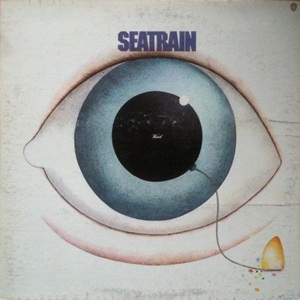
The fourth and final album by the Californian roots fusion band, a band to have previously boasted within its ranks both Peter Rowan and Richard Greene, sees Seatrain transformed into something entirely different. The LP was languishing in the bargain bin at Bradley’s Records in Doncaster in 1973 and I began to feel sorry for it. It might have been the unappealing cover art together with the six strange looking mustachioed musicians on the reverse that might very well have scared possible buyers off. Nonetheless, something obviously caught my attention and made me want to take it home and care for it, something I continue to do all these years on. The LP features a rather tight version of Bob Dylan’s “Watching the River Flow”, together with a strange little ghost story, a delightful song from the pen of Andy Kulberg called “Scratch”. Fortunately, despite its cheap price tag, this was the only scratch on it.
316 | Boz Scaggs | Boz Scaggs | Atlantic K 40419 | 1971
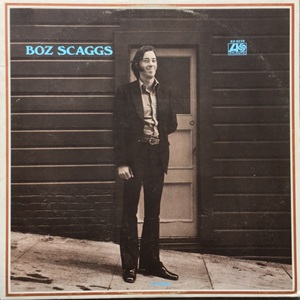
After leaving the Steve Miller Band, Boz Scaggs sought the assistance of his old friend Jann Wenner, editor of Rolling Stone Magazine, who helped secure a recording contract with Atlantic Records, the first release for the label being his eponymous second album, which could be described as a ‘blue-eyed soul classic’. Following his actual debut LP simply entitled Boz, recorded in Sweden six years earlier, this second album was recorded at the Fame Studios in Muscle Shoals and was produced by Scaggs and Wenner, along with Marlin Greene, who employed some of the studio’s skilled session musicians, most notably slide guitarist Duane Allman, credited as Duane ‘Slydog’ Allman on the sleeve, whose contribution cannot be overstated. The album is both gritty and deeply soulful, with a nod towards Scaggs’ country and blues roots, especially on such songs as Jimmie Rodgers’ “Waiting For a Train” and the twelve-minute blues workout, “Loan Me a Dime”.
315 | Vinegar Joe | Rock ‘n Roll Gypsies | Island ILPS9214 | 1972

I found this LP in the bargain bin beneath the Music and Video Exchange shop in Notting Hill, the one close to Kensington Palace. When the jazz/blues outfit Dada first came to my attention back in 1970, a track from the band’s debut album which appeared on the Age of Atlantic sampler album, I would have been completely unaware of Elkie Brooks, who wouldn’t pop up on my radar until the band morphed into Vinegar Joe shortly after the arrival of Robert Palmer to their ranks. The cover of Vinegar Joe’s debut self-titled album was illustrated in plasticine in a similar fashion to the aforementioned sampler album. A short lived band, Vinegar Joe launched the careers of both Brooks and Palmer who both went on to enjoy successful careers, yet neither musician ever really demonstrated the raw, almost feral stage presence of Vinegar Joe’s early days, opting for a more MOR image, certainly in the case of Brooks. Released under the watchful eye of Ahmet Ertegun in the US (Atlantic) and Chris Blackwell in the UK and elsewhere (Island), Vinegar Joe’s brief blip on the radar remains memorable, as does the lively cover artwork, a rare live shots only Hipgnosis design.
314 | Glencoe | Glencoe | Epic S EPC 65207 | 1972
The Top Rank on Silver Street in Doncaster had two entirely different identities in the late 1960s and early 1970s, three if you count the teenybopper Saturday morning extravaganza known as the Saturday Morning Dance Club, where you could hear some of the most abysmal chart hits imaginable by Dave Dee Dozy Beaky Mick and Tich, The Marmalade and Pickettywitch. The popular night club had the usual Tamla Motown and Northern Soul-drenched weekends that were often packed to the rafters and always ended up with a punch-up around the back between rival mods, rockers, suede heads, skinheads or whatever other heads were about at the time. However, the Top Rank was also home to the Prog Rock night on Mondays and also provided a venue for a long list of visiting bands. Pink Floyd played at the venue, recreating “Alan’s Psychedelic Breakfast” onstage. David Bowie played there twice during the Hunky Dory period. One night three bands played, whose collective names added up to only eight letters; Yes, If and Egg. The Edgar Broughton Band spat from the stage in pre-punk days, Mott the Hoople played on the rotating stage the same week “All the Young Dudes” entered the charts and I lost count of how many times I saw the Welsh hard rock band Budgie there. Curved Air, Fairport Convention and even the Electric Light Orchestra showcased their eponymous LP there. One or two bands came and went leaving only memories and the odd LP I managed to collect along the way. One such band was Glencoe, featuring notable bassist Norman Watt-Roy, fresh out of The Greatest Show on Earth and prior to his work with Ian Dury and the Blockheads, whose self-titled debut LP I would listen to frequently back in the day. “Airport”, “Telephonia” and “Sinking Down a Well” remain favourites.
313 | Neil Young | After the Gold Rush | Reprise RS 6383 | 1970
The third solo album by Neil Young was released almost simultaneously with albums by the other three members of his then band, David Crosby, Stephen Stills and Graham Nash, yet this LP is probably the most memorable. Crosby Stills Nash and Young had just scored a worldwide hit with the album Deja Vu and had made a successful appearance at the Woodstock Festival the year before. The album was written and recorded in just three weeks after a period of writer’s block and was hugely influenced by a screenplay Young had recently read, written by the actor Dean Stockwell for a potential film project to be directed by Dennis Hopper. Although the film was never made, Young decided to use these songs on the album his record company was urging him to produce, which also included the one cover, Don Gibson’s country crooner “Oh Lonesome Me”. Had the movie been made, we might have had a clearer idea of the actual meaning of the title song. Years later, we are still puzzled by the lyrics of the song, although the song as a whole, which is essentially a couple of minutes of Young’s inimitable voice and piano accompaniment, lifted towards the end by Bill Peterson’s sorrowful flugelhorn, is possibly as good as it gets.
312 | McDonald and Giles | McDonald and Giles | Island ILPS 9126 | 1970
I think it was the sleeve on the McDonald and Giles LP that first caught my attention, being probably more impressed with the musician’s girlfriends than the two Herberts pictured on the gatefold sleeve, in much the same way as I was always more intrigued with Liccy and Rose on the Incredible String Band LP sleeves. Once again, it was the Island label that also caught my attention, at a moment in time when everything on the label seemed to be crucial listening (well almost). Today in record stores up and down the country, this LP can usually be found in the box marked ‘pink label’, which almost guarantees that it would also contain LPs by the likes of Fairport Convention, John Martyn, Amazing Blondel, Traffic, Free and King Crimson, the band that Ian McDonald and Michael Giles had left before recording this album, the duo’s only release. McDonald and Giles also features contributions from Peter Giles, Steve Winwood and Michael Blakesley, who played trombone on “Tomorrow’s People”.
311 | Amazing Blondel | Fantasia Lindum | Island ILPS 9156 | 1971
There have been at least three distinctive Blondel periods in my life, first the initial discovery of the band back in 1972, then the re-discovery around 1979 and then finally the re-re-discovery, when the original trio reformed for a handful of gigs. The first of these discoveries occurred in the early 1970s when I found the band’s fourth LP England languishing in Ken’s Swap Shop on St Sepulchre gate in Doncaster, a second hand shop that always seemed to stock interesting cast offs. I thought the three musicians looked the coolest on the planet, despite their strong inclination for period costumes on their album sleeves. The re-discovery occurred just after I moved into my first house with my new wife, where I soon discovered that our next door neighbour was also a big Blondel fan, who had four of the band’s LPs. We competed to see who could play “Seascape” the loudest through the walls. I subsequently discovered all the band’s albums and soon found myself seeking out all the rarities as well. The final re-re-discovery was when the original trio of John Gladwin, Eddie Baird and Terry Wincott reformed to play a few gigs in the late 1990s and I was finally able to see the band for the first time live on several occasions. Fantasia Lindum includes one of the band’s most impressive moments in the “Fantasia Lindum Suite”, which takes up the entire first side, culminating in the heart stopping vocal crescendo of “Celestial Light”. Simply gorgeous.
310 | James Taylor | James Taylor | Apple SAPCOR 3 | 1968
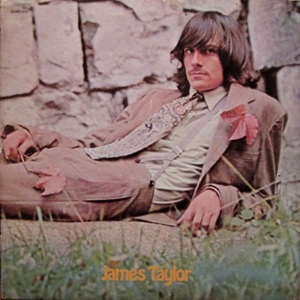
Produced by Peter Asher, James Taylor’s first LP was released on the newly established Apple label, using some of the studio time already booked for The Beatles as they recorded tracks for what was to become the White Album, in fact both Paul McCartney and George Harrison contributed to this album. Visiting London, the Boston-born singer songwriter found himself auditioning at The Beatles’ Saville Road office and was immediately signed to Apple and subsequently became the first non-British artist to release a record on the label. Among one or two of the songs that would become familiar to James Taylor’s future repertoire, were one or two songs to feature orchestral arrangements by Richard Hewson, which sound a little dated now. The album also features a song that may have inspired George Harrison’s best loved song, “Something in the Way She Moves”.
309 | Gram Parsons | Grievous Angel | Reprise K 54018 | 1974
I can’t actually claim to have been a Gram Parsons fan when this album was first recorded back in the Summer of 1973, despite being very much aware of the singer through his work with both the Flying Burrito Brothers and The Byrds. It would be shortly after Parsons’ untimely death that the name began to have some resonance, mainly due to a greater awareness of Emmylou Harris throughout the 1970s, a singer very much associated with Parsons. Gram sadly didn’t get to see the release of this album in early 1974 having died of a morphine and alcohol overdose in the Summer of ‘73, becoming yet another in a growing list of rock and roll casualties. Parsons wasn’t in good shape when he recorded this album and much of the material was made up of hastily put together odds and ends, but despite this, the album showcased some highly memorable moments, such as the heartfelt duet between Parsons and Harris on Boudleaux Bryant’s tender “Love Hurts”, a song made famous by the Everly Brothers over a decade before.
308 | Incredible String Band | Wee Tam | Elektra EKS 74036 | 1968
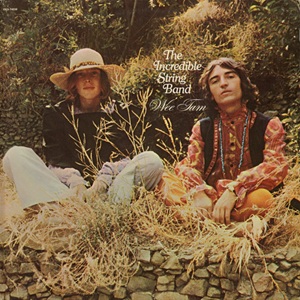
Getting to know the Incredible String Band’s recorded output came in a somewhat random order, beginning with my first discovery of Mike Heron’s “Mercy, I Cry City” on an Elektra sampler LP to buying my first full length ISB LP Changing Horses from a second hand shop in Doncaster, then eventually to collecting the lot. Both Wee Tam and The Big Huge came to me as two single American imports, though the two LPs were in fact released as a double album in the UK back in 1968. Wee Tam is the fourth album by the band, following the band’s self-titled debut, their slightly more psychedelic The 5000 Spirits or Layers of an Onion and the extraordinary The Hangman’s Beautiful Daughter, and offers a varied selection of songs and styles, with founders Robin Williamson and Mike Heron very much at the helm, together with sporadic appearances by girlfriends Rose Simpson and Licorice McKechnie. Both Wee Tam and The Big Huge feature Heron and Williamson on the cover, sitting in Frank Zappa’s garden in Laurel Canyon.
307 | Danny O’Keefe | O’Keefe | Signpost SG4252 | 1972

I first heard the opening song to this album, “Good Time Charlie’s Got the Blues”, performed by the Rotherham singer Roy Machin at the Rockingham Arms in Wentworth sometime in the early 1980s. I liked the song so much that I immediately sought out the album it was lifted from, Danny O’Keefe’s second album O’Keefe. The song was clearly the best song on the album, though there’s also a pretty faithful reading of the old Hank Williams song “Honky Tonkin’” included amongst the originals. This discovery eventually led to further investigation, with a couple more albums later joining the collection, 1975’s So Long Harry Truman and 1977’s American Roulette. Fifty-odd years on and “Charlie” still sounds as fresh as it did when O’Keefe initially recorded it, having been subsequently recorded many times, most notably by Elvis Presley, Willie Nelson, Charlie Rich, Leon Russell, Jerry Lee Lewis, Chet Atkins, Dwight Yoakum, Waylon Jennings, Charlie McCoy and Mel Torme.
306 | Captain Beefheart and the Magic Band | Strictly Personal | Liberty LBL 83172 | 1968
It was sometime in the early 1970s that I heard “Son of Mirror Man – Mere Man” on the John Peel Show. I’d never heard anything quite like it, though I’d read several articles in the music press about the decidedly odd Don Van Vliet. Again, I needed to investigate, though further investigation in those days meant much toil, expense and disappointment. I hate to use the old fart phrase that ‘the kids don’t know they’re born these days’ but it’s a fact, that with Spotify, YouTube and various Social Media platforms and thousands of other online services, legal or illegal, can I stress that the kids don’t know they’re born these days! Anyhoo, back to the point, I located Strictly Personal and dutifully wore the bugger out. It was my first Beefheart album and it remains a firm favourite. “Ah Feel Like Ahcid” is a fine opener, which sounds like an improvised blues, with some nicely syncopated licks courtesy of Alex St Clair’s bottleneck guitar and the Captain’s harp. Confusingly, the second track in is “Safe as Milk”, the same title having been used for Beefheart’s debut album released the previous year. One of the chief criticisms of Beefheart’s second album was the overuse of phasing heaped on by producer Bob Krasnow, though I have to confess it was such an effect that initially attracted me to Beefheart on “Mere Man”. Beefheart’s humour is evident on “Beatle Bones and Smokin’ Stones”, as he and the Magic Band pay homage to their British counterparts. If anything, Strictly Personal stands as a perfect bridge between the relatively ‘safe’ Safe as Milk and the ultimate statement in all things weird Trout Mask Replica, which effectively changed the game.
305 | Pretty Things | Freeway Madness | Warner Bros K 46190 | 1972

I always found this band’s moniker rather amusing; a more misleading name you couldn’t possibly imagine. The Pretty Things were still going strong when I met up with front man Phil May back in 2011, together with guitarist Dick Taylor, confirming that age had done nothing to enhance their proposed aesthetic credentials. Despite this small detail, the band’s output, from their early blues days through their adventurous pop opera period and on through their early 1970s rock heyday, had always provided one or two surprises over the years. Claiming their album SF Sorrow to be the first ever rock opera, which indeed popped up a few months prior to The Who’s legendary Tommy, Pretty Things rode that particular wave of success, their credentials serving them well through the next decade, where their rock oriented fare made some meaningful headway. Freeway Madness came along in the early 1970s amidst other such albums, with even John Peel playing the riff-laden “Onion Soup” on his late night show, complete with the ”Another Bowl” coda, prompting a visit to a Doncaster record shop shortly afterwards. Judging by the scribble on the dust sleeve, I picked up my copy in 1973 from a bargain bin in Bradley’s Records and it still comes out to play over half a decade later.
304 | Van Morrison | Astral Weeks | Warner Bros K 46024 | 1968

I first discovered Astral Weeks slightly later than most, just about the time we were all waiting around for the arrival of the so-called Belfast Cowboy’s sixth album release Saint Dominic’s Preview in 1972. Waiting for this LP to arrive gave me time to look back over Morrison’s back catalogue and Astral Weeks soon became the first to find its way onto my shelf. I was immediately blown away by the sound and the feel of these songs, which I played over and over, undecided which was my favourite track. One minute it would be “Madame George”, the next “Sweet Thing” or what about the title song which opens the record? I knew little of the man, but couldn’t imagine sitting down with him for a chat, even back then. Lyrically, the songs have a sort of stream-of-consciousness style, which suits the general themes. In the days when my siblings, or occasionally when dad, would pass my bedroom, I would often close the door when some of the more challenging delights were currently playing, not so much out of embarrassment, but to avoid unnecessary ridicule; Kevin Coyne for instance, or Syd Barrett or definitely some of Zappa’s more testing material. In the case of this album, I was quite happy for any of those ears to catch a bit of these songs; well perhaps I might’ve skipped over “Beside You”.
303 | Little Feat | Feats Don’t Fail Me Now | Warner Bros K 56030 | 1974
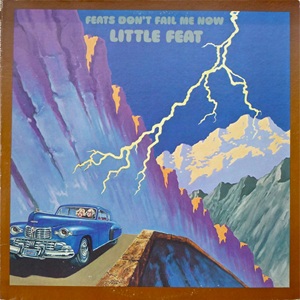
Apparently a great live band, though regretfully I didn’t get to see the band when they came over to the UK, while very much in the peak of their career. Like so many of their UK fans, I got my first look at the band when they appeared on the Old Grey Whistle Test around the time of this album release, though I was already aware of the band having heard the Sailing Shoes album. One of the songs they performed on the show was “Rock and Roll Doctor”, which opened Feats Don’t Fail Me Now album, whilst a little later became familiar with “Oh Atlanta”, via a generously cheap Warner Bros sampler called The Warner Brothers Music Show. This was enough to spark an interest in the band that I still to today claim was one of the greatest bands in the history of great bands. This was largely due to Lowell George’s voice and peerless slide guitar playing, though by this time Paul Barrere’s obsession with Funk was beginning to take the band out of my area of interest. George’s “Down the Road”, “The Fan” and the aforementioned “Rock and Roll Doctor” remain firm favourites, though I should mention the closing mash-up of two previous Feat numbers, “Cold Cold Cold/Tripe Face Boogie”, though for the definitive version of “Tripe”, look no further than the band’s superb double live set Waiting for Columbus, released four years later.
302 | The Butterfield Blues Band | East-West | Elektra EKL-315 | 1966
There are several possible routes to my first encounter with the Butterfield Blues Band. The initial discovery may have had something to do with seeing pictures of Mike Bloomfield on stage with a cool looking Bob Dylan at the 1965 Newport Folk Festival, as the Hibbing Bard first ‘went electric’, or perhaps it had something to do with hearing about Joe Boyd’s first encounter with Richard Thompson, performing this album’s title track as a sprawling blues jam at the UFO Club a little later. It’s more than likely though, that I may very well have first heard the band on Alexis Korner’s iconic radio show one Sunday evening in the late 1970s, sandwiched between something by Sam Chatmon and Sweet Honey in the Rock. What is undisputed though, in my fading and considerably unreliable memory, is that East-West was the first Butterfield Blues Band LP I ever bought, after finding it languishing in one of the cheap bins at Bradley’s Records in Doncaster around the same time. The imported copy on the Elektra label was one of the first blues albums I ever bought and it still comes out for a play occasionally. Hearing Butterfield’s sneering harmonica for the first time on the opener “Walking Blues” was quite a revelation at the time, prompting me to buy my first blues harp. The harmonica riff on “Work Song” could also be found in Bert Jansch’s interpretation of Davy Graham’s guitar workout “Anji” on his eponymous debut released the previous year. But it’s perhaps the thirteen minute improvisation “East-West” that this album is best remembered for, where eastern influences infiltrate this iconic blues instrumental.
301 | Stevie Wonder | Innervisions | Tamla Motown STMA 8011 | 1973
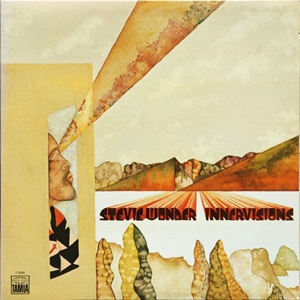
It was something of an unexpected surprise to a young music nut still getting to grips with a mixture of Progressive Rock, Hard Rock and Folk Rock, to have a friend recommend a Stevie Wonder LP. Replacing the much played Larks’ Tongues in Aspic LP with Innervisions, was a worthwhile experiment, as Stevie Wonder’s confident groove took a hold. It was unexpected, but infinitely rewarding. Although the Motown star had already made great strides in his more experimental arrangements with such albums as Music of My Mind and Talking Book, both released the year before Innervisions , it was this album that made us rock aficionados sit up and take note. There was something appealing in Stevie Wonder’s use of electronics, in collaboration with Tonto’s experimental team of Malcolm Cecil and Robert Margouleff, whose participation lifted the arrangements to a new level throughout. “Visions” wasn’t too far removed from some of the softer Progressive Rock arrangements at the time, certainly a world away from “Fingertips” and “My Cherie Amour” at least. The album includes a daring performance of “Living for the City” which is a difficult but compelling listen, even dare I say, a compulsory listen. Unafraid to address the social climate of the early 1970s, Stevie Wonder could do this with empathy and compassion and no one could really argue with that. This is the greatest of Stevie Wonder’s albums and crucial to any respectable record collection.
300 | The Beatles | Revolver | Parlophone PCS 7009 | 1966

Probably the pivotal moment of the Beatles’ short moment in the spotlight, where things became much less Fab and much more interesting, a time of rapid change. “Tomorrow Never Knows” was the defining moment, when the studio became just as important an instrument as the guitar or piano. Backwards guitars and tape loops were liberally employed as Lennon and McCartney experimented with their song writing at their leisure. Though it was state of the art music making and very much in tune with the times, older forms were also simultaneously employed; the string quartet replacing the band altogether on “Eleanor Rigby” for instance, plus the use of the sitar, a classical Indian instrument, yet in the hands of the Beatles together with their empathetic producer George Martin, it all fitted hand in glove with the shock of the new. Some say the album might have benefitted with the exclusion of “Yellow Submarine”, though if it wasn’t there, well it wouldn’t be Revolver now would it? The band’s old pal from their Hamburg days, Klaus Voorman, provided Revolver with its iconic cover artwork, a perfect exercise in artistic symbiosis. Arguably the Beatles best album.
299 | Robert Wyatt | Rock Bottom | Virgin V 2017 | 1974
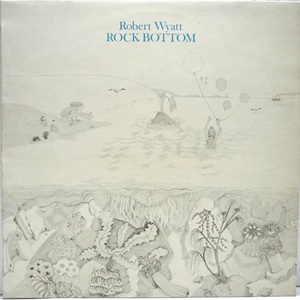
Produced by Pink Floyd’s Nick Mason, Robert Wyatt’s second solo effort is notable not only for the brilliant compositions, but for being the moment when Wyatt’s riotous Keith Moon-like behaviour came to an abrupt end, as the drunken ex-Soft Machine drummer fell from a fourth-floor window, an incident that would see to it that he regretfully remained in a wheelchair from that point on. Rock Bottom was in preparation during this period and some of the material is based on a mind coming to terms with a difficult life ahead. I was having my own difficult period too, namely ‘17’, the worst age of all and I’d already entered a world of all things Soft, Tubular or Virginal, with particular interest in Fred Frith. The avant-garde music of the time was certainly somewhat more interesting than anything on the mainstream front, despite Johnny Walker’s efforts to wean listeners off Donny Osmond and David Cassidy and onto The Eagles and The Doobie Brothers. I think I took it a step further and chose Henry Cow and the Softs as the way to go. Wyatt made a huge impression on me at the time and seemed to bridge the gap between my early teen life and my oncoming adulthood by recording an almost tongue-in-cheek version of “I’m a Believer”, a song I loved as a kid by The Monkees. The rest is history, with some of Wyatt’s work having been re-visited by The Unthanks, in fact, the only time I ever met up with Wyatt was after an Unthanks gig in Lincoln back in 2009. Lovely man.
298 | Buffalo Springfield | Last Time Around | Atco 228024 | 1968
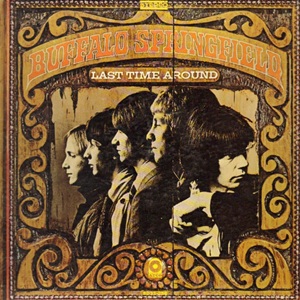
By the time I first heard Buffalo Springfield, it was all pretty much over for the band, though only just the beginning for the band’s three core members, Stephen Sills, Neil Young and Richie Furay. Hearing “Broken Arrow” and its heavily textured and complex piecing together of different sections, made me want to discover more. I went in search of the band’s albums and soon discovered they counted three, Last Time Around being the final one. Along with Dewey Martin, Bruce Palmer and Jim Messina, the band pretty much knew it was their last hurrah before the band splintered, Stills going on to form Crosby Stills Nash, with Young joining later after a brief spell at going it alone, and Furay going on to form Poco with Messina. The album was actually put together by Messina and Furay for contractual reasons, and the band only appear together on “On the Way Home”, which beggars the question whether Last Time Around could be considered a Buffalo Springfield album at all. Despite this, the album was well received critically, with one or two favourable comments from such leading music scribes as Robert Christgau and Barry Gifford.
297 | Neil Young | On the Beach | Reprise K 54014 | 1974

After all the acclaim that Harvest received in 1972, assisted in no small part by the success of the single “Heart of Gold”, Neil Young bridged the gap between this and his next studio album, by releasing the mish-mash double soundtrack to his film Journey Through the Past, which has its moments, together with a live album, Time Fades Away, featuring his band the Stray Gators. By the summer of 1974, fans were ready to see what their ragged hero was capable of. Although On the Beach certainly had one or two fine moments, it was nowhere near as slick and accomplished as Harvest, something that would be followed in the same downward trajectory as the next release, Tonight’s the Night, recorded before On the Beach but released a good year later. Young courted a little controversy with “Revolution Blues”, which concerned the singer’s connection with one Charles Manson and his dune buggy brigade towards the end of the so-called Summer of Love, with his fellow musicians becoming increasingly nervous about performing the song live. Despite this, David Crosby and The Band’s rhythm section of Rick Danko and Levon Helm managed to put the track down on the album with no apparent fuss. The other notable thing about On the Beach is the comical sleeve photo shot, which features a Cadillac fender sticking up out of the sand next to some beach furniture, our hero standing close by looking out at the ocean. A world away from the bleak follow up’s sleeve.
296 | Blodwyn Pig | Ahead Rings Out | Chrysalis ILPS 9101 | 1969
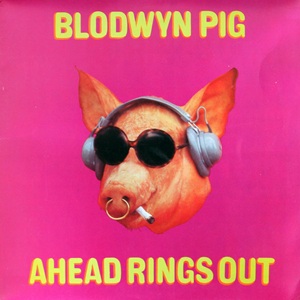
Ahead Rings Out is one of those pink label Island LPs that pop up every now and then in second hand record shop browsers or at record fairs up and down the country. This garish pink sleeve often jumps out between the Jethro Tull LPs, Blodwyn Pig being associated with the band after being formed by Tull’s original guitarist Mick Abrahams. Abrahams fell out with his former band mate Ian Anderson over musical differences and went on to form this short lived blues rock outfit in 1969. The comical sleeve motif, a tuned-in, turned-on sus scrofa domesticus wearing headphones, sunshades and a piercing through its snout, smoking something presumably illegal, was slightly risky for 1969, though Abrahams points out in the sleeve notes that if the cover didn’t appeal, the owner could always turn it into a couple of party hats. The sleeve perhaps doesn’t quite illustrate the bluesy numbers within, one or two of which are up there with the best, notably “Dear Jill”, apparently played on a seven-string guitar with a slide by Abrahams, a little like the Stones’ “Little Red Rooster” or John Mayall’s “Saw Mill Gulch Road”. Produced by Andy Johns and joined by Jack Lancaster on an assortment of flutes, saxes and violin, Andy Pyle on bass and Ron Berg on drums, the band makes one or two manoeuvres into free jazz territory, notably Lancaster’s explorative “The Modern Alchemist”, albeit with a blues base throughout.
295 | Traffic | John Barleycorn Must Die | Island ILPS 9116 | 1970
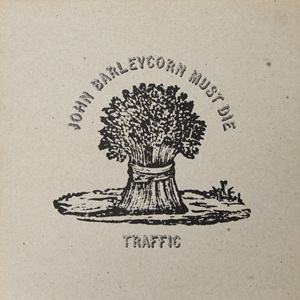
In the late 1960s and early 1970s it was difficult to keep up with Little Stevie Winwood. He’d already fronted the Spencer Davis Group as a fifteen-year old soul singer, then formed the rock band Traffic with Jim Capaldi, Chris Wood and Dave Mason, who churned out such psychedelic singles as “Paper Sun” and “Hole in My Shoe”, before settling into a critically acclaimed jazz rock outfit that went on to rub shoulders with the likes of Free, King Crimson and Jethro Tull on the burgeoning Island label. After Mason left the band, Winwood enjoyed a very brief spell in the short-lived supergroup Blind Faith with Clapton, Baker and Family man Rick Gretch, before regrouping with the two remaining members of Traffic, Capaldi and Wood, to record the band’s fourth album, which began as a Winwood solo project but soon became a full blown Traffic release. Among the jazz fusion of “Glad” and “Empty Pages”, the soulful rock of “Every Mother’s Son” and the bluesy “Stranger to Himself”, the band surprised just about everyone with a veritable show stopper, a delicate reading of the traditional folk song “John Barleycorn”.
294 | The Beatles | The Beatles | Apple PCS 7067/8 | 1968
Though I was a big fan of the Beatles from almost the beginning, certainly affected (in a good way) by some of the group’s early hits, notably “All My Loving”, “Can’t Buy Me Love” and “We Can Work it Out”, it wasn’t until the early 1970s, when the boys had parted company, did the love affair really take off. I felt duty bound to add all of the band’s albums that had previously escaped me, or to be more accurate, those I couldn’t afford as a kid, and on the top of the list was the one known as the White Album. I picked up my second hand copy from Sheffield’s much missed cave of earthly delights Rare and Racy, the sleeve of which still bears the shop’s famous trademark stamp. I remember at the time having just read Vincent Bugliosi’s Helter Skelter paperback, which featured references to some of the songs on this album and I was intrigued enough to find out whether a good listen to it would turn me into a serial killer or not. Fortunately, listening to such songs as “Julia”, “Mother Nature’s Son” and “Blackbird” kept me on the straight and narrow, although I have to confess “Revolution #9” did make me want to pick up the bread knife on occasion. The album remains a bit of a mish-mash of styles, much of it conceived during a visit to India, yet it has garnered universal praise in some quarters.
293 | Creedence Clearwater Revival | Cosmo’s Factory | Liberty LBS 83388 | 1970
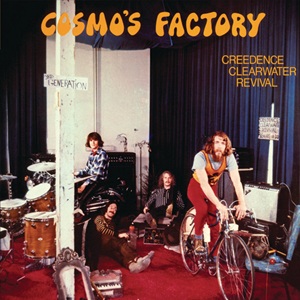
Creedence Clearwater Revival released no fewer than six albums before the end of 1970, that’s roughly two per year, the band having released their self-titled debut in the summer of 1968, though the band’s beginnings go as far back as 1959 under the name The Blue Velvets. By the time of Cosmos’ Factory, the band had produced no fewer than ten hit singles, from “Suzi Q” in 1968 to “Fortunate Son” in the autumn of 1969. The hits continued after the release of this album, notably “Travelin’ Band”, “Who’ll Stop the Rain”, “Up Around the Bend”, “Run Through the Jungle”, “Lookin’ Out My Back Door” and “Long as I Can See the Light”. In addition to these successful six singles, the album also featured such notable inclusions as “Ramble Tamble”, “Before You Accuse Me” and their re-working of the Marvin Gaye hit “Heard it Through the Grapevine”. Cosmo’s Factory is named for the rehearsal space the band had been using (The Factory) and drummer Doug ‘Cosmo’ Clifford’s nickname. It remains one of the band’s most accessible albums.
292 | Jefferson Airplane | Takes Off | RCA INTS1476 | 1966

The debut album by Jefferson Airplane was first released in 1966 around the same time as Pet Sounds, Revolver, Fifth Dimension, Freak Out and Blonde on Blonde, a year of bold experimentation and musical growth, while the England football team scored their one and only World Cup victory. This album was produced prior to the arrival of Grace Slick, the female voice at the time belonging to Signe Toly Anderson, who appears on the sleeve with the then customary pigtails (see Jim Queskin Jug Band period Maria Muldaur or early Joan Baez), who was later replaced by Slick, who in turn would go on to be the band’s focal point for years to come. Jefferson Airplane Takes Off features one or two songs that would remain in the band’s set through their most prominent years, notably Marty Balin’s “It’s No Secret”, a cover of the Nashville Teens hit “Tobacco Road”, and a rather funky take on Memphis Minnie’s “Me and My Chauffeur Blues”. The album was also the first and final record to feature drummer Skip Spence who would be replaced shortly afterwards by Spencer Dryden. Not as outstanding as its follow up Surrealistic Pillow.
291 | David Ackles | American Gothic | Elektra K 42112 | 1972

There’s something immediately theatrical about the American singer songwriter David Ackles’ third album release American Gothic, an album recorded in London with fellow songwriter Bernie Taupin at the helm. The title song, which kicks off the album, could be a mixture of a dark Brechtian theatrical piece with a Grant Wood backdrop, as the title might suggest. Once the drama subsides though, “Love’s Enough” soothes the senses like anything you might imagine from the pen of Burt Bacharach. Robert Kirby offers some lush arrangements, as he did for many an obscure artist at the time, not least on albums by Nick Drake, Vashti Bunyan, Shelagh McDonald and Keith Christmas. The eleven original songs here are all written by Ackles, half of them first rate ballads and half potential show tunes that unfortunately miss their mark. American Gothic seems to look like a fifty year-old artefact still searching for its audience, while David Ackles sounds like a serious artist bogged down by the lure of the footlights.
290 | The Band | Music From Big Pink | Capitol ST 2955 | 1968
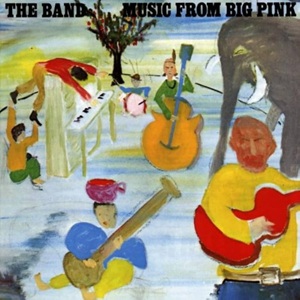
I can’t decide what appeals to me the most about The Band, whether it’s the music they created in the late 1960s or just the idea of five strange looking musicians hanging out together, making music in a pink house in the quiet surroundings of upstate New York. Music From Big Pink was actually recorded in studios in both Los Angeles and New York but the songs were pretty much created in that small rural community of Woodstock, or in fact nearby Saugerties, New York. The songs were written and worked up in the basement of that pink house, the same one used by Bob Dylan (who painted the sleeve picture here) to record the songs that eventually emerged as The Basement Tapes in 1975, though acetates of the songs had been circulating in bootleg form for quite some time earlier. Music from Big Pink marked the start of the critically acclaimed era of The Band, formerly known as The Hawks, the backing band of Arkansas-born rockabilly singer Ronnie Hawkins, and whose work would influence generations of musicians to come. The LP is perhaps best remembered for such songs as “The Weight”, “This Wheel’s on Fire” and “I Shall Be Released”, but the conversation shouldn’t stop there. “Tears of Rage”, “In a Station” and “Chest Fever” also provide moments of pure genius.
289 | Free | Fire and Water | Island ILPS 9120 | 1970

In 1970, you would probably have been either a hermit living in the remote Motuo County in China or perhaps a crown court judge, if you were to claim you hadn’t heard of the British rock band Free. “All Right Now” seemed to be on the radio constantly, which in those days would be located under the bed covers, tuned into Radio Luxembourg (or almost tuned in, as the case might be). The same year saw the extremely young band play the Isle of Wight Festival alongside Jimi Hendrix, The Who, The Doors, Leonard Cohen and Joni Mitchell amongst others, and lest we forget, they almost stole the show. Fire and Water, the band’s third album, was among the first few LPs I ever owned and I still consider it a firm favourite. Having been used to the single release version of “All Right Now”, it initially came as a surprise to find the extended version on this LP that featured a little more Kossoff, which is never a bad thing. There’s no other singer in the world quite like Paul Rodgers, whose soulful voice permeates the seven songs, notably the title song, “Mr Big” and the aforementioned “All Right Now” in particular. It was just a shame that Mr Kossoff had his finger on the self-destruct button, as did many of his contemporaries at the time. A note on the cover shot, this was precisely how to show a young band in their prime. Perfect.
288 | The Mothers of Invention | Freak Out | Verve SVLP 9154 | 1966
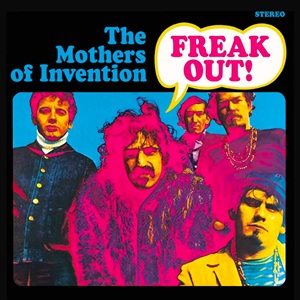
If we were to consider some of the other contemporary pop music that was around in the mid-Sixties, The Mothers of Invention would probably stand out as something decidedly odd by comparison. The band’s debut album Freak Out, was not only very different from others of the period, Aftermath, Pet Sounds, Revolver, for instance, it was also remarkable for its daring content, its garish sleeve design, its bold musical experimentation, and the fact that it was possibly the earliest double album in rock music, though Dylan’s Blonde on Blonde was actually released a week earlier. With Frank Zappa very much at the helm, the Mothers at the time consisted of Zappa on guitar, plus vocalist Ray Collins, bassist Roy Estrada, guitarist Elliot Ingber and drummer Jimmy Carl Black, who each brought their own individual character to the recordings, enhanced further by a bunch of session musicians. Freak Out feels like a concept album, with various intermingling styles poured into the mix, together with a theme that appears to lampoon the 1960s Summer of Love with a bit of a wake up call. A reality check of sorts from Planet Zappa. Kicking off with the bold rock sound od “Hungry Freaks Daddy”, followed immediately by the equally accessible “I Ain’t Got No Heart”, things become more interesting with “Who Are the Brain Police”, which upon first encountering, feels like a completely new territory in music altogether, a song from a Dystopian Broadway musical perhaps? This looked like the turning point on the album, where things would begin to become increasingly bizarre at every term. Not the case, as the band immediately return to 1950s doo-wop with the convincing “Go Cry on Somebody Else’s Shoulder”, demonstrating the band’s vocal command when they choose to employ it. Zappa reaches into straight forward protest territory with the determined “Trouble Every Day”, which is followed by the extraordinary “Help I’m a Rock”. There was nothing quite like this anywhere else in 1966, though I’m sure it flung open the doors for things to come. The album culminates with the twelve-minute experimental workout “The Return of the Son of Monster Magnet”, which sounds like the music that might be played on the Starship Enterprise. Along the same lines as the Beatle’s later “Revolution 9”, but infinitely better. Beam me up Scotty.
287 | Tonto’s Expanding Head Band | Zero Time | Atlantic K 40251 | 1971
The first time I came across Zero Time, the debut album by Tonto’s Expanding Head Band, was while flicking through a small box of records at a friend’s bedsit in 1973. She had a small collection of LPs, which included the first Wishbone Ash album, her hero Jimi Hendrix’s Hendrix in the West, and this, which for then, was quite an eclectic mix. These days I can’t listen to this LP without remembering those days, the many repeated plays on the Dansette, our many conversations and the consistent aroma of burning incense from the joss sticks that burnt throughout the flat. Electronic music was still in its infancy, though Stevie Wonder had begun to incorporate the sound of Tonto in his own work, eliciting the help of synth pioneers Malcolm Cecil and Robert Margouleff to create a new sound. Tonto, which is an acronym of The Original New Timbral Orchestra, only made a couple of albums in the early 1970s, though their work stretched to advertising and other enterprises throughout the decade. The six pieces that make up the album are varied enough to signify explorative territory, from the easily accessible opening piece “Cybernaut”, a fine melody with an eastern flavour, to the Kraftwerk-like “Jetsex”, which wouldn’t have been out of place as incidental music from Dr Who. Cecil and Margouleff, who we are introduced to visually via a fisheye shot on the back cover, standing next to their Tonto creation, could be playful in their music making, certainly by the time of the album’s one and only follow up release It’s About Time, three years later, but also on such material as “Timewise”, the closing track on side one of this album. Almost entirely instrumental, Zero Time has one vocal performance, though filtered through a synthesiser, “Riversong”, written by the American author Tama Starr. The album also has an impressive psychedelic inner gatefold design, featuring Isaac Abrams’ imaginative floral painting Seed Dream. By the end of the next decade electronic music had covered much ground, with thousands of albums covering many genres of music, but in 1971, Zero Time was something rather new and unique.
286 | Captain Beefheart and His Magic Band | Trout Mask Replica | Straight STS 1053 | 1969

I might be mistaken here, but I don’t think I’ve ever come across anyone who immediately fell in love with Captain Beefheart’s challenging third album, though I have come across those who say it went on to become one of their all-time favourite albums, me included. The first time I heard anything by the Captain, it would’ve been “Son of Mirror Man – Mere Man” from his previous album Strictly Personal, when it was played on the John Peel show late one night in the early 1970s. I wanted more of the same, yet Trout Mask Replica wasn’t it, that’s for sure. This Frank Zappa-produced double album is an assault on the ears and senses pretty much from the start to the finish, to which many a listener’s reaction would’ve been somewhere along the lines of WTFWT? Many don’t get through it in one sitting, or in this case four sittings, with at least three visits to the turntable, yet we return to it occasionally in the hope of discovering something new. The musicians who contributed to this album are many and varied, though the core Magic Band was comprised of Don Van Vliet (Captain Beefheart), John French (Drumbo), Jeff Cotton (Antennae Jimmy Semens), Bill Harkleroad (Zoot Horn Rollo), Mark Boston (Rockette Morton) and Victor Hayden (The Mascara Snake), all of whom spent at least eight months rehearsing the material prior to the recording in trying circumstances. If the album maintains any importance whatsoever in the mid-2020s, then perhaps it’s the influence it had on many of today’s leading names in music from Tom Waits and PJ Harvey to John Lydon and Pere Ubu.
285 | Alice Cooper | School’s Out | Warner Bros K 56007 | 1972

I left school in the summer of ‘72, to the strains of “School’s Out”, the title song from the LA band’s fifth album. The iconic lyrics spelled out exactly how I was feeling at the time. ‘No more pencils, no more books, no more teachers’ dirty looks’; School was indeed ‘out forever’. This was the first record I’d heard of Alice Cooper since “Under My Wheels” appeared on the Warner Bros sampler LP Fruity, the year before, which led to me checking out the band’s previous album Killer, the first of the band’s albums to attract my attention. Schools Out was really the band’s breakthrough album in the UK with the band making several appearances on Top of the Pops during this period, with the band’s titular leader brandishing a sword, as mascara dripped spider-like down his face. Dad’s expression of utter disgust hadn’t been this vivid since Arthur Brown’s appearance on the show a few years earlier. Apparently, Mary Whitehouse called for a total radio and television ban and Vince in turn sent her a bunch of flowers for all the additional publicity. The album came in a sleeve that resembled a school desk and original copies came with a pair of knickers. No wonder Mary Whitehouse was close to having one of her nose bleeds!
284 | Incredible String Band | Incredible String Band | Elektra EKS 7322 | 1966

It would be a good six years after the release of this album that I would discover the Incredible String Band for the first time, when I found a copy of Changing Horses, the band’s fifth album, in a junk shop on the outskirts of town. The Incredible String Band’s first outing featured the original line-up of Robin Williamson, Mike Heron and Clive Palmer, the latter who would leave shortly afterwards, just prior to Williamson and Heron garnering worldwide attention with the band’s next few albums, even appearing at the famed Woodstock Festival in the summer of ‘69. This album saw the burgeoning talents of all three members with such notable songs a Williamson’s “October Song”, Heron’s “Everything’s Fine Right Now” and Palmer’s “Empty Pocket Blues”. Years later, I managed to get my copy of this LP signed by an obliging Williamson and attempted to get Heron to sign it too, but he was ‘too busy’. Sadly, Palmer is no longer around to sign anything.
283 | Fotheringay | Fotheringay | Island ILPS 9125 | 1970

After stints with both Strawbs and Fairport Convention, Sandy Denny sought a new, if short lived, direction by forming her own band Fotheringay, named for a song she wrote for Fairport’s second album What We Did on Our Holidays. Teaming up with the Australian folk singer and former member of Eclection Trevor Lucas, who she would later marry, together with American Telecaster wizard Jerry Donoghue, Denny found a temporary vehicle for her songwriting credentials and highly distinctive alto voice. Added to the mix, there’s the fine rhythm section of Pat Donaldson on bass and Gerry Conway on drums, yet despite the band’s promise in 1970, the pressure for Denny to follow a solo career at a time when the singer songwriter was the flavour of the month, proved to be the Fotheringay’s nail in the coffin. The band therefore fell apart, paving the way for Denny’s solo career, whilst Lucas and Donoghue would join Denny’s previous outfit Fairport Convention briefly. Fotheringay, the album features a handful of fine Denny originals, including “The Pond and the Stream”, “The Sea”, “Nothing More” as well as her superb arrangement of the traditional “The Banks of the Nile”.
282 | Elton John | Empty Sky | DJM DJF 20403 | 1967

This debut solo album by Elton John was very much entrenched in the then popular singer songwriter mould, one man, one piano, and a bunch of backing musicians, but then crucially, the collaboration with lyricist Bernie Taupin, a working relationship that would continue right up to the present day. There’s little here to indicate that Elton would go on to become the huge star that he is today, certainly one of the biggest names in popular music, though the standard of songwriting is mature, even at this stage of his (and Taupin’s) career. The use of the harpsichord is prominent throughout the album, notably on the album’s finest moment, “Skyline Pigeon”, a hymn-like song that the singer would keep in his live repertoire for some time to come. A couple of members of the rock band Hookfoot helped out, Caleb Quaye and Roger Pope, together with Nigel Ollson on just the one song “Lady What’s Tomorrow”. Ollson would go on to be part of Elton’s regular band and feature on several of his subsequent albums. The singer appears in a sketch on the cover by Dave Larkham, which was changed for an inferior design for its US release a few years later, after the ‘star’ was finally discovered.
281 | Gong | Flying Teapot | Virgin V 2002 | 1973

Gong’s third album Flying Teapot is possibly best remembered for being the second album issued on the then newly established Virgin record label, released on the same day as the infinitely more well known Tubular Bells by Mike Oldfield, which had the catalogue number V1001. Flying Teapot, subtitled Radio Gnome Invisible Part 1, also saw the arrival of Chingford guitarist Steve Hillage, initially as a contributing musician to the first in a trilogy of albums, the others being Angel’s Egg and You, for which Hillage had by then joined as a fully-fledged member of the band. With one or two fun numbers, notably “The Pot Head Pixies”, a bizarre pop tune, with spoken interludes, which sound as if they might’ve been delivered by Spike Milligan’s ‘Eccles’ character, the album remains accessible and is probably also remembered for the twelve and a half minute title piece, a jazz workout reminiscent of Weather Report. The LP was issued in two different gatefold sleeve versions, both featuring cartoonish paintings of the titular teapot, designed by Dingo and Maggie, not to mention Tom Fu, as indicated in speech bubbles on the inner spread. It’s one of those LP sleeves that was found favour from those of us who read it on the bus ride home from the record shop.
280 | The Beatles | Sgt Pepper’s Lonely Hearts Club Band | Parlophone PMC 2027 | 1967
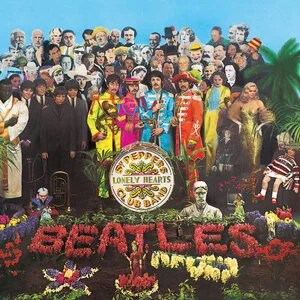
It would be pointless to describe this album or indeed formulate an opinion about its historic significance or its musical credentials, therefore perhaps I should reminisce instead upon the first time I heard the album, which was way back in the late 1960s. I was halfway up a ladder, pinning Christmas decorations to the main assembly hall walls at Balby High School for the end of term dance, when a classmate (Suzanne) placed the needle on this record, essentially to provide entertainment for us during our task. I remember looking over and seeing the sleeve resting against the side of the Dansette and realised it was none other than The Beatles, but then becoming somewhat confused at what I was hearing. Had she accidentally chosen the wrong speed? Was the Dansette faulty? Midway through “Lucy in the Sky with Diamonds”, my curiosity got the better of me, and I had to climb down from my perch in order to check. I was surprised to find that she had in fact put it on at the correct speed. This was my introduction to one of the most iconic records in popular music, a record that still gets played regularly, even more than half a century on. Any further details concerning the songs, the artwork or indeed the cultural significance of this record would only be necessary to readers arriving from Venus or other celestial locations.
279 | Paul Simon | There Goes Rhymin’ Simon | CBS 69035 | 1973

Paul Simon’s third solo album, which followed hot on the heels of his self-titled second album of the previous year, has possibly improved with age. There Goes Rhymin’ Simon is still highly listenable today, fifty years on, not least for such songs as “Kodachrome”, “Take Me to the Mardi Gras” and the superb “Loves Me Like a Rock”, featuring some spine-tingling harmonies by the Dixie Hummingbirds. Recorded in various locations, including Columbia Studios in New York City, A&R Recording in New York City, Malaco Recording Studios in Jackson, Mississippi, Morgan Studios in London and the legendary Muscle Shoals Sound Studio in Alabama, the album remains rich in variety. The album is also noted for a small contribution by the pre-Roches Maggie and Terre Roche, still working as a duo before sibling Suzzy joined to create the wonderful trio shortly afterwards. The two sisters are pictured in the centre spread of the gatefold sleeve. The gospel and Dixieland influences further emphasise Simon’s already present interest in multiple musical genres, something he would bring to full fruition with the landmark Graceland album thirteen years later.
278 | Bachman-Turner Overdrive | Bachman-Turner Overdrive | Mercury ACB 00224 | 1973

Not only had there been two Bachman-Turner Overdrive albums before “You Ain’t Seen Nothing Yet” burst onto every radio in the UK in the autumn of 1974, there had also been a couple of albums under the band’s previous life as Brave Belt, and The Guess Who before that. This was no overnight success by any means for Randy Bachman. The year before the success of that single, Bachman-Turner Overdrive released its debut album under that name, though I have to say I missed those two LPs upon their initial release. The Bachman-Turner Overdrive album is a bold debut, with plenty of fancy wah-wah guitar at play, certainly on the smouldering jazz-drenched “Blue Collar”, together with a mature ZZ Top sense of boogie throughout the album. Made up of siblings Randy, Tim and Robbie, together with Fred Turner, the band put Toronto back on the musical map once again in the early 1970s, “Gimme Your Money Please” being released later as a Canada only double A side single release with “Little Gandy Dancer”. International success came along a little later.
277 | Randy Newman | Sail Away | Reprise K44185 | 1972

When I first saw Randy Newman perform “Political Science” on the Old Grey Whistle Test, the singer resplendent in his Marc Bolan flowery shirt and wavy locks, I couldn’t quite believe my ears. ‘Is he kidding?’ I would ask. ‘He’s being ironic’ they would respond. But Americans don’t do irony do they? Randy Newman is the exception to the rule and much of his early work is loaded with humour, years before comedians would attempt to dissect Alanis Morissette songs. Sail Away is perhaps Newman’s boldest statement, with a handful of memorable songs that are still remembered and performed fifty years on from its initial release. Perhaps its success was due to the fact that several of the songs had already been released by other musicians, notably “Simon Smith and the Amazing Dancing Bear”, a hit for Alan Price five years earlier and “Dayton, Ohio – 1903” having been recorded by Billy J Kramer in 1969. It wouldn’t stop there though, with Tom Jones warbling a fairly unconvincing “You Can Leave Your Hat On” for the 1997 film The Full Monty. Randy Newman would go on to build a healthy career in film soundtracks, and like Ry Cooder who did precisely the same, deprived the rest of us of more of what they were really good at.
276 | Elton John | Honky Chateau | DJM DJLPH 423 | 1972
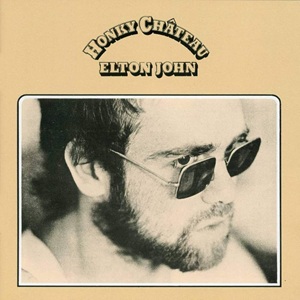
This was album number five for the famed British singer songwriter, released in 1972. Following on from the previous year’s Madman Across the Water and just ahead of 1973’s Don’t Shoot Me I’m Only the Piano Player, Honky Château boasts a couple of hit singles, the New Orleans influenced “Honky Cat” and perhaps one of Elton’s biggest ever numbers “Rocket Man (I Think It’s Going to be a Long Long Time)”, which would go on to be used as the title of the dismal 2019 biopic, albeit reduced to just the two words and ditching the cumbersome subtitle. The album was recorded at the Château d’Hérouville, an 18th century French château fifty miles north of Paris and is remembered for being the first of Elton John’s major worldwide hit albums. Ed Caraeff’s cover shot shows a rare bearded singer, looking somewhat moody and comparatively restrained, giving little in the way of any advanced warning as to the flamboyant superstar he would shortly become.
275 | Yes | Yessongs | Atlantic K 60045 | 1973

My interest in Yes was just about on the wane after the release of Close to the Edge, an album that was destined to become a hard act to follow. Later the following year came the sprawling double album Tales from Topographic Oceans, which seemed a little self-indulgent, perhaps one of the reasons Prog soon drowned in its own misty lagoon. In between these two albums, and just in the nick of time, the band released a three disc live album, which provided fans with a record of the band’s live sound in no less than thirteen pieces of music, most of them firm Yes favourites such as “Roundabout”, “Yours is No Disgrace” and the entire “Close to the Edge” suite. The rest of the band were even generous enough to allow keyboard wizard Rick Wakeman a good six and a half minutes to show off his talents with “Excerpts from Six Wives of Henry VIII”, which included bits of his recently released solo album, a bit of Handel’s “Hallelujah Chorus”, some dramatic Keystone Cops type piano chops and an all-out apocalyptic finale, all delivered in a cape. As with most Yes albums from this period, Yessongs was dressed in an elaborately designed sleeve, courtesy of Roger Dean, a Yes man if ever there was one. The sleeve featured three double page futuristic landscapes, plus a twelve-page colour booklet, showing the band in various concert situations. The album remains a fairly decent record of the band’s heyday as a live outfit.
274 | King Crimson | In the Wake of Poseidon | Island ILPS 9127 | 1970
“Cadence and Cascade” was the first song I heard by King Crimson, when it appeared on the Bumpers Island sampler in 1970. After further research I discovered that the song wasn’t typical of the band’s sound, in fact, compared to “20th Century Schizoid Man”, it could be a different band altogether. It was however, a way in, and after collecting most of the bands albums and for the most part enjoying them, it was a worthwhile discovery. The curious thing about “Cadence” is that band leader Robert Fripp drafted in his old school pal, the late Gordon Haskell, to sing it, rather than the outgoing Greg Lake, who apparently recorded an earlier version of the song. In the Wake of Poseidon hardly compares with its predecessor In the Court of the Crimson King, but it has its moments, notably the sprawling “Pictures of a City”, which according to the sleeve notes, includes “42nd at Treadmill”. Another notable thing about this album, is the inclusion of “Cat Food”, which was not only a rare single release by the band, it was also performed on TV around the time. The Mellotron is still prominent, certainly on the title song, which adds to the album’s Prog credentials. Tammo De Jongh’s cover artwork features several portraits, said to be the twelve faces of humankind, such as the Fool, the Warrior and Mother Nature herself among them; fun to explore on the bus home from the record shop.
273 | Beach Boys | Pet Sounds | Capitol T 2458 | 1966

Is it a classic? Over the years, Pet Sounds has been invariably hailed as one of the most influential albums of all time, which may or may not be true, it certainly had Paul McCartney continually reaching for the bar (the one musicians try to raise, rather than the one they take a tipple at), and vice versa. Truth of the matter is, I never found the album anywhere near as good as Revolver, Sgt Pepper, or indeed Rubber Soul or Abbey Road for that matter. Don’t get me wrong, Pet Sounds has one or two moments of genius, not least “God Only Knows”, “Wouldn’t it be Nice” and “I Just Wasn’t Made for These Times”, but as an album to reach for, it remains pretty much on the shelf for most of the time. It also has the worst cover in the history of album covers. I’m exaggerating now. In a way, the arrival of the CD format back in the early 1980s, saw a handful of re-issues that flooded the market, not only in record shops, but also in supermarkets, such CDs as Van Morrison’s Moondance, Marvin Gaye’s What’s Going On and Dire Straits Brothers in Arms. Pet Sounds fell into that category, a sort of supply before demand classic. For me, the best way of hearing the Beach Boys is via a good compilation, Endless Summer for example. Now there is a classic!
272 | Little Feat | Sailin’ Shoes | Warner Brothers BS 2600 | 1972
In the early 1970s, just after I’d jumped the high school ship and landed right on my backside in the real world, I was ready to join a hippy theatre group called Arthur, made up predominantly of students from a nearby teacher training college. When we were not rehearsing Samuel Beckett scenes or Chekhov shorts, we would often find ourselves back at the director’s place, sharing illegal substances, spicy food and kindred musical spirits. One of the group’s more enigmatic figures was the director’s lodger, a tall quiet man called Paul, who pretty much kept himself to himself and said very little. He kept his records in a cardboard box next to the record player, which contained around fifty LPs and which I was always eager to dip into. Made up almost entirely of LPs by American bands, that box contained albums by the Steve Miller Band, early Doobie Brothers, Todd Rundgren, The Flying Burritos, The Byrds and most importantly, two records by Little Feat (Dixie Chicken hadn’t yet arrived). As Ian’s wife prepared food, I would dive into the box and out would come Sailin’ Shoes, a record that effectively kick started a lifetime love of Lowell George, although at the time I wasn’t to know just how short his lifetime would become, the singer cashing in his chips before the end of the decade. Strangely, I can’t watch a Samuel Beckett play, have a curry or be on the receiving end of a whiff of the herb, without thinking of “Cold Cold Cold”, “Trouble”, “Tripe Face Boogie”, “Sailin’ Shoes” or the timeless “Willin’”, not to mention Neon Park’s bizarre Fragonard / Gainsborough inspired cover painting, depicting a cake on a swing!
271 | Wishbone Ash | Wishbone Four | MCA MDKS 8011 | 1973

A favourite band from the era, Wishbone Ash’s appeal was still intact by the time of the band’s imaginatively titled fourth album, though its predecessor Argus was a hard act to follow. The original line-up was still there, despite tensions within the ranks. The familiar twin guitars of Ted Turner and Andy Powell, plus the rhythm section of Martin Turner on bass and Steve Upton on drums, maintained some of the band’s familiar sound, which was first revealed four years earlier, though in places, the band leaned towards a more acoustic feel, certainly on “Ballad of the Beacon”. Wishbone Four was to be the last album with Ted Turner in the band, who would be replaced by Laurie Wisefield for their next few albums. Though the album stands up to scrutiny fifty years on, it has to be said that there’s no “Phoenix”, no “The King Will Come” or even “Vas Dis” here.
270 | Pink Floyd | Relics | EMI Starline SRS 5071 | 1971

Released between Atom Heart Mother and Meddle, Relics is a compilation of some of Pink Floyd’s earlier successes, notably the Syd Barrett composed singles “Arnold Lane” and “See Emily Play”. Subtitled A Bizarre Collection of Antiques & Curios and wrapped in a cover that shows a sort of pre-steampunk line drawing by drummer Nick Mason, Relics was originally released on the budget Starline label to keep the funds coming in during what was predicted to be their next album Meddle’s long gestation period. The compilation also features material from the band’s first three studio albums released between 1967 and 1969, The Piper at the Gates of Dawn, A Saucerful of Secrets and More, plus one previously unreleased song “Biding My Time”. Naming a compilation Relics just four years after the earliest track on the album just goes to show how quickly time seemed to be passing at that time. Fifty years on and much of this album seems slightly dated yet remains very much a part of this hugely successful band’s body of work.
269 | Rolling Stones | Exile on Main Street | Rolling Stones Records COC 69100 | 1972

For the recording sessions of the Rolling Stones tenth album release, the band relocated to France, renting a villa in Nellcôte, while living abroad as tax exiles. Exile on Main Street was released as a double LP set in 1972 and featured an array of musician friends such as Nicky Hopkins, Bobby Keys, Jim Price and Jimmy Miller with guest appearances by the likes of Billy Preston, Dr John, Al Perkins and Gram Parsons. Despite lukewarm reviews at the time, the album is now regarded as one of the best albums the band ever produced in its six decade existence. At the time of its release, the NME put out a free flexidisc promoting some of the material on the album, with a specially recorded blues intro by Mick Jagger, which despite the poor quality of the sound, as was the case with cheaply produced flexi discs, I found myself playing it over and over at the time and it still resonates today. The album has some impressive moments, certainly “Tumbling Dice”, “Rocks Off” and “Happy”, though really, not a duff ’un in sight.
268 | Various Artists | Woodstock Original Soundtrack | Atlantic K 60001 | 1970

The Woodstock Festival, or to give it its official title, The Woodstock Music and Arts Fair presents An Aquarian Exposition in White Lake NY, left a lasting impression on me, despite the fact that I wasn’t there. Too young and too far away was the reason, being just twelve and a half and White Lake being three and a half thousand miles away. I experienced the festival as most of us did, through DA Pennebaker’s film documentary, which was released a year after the event and which I saw sometime later in the 1970s, after queuing up at the now demolished Gaumont Theatre on the crossroads of Hallgate and Thorne Road in Doncaster. I first heard the triple disc soundtrack album in 1973 after borrowing it from a fan of The Who who I worked with at the time and immediately took to the music, the atmosphere and the legendary announcements. In the subsequent weeks, months and years, I would seek out the music of just about every one of the bands and musicians featured on these six sides, including CSNY, Santana, Arlo Guthrie, Ten Years After, Jefferson Airplane and Country Joe and the Fish. Hendrix, Cocker, Canned Heat and The Who, I was already acquainted with. Despite Guthrie’s embarrassingly stoned announcements, that there would be “about a million and a half people here by tonight”, which actually turned out to be a third of that estimate, together with the fact that “New York State Thruway is closed man, can you dig it?”, there was an unprecedented gathering of people who turned out for the stormy weekend, which began on Friday 15 August, 1969 with Richie Havens and concluded on the morning of Monday 18 August, with Jimi Hendrix, the event running over by a good eleven hours. The three-panel centre spread photo taken by Jim Marshall shows the extent of the crowd, which is still impressive today. As a live LP, the sound is a little dodgy in places, due to various bits of buzzing and bleeping, probably caused by the damp weather, but as a historical record of probably the most famous pop festival ever, it’s an impressive statement. Great moments include CSNY’s “Suite: Judy Blue Eyes”, Joe Cocker’s “With a Little Help From My Friends” and Hendrix’s “Star Spangled Banner”. Did I mention Sha Na Na? Thought not.
267 | Flying Burrito Bros | Last of the Red Hot Burritos | A&M AMLS 64343 | 1972
One of a bunch of American LPs I discovered in the cardboard box under the record player at a Pal’s flat back in the early 1970s, a box that also included a couple of Little Feat albums, several Todd Rundgren LPs and the odd Jackson Browne. With Gram Parsons now pretty much out of the picture, the Flying Burrito Bros underwent several line-up changes, a few of which are illustrated on the inner gatefold sleeve with only Chris Hillman remaining from the original band. The Last of the Red Hot Burritos is notable for its guest appearances, including Country Gazette’s Byron Berline on fiddle, helping out on one or two stomping bluegrass workouts, including the exhausting “Orange Blossom Special” and “Dixie Breakdown”, which also features Hillman’s soaring mandolin and Kenny Wertz’s informed banjo playing. Though this was evidently marketed as the last of the Burritos, there was more to come later in the decade. It was however the album that led me to the earlier albums, The Gilded Palace of Sin and Burrito Deluxe among others.
266 | Man | Rhinos, Winos and Lunatics | United Artists UAG 29631 | 1974
In the early 1970s, it was impossible to escape the Welsh rock band Man. Back then they seemed to be just part of the musical furniture. Their ninth LP Rhinos, Winos and Lunatics ended up in my collection after its initial release in 1974 and it soon found its way onto the turntable and stayed there pretty much for the duration of that year. Original guitarist Deke Leonard was back in the fold after being sacked by the band during the mixing of their second album 2 Ozs of Plastic With a Hole in the Middle in 1969 and effectively brought a spark to the band’s new sense of creativity. The sleeve was just another example of why the LP format was so important to us back then, a feast of things to look at, a cover shot of the band relaxing in a cluttered room full of objects, an inner sleeve rich in detail, featuring a full page scenario and a four-page insert with band bios, all of which was read before I even got to the bus stop. “Kerosene” is perhaps the finest Steely Dan song not actually written or performed by Steely Dan.
265 | Ian Matthews | If You Saw Thro’ My Eyes | Vertigo 6360034 | 1971

Ian Matthews was originally from Barton-upon-Humber but moved just up the road from my home town before his teens. I didn’t really become aware of the singer until his band Matthews Southern Comfort released the Joni Mitchell song “Woodstock” in 1970, a song that seemed to be on the radio almost constantly. I was too young to know anything about his involvement with Fairport Convention until the early 1970s when he’d already left the band after a couple of album releases. One or two of his ex-band mates make appearances on this album, notably Richard Thompson on guitar and accordion and Sandy Denny duetting on the title song. If You Saw Thro’ My Eyes was the first of two LPs to be released on the Vertigo label, the same label as all those early Black Sabbath LPs, the second being Tigers Will Survive, which was released the following year. The cover shot of the young singer-songwriter, wrapped in a purple haze, seemed to echo the feel of other such singer-songwriter albums of the period, such as Carole King’s Tapestry, Tom Paxton’s 6 and Emitt Rhodes’ eponymous second LP. What’s with singer-songwriters and windows?
264 | Poco | Poco | CBS S 64082 | 1970

After the inevitable break-up of Buffalo Springfield in the late 1960s, it was easy to see the direction both Stephen Stills and Neil Young were heading, their competitive guitar sparring leading the way to the ongoing pursuit of rock god status. It was slightly more difficult to determine which direction Richie Furay and Jim Messina, the third and fourth notable members of the band, would go. Country Rock was still in its infancy and a niche was there for the taking, pretty much taking advantage of the same circuit as the Byrds and the Flying Burrito Bros before them, and later Eagles of course. By the time of the band’s second album, Timothy B Schmidt had already replaced Randy Meissner, two future members of Eagles in fact. Poco features possibly the band’s most commercial song, “You Better Think Twice”, three and a half minutes of pure country pop, whilst the band’s take on the Dallas Frazier (“Elvira”) song, “Honky Tonk Downstairs” is pure Bakersfield. The second side is dominated by the eighteen-minute jam “Nobody’s Fool/El Tonto de Nadie, Regress”, which can be slightly plodding in comparison.
263 | Commander Cody and His Lost Planet Airmen | Country Casanova | Paramount Records SPFL 287 | 1973

Commander Cody and His Lost Planet Airmen was formed in 1967 by George Frayne IV, who adopted the moniker Commander Cody and remained as such until his death in 2021. Country Casanova is the band’s third album release, which first hit the shelves in June 1973, wrapped in a cover that showed our hero leaning against a gleaming white Lincoln Continental, which belonged to photographer Jim Marshall, who also took the snap, with a bored looking donkey, also allegedly called ‘George’, looking on. There’s no doubt as to the level of musicianship involved in the making of this largely Western Swing album, notably the guitar playing of Bill Kirchen (misspelt Kircher on the sleeve), who I once saw playing a trombone, whilst negotiating the table tops at the lamented Rockingham Arms in Wentworth sometime in the 1990s; or was it just a dream? The album includes a pretty faithful reading of Buddy Holly’s “Rave On”, a fabulous version of the old Merle Travis hit “Smoke! Smoke! Smoke! (That Cigarette)” and more infamously, “Everybody’s Doin’ It”, with its multiple expletives ensuring little radio play, especially back in 1973.
262 | The Beatles | Let It Be | Apple PCS 7096 | 1970
Some think that the Beatles would’ve been better going out with Abbey Road, a fine swansong if ever there was one, but history has it that Let it Be was to be the band’s final album release, a mish-mash of studio tracks recorded under trying circumstances, leaving in some of the studio banter, such as Lennon’s surreal waffling, false starts and iconic conclusion, “I hope we passed the audition”. There are one or two fine moments here, not least “Two of Us”, which reminds us clearly of how harmonious these two Liverpool scallies could be even on a bad day. George leaves his sitar at home and provides a couple of less than memorable moments, though Lennon exceeds with “Across the Universe”, continuing where Harrison left off with its Eastern flavour. Despite Phil Spector’s overblown production, especially on McCartney’s “The Long and Winding Road”, the album remains important, if only for the brilliant “Get Back”, with a groove that’s difficult to replicate, enhanced further by Billy Preston’s presence, one of the many fifth Beatles, and a welcomed addition to the line-up, unlike another continual presence in the studio at the time. Still, water under the bridge.
261 | Richard and Linda Thompson | I Want to See the Bright Lights Tonight | Island ILPS 9266 | 1974
Bright Lights pretty much continues where Henry the Human Fly left off, with more idiosyncratic song writing from the former Fairport guitarist. This time Linda Peters, now Thompson, takes a more prominent role, her name taking equal billing in the steamy window scrawl that dominates the cover. Their respective voices not only work well in a solo context but when performing duets, on such songs as “When I Get to the Border”, “Down Where the Drunkards Roll” and “We Sing Hallelujah”. Richard Thompson’s two solo vocal performances are amongst his greatest recorded moments, “The Calvary Cross” and “The End of the Rainbow”, the latter being possibly the bleakest song in the songwriter’s canon. Linda’s voice shines throughout though, a voice on a par with Sandy Denny’s and like Denny’s, immediately recognisable. The country-infused “Withered and Died”, the lilting “The Little Beggar Girl” and the tense “The Great Valerio”, all mark Linda Thompson out as a key voice on the scene back then. The album is quite rightly remembered though, for its infectious title song, which Thompson still refers to as his only ‘hit’, a song enhanced enormously by the inclusion of a silver band, and they don’t come more quaintly English than that. I didn’t get to see the duo play live until later in their career, just before it went tits up for the couple, performing on a wet stage in an Oxfordshire field, surrounded by members of Fairport Convention as the rain bucketed down. It was wet bliss, but bliss nonetheless. There’s been Ike and Tina, Sonny and Cher, Paul and Linda and even, dare I say, Jack and Meg, but for my money, Richard and Linda were always the real deal.
260 | Al Stewart | Zero She Flies | CBS S 63848 | 1970

Al Stewart was another songsmith I discovered through sampler records, one song in particular, which made it onto side three of the CBS double LP Fill Your Head With Rock, and in turn found its way into my box in the early 1970s. As an introductory number, “A Small Fruit Song” was a fairly decent place to start, essentially a guitar workout with a short poem almost as a coda. The sampler fulfilled its function on this occasion and I soon headed for the record shop to buy the LP this song was lifted from, Zero She Flies, in order to discover more. The first thing I discovered was that it wasn’t Stewart’s first outing, that being the earlier Bedsitter Images in 1967, followed a couple of years later by his second, Love Chronicles. Zero She Flies was the singer’s third album release and once again featured exclusively Al Stewart originals, though the opening song “My Enemies Have Sweet Voices” was co-written by British poet and screenwriter Peter Morgan, whose poem was treated to a sort of “Hit the Road Jack” construct, enhanced by Duffy Power’s blues harp. If my initial question of why an apparent folkie was included on an LP entitled Fill Your Head With Rock, then this was answered immediately after hearing Zero She Flies, with its Folk Rock credentials very much worn on its sleeves, certainly on such tracks as “Gethsemane Again”, “Electric Los Angeles Sunset” and the title song that concludes the album, making good use of Fotheringay’s Trevor Lucas and Gerry Conway in places. Stewart’s sleeve notes, the style of which he thanks Richard Farina, were at the time much needed signposts toward those I should perhaps check out, from Albert Camus and Jean-Paul Satre, to Roy Harper and Robin Williamson, not to mention Nostradamus and Lonnie Donegan.
259 | Doobie Brothers | The Doobie Brothers | Warner Bros K46090 | 1971
Though not the first album I heard by the Doobie Brothers, it was in fact the first LP I sought out, almost immediately after discovering the band’s second album Toulouse Street towards the end of 1972 languishing in a carboard box at Ken’s Swap Shop in Doncaster. The four rough looking dudes on the cover, none of whom are called ‘Doobie’, are Tom Johnson, Patrick Simmons, John Hartman and Dave Shogren, who would leave mid-way through the band’s next album. After the initial relief, that the band chose to appear fully clothed on the stark black and white cover, in contrast to the one seen (hard to unsee), centre spread of their second album, I found the band’s sound already pretty much established on the opening song “Nobody”, with some manic acoustic guitar, which effectively gets the album off to a good start. The LP sold poorly initially, allegedly being picked up by a mere handful of Californian hippies, yet listening to the album fifty years on, it’s every much as enjoyable as their later, more successful albums. For me, the Doobie Brothers were an important band, not least for pointing me in the direction of other such West Coast bands that followed, those bands being Little Feat and Eagles, which in effect, opened an entirely new catalogue of music to me, that would in turn lead to the likes of Jackson Browne, Jesse Winchester and Warren Zevon amongst others.
258 | The Nice | Elegy | Philips 6303 011 | 1971
Elegy was one of the must have albums of 1971, simply because it featured a live version of their show stopping ten minute version of the West Side Story tune “America (2nd Amendment)”, which was one of the tracks frequently played at the Doncaster Top Rank’s regular Progressive Rock night. It was hard to believe that the same sound system was put to use on a Saturday morning for The Archies “Sugar Sugar” and Saturday night for exclusively Soul and Motown. On a Monday night however, the Top Rank on Silver Street became the domain of repeated plays of Uriah Heep’s “Gypsy”, Led Zeppelin’s “Whole Lotta Love”, Pink Floyd’s “One of These Days” and Keith Emerson and Co performing this Leonard Bernstein classic, recorded live at the Fillmore East, New York. I’m convinced that the real draw of this album was the sleeve design, the work of those genius, if somewhat excessive Hipgnosis boys, who thought it a good idea to take several footballs to the actual Sahara Desert simply to grace the gatefold sleeve. Elegy also features a little Tchaikovsky, a bit of Tim Hardin and a ten minute reading of Bob Dylan’s “My Back Pages”. Punk had to happen (they say).
257 | Incredible String Band | No Ruinous Feud | Reprise MS2139 | 1973
The one thing I remember about the Incredible String band’s eleventh album release, was the almost overblown advertising campaign that came with it, the album sleeve plastered all over the music press at the time, with ads in all the majors, New Musical Express, Melody Maker, Sounds and Disc and Music Echo. My immediate reaction to seeing this album sleeve was to ask ‘who are these blokes and where are the women? where’s Liccy? where’s Rose? and who is that in the hat? is that Mike Heron wearing a tie? what is going on?’ I was confused. It appeared to me that time was moving on and so was the ISB. I placed the needle on the grooves with some suspicion. No Ruinous Feud was to be the band’s penultimate album, the band finally calling it a day with their next release Hard Rope and Silken Twine the following year. Though the band’s folk roots could still be found here, certainly on such songs as “At the Lighthouse Dance” and the Fairport-like instrumental, simply entitled “Jigs”, the band appeared to be in search of other sounds, such as Reggae on “Second Fiddle”, Country on their cover of Dolly Parton’s “My Blue Tears”, and perhaps unfortunately, Heron almost falling hopelessly into easy listening mode with the throwaway “Turquoise Blue”. No Ruinous Feud is a mish mash of experimentation and amounts to little, though even fifty years on, I still quite enjoy the opener “Explorer” which could be mistaken for a Cat Stevens album outtake.
256 | Humble Pie | Eat It | A&M SP3701 | 1973
In 1971, I was introduced to Humble Pie’s live double album set Performance Rockin’ the Fillmore, which I considered to be the best live album I’d ever heard, despite what The Who fans say. The four individuals on stage, knew instinctively how to bring excitement to a show and gave two memorable performances over two nights at the Fillmore East in New York back in 1971. Seven songs over four sides, created by a bog-standard rock band line-up, two guitars, bass and drums, together with a couple of highly distinctive voices, courtesy of Steve Marriott and Peter Frampton, both former faces, one from the Small Faces and the other being the Face of ‘68. By the time of the release of Eat It, the band’s sixth studio album, again a double set, the band was still a four-piece, with Dave ‘Clem’ Clemson having replaced Frampton, who had gone off to embark on a phenomenally successful solo career. With the help of a trio of soulful backing singers, Venetta Fields, Clydie King and Billie Barnum, who would become known as The Blackberries, the band as now free to explore further nuances in their music, especially on the album’s stand out track, a cover of Ike and Tina Turner’s “Black Coffee”. The album is also remembered for its four way split, with each side providing a different feel, the first side which concentrates on Marriott’s rock and roll songs, side two a bunch of classic R&B covers, side three a collection of four acoustic-based songs and the final side recorded live in Glasgow. Plenty of variety to get your teeth into, even fifty years on.
255 | Gordon Lightfoot | The Way I Feel | United Artists UAS 6587 | 1967
During my years of conducting interviews with folkies who were willing to humour me, I would often speak to visiting Canadians, whilst dropping such names as Leonard Cohen, Joni Mitchell, Neil Young and eighty percent of The Band, and nine times out of ten, my interviewee would remind me to include Gordon Lightfoot in that praise. Musically active from the late 1950s, Lightfoot was there to absorb the scene and make his mark as a major songsmith, “Early Morning Rain” and “If You Could Read My Mind” being enough to claim a place amongst the very best of them. The Way I Feel is Lightfoot’s second album, recorded in 1966 and released the following year, and though not quite as strong as his debut in terms of the songs, the album still has one or two fine moments. Joined by a small combo, made up of Nashville notables Ken Buttrey on percussion and Charlie McCoy on third guitar, harmonica and celeste, together with Red Shea on lead guitar and John Stockfish on bass, Lightfoot’s songs sparkle with a country sound. The tempo bending “Canadian Railroad Trilogy” is perhaps the album’s stand out song, though mention should be given to the title song, which appeared earlier on Lightfoot’s debut album, though this time is treated to a much fatter sound in order to conclude the album on a good note, a song that would later find itself on the debut album by the British Folk Rock outfit Fotheringay, featuring the voice of Trevor Lucas, not forgetting Sandy Denny, who along with fellow folkies Fairport Convention were still picking up song gems from across the pond.
254 | The Mothers of Invention | Uncle Meat | Bizarre MS 2024 | 1969

I was fifteen when I first heard Uncle Meat and since I was already well versed in all things Outer Limits, Dr Who and Quatermass and the Pit, I was substantially well primed for anything by Frank Zappa. I already had Absolutely Free, which I picked up at the same junk shop a few months before, so I felt more than ready for more. Uncle Meat was a double album originally comprising material intended for a film soundtrack, yet it all sounded a little too cobbled together for it to make any sense to me, other than a potential exploration into the seriously weird. I persevered and initially found some of the selections rewarding, not least the extended guitar noodling on “Nine Types of Industrial Pollution”, the highly melodic doo-wop pastiche of “Dog Breath”, together with the avant-garde orchestrations of the “In the Year of the Plague” coda. The Mothers at the time of recording featured the usual suspects, Jimmy Carl Black, Roy Estrada, Don Preston, Billy Mundi, Jim Sherwood, Artie Tripp, Ian Underwood and Ray Collins, together with Nelcy Walker and Ruth Komanoff, who was yet to become Mrs Underwood. The four sides are littered with the usual Zappa interludes, burps and farts and spoken bits, including those by the ever present Suzie Creamcheese and one section that finds one band member complaining about money (or lack of it), which is both entertaining and irritating in equal measure. The moment Don Preston climbs up to the mighty Royal Albert Hall pipe organ to deliver the familiar “Louie Louie” riff is a moment to savour as is the rare acoustic guitar-led “Project X”, featuring some fine marimba playing courtesy of Ruth Komanoff. “The Uncle Meat Main Theme” and “The Uncle Meat Variations” have grown on me over the years and now make as much sense to me as anything in jazz or modern classical music, in fact Ruth’s marimba flourishes once again stand up to scrutiny. One of the landmark compositions in the Mothers’ canon is the mighty “King Kong”, which gets an entire side dedicated to variations of the tune, though I still consider the band’s performance of the piece on Colour Me Pop back in 1968 to be the definitive version. The gatefold sleeve, which features some, if not all of the musicians involved, is the usual Dada-esque creation familiar with Zappa’s prolific output at the time. Some doubles leave me wondering why the band in question didn’t strip it all down to a single release, losing all the fodder, though in this case, like the band’s earlier Freak Out, I feel it all needs to be here, farts and all.
253 | The Doors | LA Woman | Elektra K 42090 | 1971

It’s always rewarding to have one of those sporadic Doors periods, when the albums come out again, usually prompted by an appearance on a film soundtrack or a death, the most recent being that of keyboard player Ray Manzarek, though that was way back in 2013. I suppose the most recent connection was losing Val Kilmer, who famously played Jim Morrison in the Oliver Stone film The Doors back in 1991. A long time ago. The first Doors casualty though was Jim Morrison himself, who was found dead in a bath tub in Paris by his girlfriend Pamela Courson back in 1971. A couple of months before this tragedy though, the Doors released their sixth studio album LA Woman. It was pretty much back to blues for the most part, though the album does feature one or two show stoppers, notably the sprawling “Riders on the Storm” and the equally sprawling title cut. “Love Her Madly” is probably the most commercial song on the album, which was released as a single, going on to reach number 11 on the Billboard singles chart in 1971. Fifty years on and the LP can be found once again in record shops around the world, with a rather more expensive price tag than, let’s say the band’s self-titled debut or The Soft Parade, which is probably due to the sleeve that features a transparent window, the yellow background being the record’s inner cardboard sleeve. Classy.
252 | Cat Stevens | Mona Bone Jakon | Island ILPS 9118 | 1970
The artist formerly known as Cat Stevens was a teen sensation in the mid to late Sixties, with such hits as “Matthew and Son”, “I Love My Dog” and “I’m Gonna Get Me a Gun” under his belt. After a period of illness, which included a good spell in hospital, the man formerly known as Steven Demetre Georgiou was looking for a new direction, and his third album under the feline moniker, Mona Bone Jakon, was the first in the guise of singer songwriter extraordinaire. “Lady D’Arbanville”, is a stark opener and an unlikely single release, though it proved to be a popular choice. Said to be about a former girlfriend, the song immediately demonstrated this change in direction, which would be the singer’s role for the rest of the decade. Although the single was placed immediately into my little orange box, the album didn’t join my collection until well after Tea for the Tillerman, Teaser and the Fire Cat, and a bunch of others, had already been added to my collection. I’m not sure why it took so long to get this album as it has its moments, not least “Trouble”, “Maybe You’re Right” and the uncharacteristically sleazy title song. Having heard a couple of the songs during the Hal Ashby film Harold and Maude probably had a lot to do with it. “Pop Star” was probably a little late to the party, the singer having already done all that previously, with “Matthew and Son” unsurpassed in terms of singles chart success. It was a string of highly successful albums that followed. Mona Bone Jakon is also one of the few LPs to feature a dustbin on the cover, the other one being Fleetwood Mac’s debut a couple of years earlier.
251 | Townes Van Zandt | Our Mother the Mountain | Poppy PYS 40004 | 1969
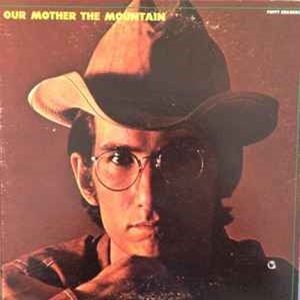
It wasn’t until well into his career that the name Townes Van Zandt reached my ear, first discovering his name of this Texan singer songwriter via an Emmylou Harris album back in the 1980s, several years after the release of Van Zandt’s debut album in 1968. Pretty soon, his name began to pop up everywhere, mainly due to the multiple recorded versions of perhaps his most famous song, “Poncho and Lefty”, later “Pancho and Lefty”, famously covered by Merle Haggard and Willie Nelson. I found his second album Our Mother the Mountain, languishing in a junk shop sometime in the early 1990s, around the time he passed through my town like a drifting tumbleweed. The audience at the Toby Jug that night was sparse, which appeared to be the norm for Townes. Stumbling upon this 1978 re-issue of Our Mother the Mountain was fortuitous, as it is still considered his best album, featuring eleven quality songs and the cream of Nashville players, such as James Burton and Charlie McCoy, though the bulk of the album was initially recorded in Los Angeles. A handful of the songs featured on this album remained in the singer’s live repertoire for the rest of his career, notably the poetic “Tecumseh Valley”, the despondent “Kathleen”, and the Dylan-influenced “She Came and She Touched Me”, which could easily stand side by side with “To Ramona”. I saw Townes Van Zandt just one more time during the summer of 1996, four months before he died on New Year’s Day, 1997. Our Mother the Mountain, together with his debut For the Sake of the Song, are a good place to start for newcomers to Townes Van Zandt, though perhaps seeking out one or two live recordings might give new listeners a clue to the man behind the songs. He remains a much missed folk troubadour.
250 | Joan Baez | Diamonds and Rust | A&M AMLH 64527 | 1975

When I poked my camera under the nose of Joan Baez at the Cambridge Folk Festival in 2015, I was well aware of who I was photographing, unlike the journalist in the Don’t Look Back film, who when enquiring as to who he was addressing said “Strewth, I’ve been looking for you all day”. It was a key moment, when we realised that this very famous folk singer was now standing in the shadow of Bob Dylan. Later, Joan would once again step into the limelight, closing the opening night of the now legendary Woodstock Festival on August 15, 1969, where the singer was met with widespread approval. The frustrating relationship Joan had with Dylan was always hinted at, but never quite brought to the fore as much as when Joan presented the title track to her sixteenth album in 1975. “Diamonds and Rust” is as open and unambiguous as anything that could be written about a relationship, and many of Joan’s fans adopted the song almost as an anthem. Like Stevie Wonder earlier, Joan enlisted the TONTO team of Malcolm Cecil and Robert Margouleff to add their legendary synth pop sound to the project, whilst Larry Carlton helped out at the production desk. Despite the revealing opening track, Dylan’s “Simple Twist of Fate” closes the first side, joining a fine selection of ‘covers’ from the pens of such contemporary writers John Prine (“Hello in There”), Jackson Browne (“Fountain of Sorrow”) and Janis Ian (“Jesse”) amongst them. Joni Mitchell also makes an appearance on the album, duetting with Joan on her song “Dida”, which originally appeared on her previous album Gracias a la Vida.
249 | Rolling Stones | Aftermath | Decca SKL 4786 | 1966

When your record collection includes such albums as Beggar’s Banquet, Let It Bleed, Sticky Fingers and Exile on Main Street, the quintessential four consecutive releases between 1968 and 1972, Aftermath tends to be overlooked, and fits in more comfortably with the early Stones repertoire. Listen again though and try to think of a better album opener than “Paint it Black”, complete with Brian Jones’ sitar and Jagger’s convincing vocal and almost camp hummed outro; Aftermath suddenly becomes a contender once again. If “Stupid Girl” initially comes over as almost throwaway, “Lady Jane” makes the regular Stones fan either sob into their beer or reach for the record needle and move on to the next track. I’m with the former, being one utterly entranced by Jones’ baroque approach and his use of the mountain dulcimer, not what you’d expect from the band. “Under My Thumb” is perhaps morbidly remembered now for being the song performed at the Altamont Speedway in San Francisco just as the Hell’s Angels murdered Meredith Hunter right in front of the stage and the Gimme Shelter film crew’s cameras. This little incident didn’t stop Jagger and Co completing the song and even going on to perform another eight more before the band became aware of the awful details. Another highlight of Aftermath is “Out of Time”, a number made even more popular by Chris Farlowe, who took the song to the top of the UK charts a month before the England football squad made even bigger news in that year.
248 | Paul McCartney | McCartney | Apple PCS 7102 | 1970

It’s perhaps only with the gift of hindsight that we can look at Paul McCartney’s debut solo album with any degree of positivity. Produced just as the Fab Four were going through a divorce, anything that didn’t include all four Beatles was bound to be frowned upon, especially by the one that many claimed was the cause of the band’s demise. The truth is, Beatle Paul almost suffered a breakdown during this period, his beloved band’s break-up being the very last thing he wanted. So it was back to the very basic elements of recording, a forerunner if you will of all those bedroom albums that would follow, as McCartney put together a bunch of half-remembered, half-written and truth be told, half-baked ditties, which he then released on the Beatles record label. At the time, the LP met with almost universal disdain, with comments to the effect of “he’s not even trying”, though looking back from this vantage point, even the most twee half song of them all, “The Lovely Linda” has a certain quaintness and “Teddy Boy” could easily have replaced at least five of the songs on the White Album. The highlights for my money though, are the superb “Junk”, an unlikely song based around the stuff we hoard in the back yard, which is given an instrumental reprise toward the end of the album, the soulful “Every Night”, later a big hit for New Yorker Phoebe Snow, and perhaps best of all, “Maybe I’m Amazed”, which is at the very least on a par with anything on Let It Be. McCartney is okay, Ram is infinitely better.
247 | Ten Years After | Cricklewood Green | Deram SML 1065 | 1970

Before witnessing Ten Years After perform “I’m Coming Home” at the Woodstock Festival, or to be more precise, during the film documentary of said festival a few years after the event, I was already familiar with the band chiefly due to the band’s 45 release “Love Like a Man”, a single that had found its way into my little orange box, specifically to rub shoulders with half a dozen Creedence singles, several Jimi Hendrix and the odd Joe Cocker, all of whom had in turn rubbed shoulders with Alvin Lee and Co at that iconic gathering in Bethel in the summer of ’69. “Love Like a Man” was released on the Deram label, a shortened version to that on the album, with a live recording of the song on the flip side, which had to be played at 33 1/3, always fun on the jukebox. Cricklewood Green was the band’s fifth album and seemed to fit in with the then current trend of rock outfits venturing further away from their blues roots and into almost Prog territory, with extended solos and almost psychedelic sounds, certainly on “50,000 Miles Beneath My Brain”. This is further exemplified in the gatefold sleeve artwork, which features a psychedelic illustration of the band on the inner and a collection of curios on the outer, none of which would be out of place in the V&A. The sleeve also features the red/blue hole, for identifying the version contained within, mono or stereo, which was still necessary at the time. It has to be said that the Andy Johns-produced LP found its way into my collection simply due to the fabulous seven and a half minute version of “Love Like a Man”, together with its classic guitar riff.
246 | Pentangle | Transatlantic TRA 162 | 1968
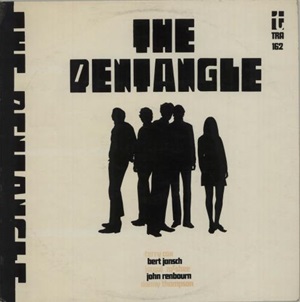
Whilst busy devouring Basket of Light, Pentangle’s third album, after receiving it as a gift sometime in the early 1970s, a strange LP to be added to a burgeoning rock LP collection it has to be said, I was almost magnetically drawn to the quintet’s other albums, notable this one, their 1968 debut. It didn’t take long to realise that the music of Pentangle was closer to jazz than first imagined, especially with their penchant for solos, not just the two guitars of Bert Jansch and John Renbourn, but also the rhythm section of Danny Thompson and Terry Cox’s bass and drums; the solos on “Bells” for instance, exemplifies this in spades. By the time Pentangle was released, both guitarists had released solo albums and even a duo album simply entitled Bert and John, but it was as a quintet with vocalist Jacqui McShee that these musicians were able to spread their wings, the band soon taking to some of the biggest UK stages and shortly afterwards, to some of the noted international stages, such as the Fillmore West on the same bill as Grateful Dead. For their first album, the band chose such traditional folk material as “Let No Man Steal Your Thyme” and “Bruton Town”, a little Gospel number courtesy of the Staples Singers, “Hear My Call”, some blues, “Way Behind the Sun”, together with some of their more experimental jazz/folk fusion explorations, such as their own composition “Pentangling”, a sprawling seven-minute work-out showcasing each of the musicians’ expressive talents. With flowery sleeve notes courtesy of John Peel, who suggested that we should play this record to those we love, Pentangle is a superb debut in any genre of music.
245 | The Wailers | Catch a Fire | Island ILPS 9241 | 1973

It’s hard to describe the moment I first caught sight of The Wailers with Bob Marley on the Old Grey Whistle Test back in the early 1970s. One or two questions immediately arose, mainly concerning the musicians’ hairstyles but also the band’s highly distinctive sound. Reggae had been around for a good while and I already had a bunch of singles on the Trojan record label by such bands as The Pioneers, Greyhound and Desmond Dekker and the Aces, as well as one or two on the Trojan imprint Techniques Records (Dave and Ansil Collins) and on Harry J Records (Bob and Marcia). The Wailers were on Island though, one of my favourite labels at the time, known for such bands as Free, Fairport Convention and Traffic. The penny soon dropped that reggae was being taken seriously amongst the rock fraternity (at last!) and not just a novelty genre as it had been in the past, with such hits as “My Boy Lollipop” and “Double Barrel”. Though “Concrete Jungle”, “Stir it Up” and “No More Trouble” are stand out tracks, Catch a Fire is perhaps best known for its clever cover design by Rod Dyer and Bob Weiner, which resembles a zippo lighter, complete with fully functioning hinged lid, all of which are now regarded as highly collectable if not highly inflammable.
244 | Bert Jansch | Bert Jansch | Transatlantic TRA 125 | 1965
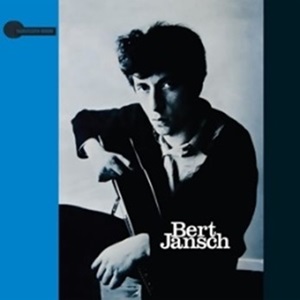
During my last couple of years at Secondary School, I was taught by a young art teacher who could’ve been described at the time as ‘relatively hip’ and who would often bring records into class by such obscure guitar players as the Reverend Gary Davis and Stefan Grossman, all of which were, to my ears at least, a marked improvement on “Love Grows Where My Rosemary Grows” and “Wandrin’ Star”. On one such occasion, he brought in the debut LP by a then relatively obscure Scots guitar player, whose name I couldn’t pronounce, but whose guitar playing made me sit up and take note. We were told to stop working, put our pencils down and gather around the Dansette, whereupon he lifted the arm and hovered the needle over the last track on side one, asking us to concentrate on the lyrics. At first, I thought “Needle of Death” was a cautionary tale for Singer sewing machine users, but it then dawned on me that our teacher was delivering a warning about the growing use of heroin in the town. Bert Jansch entered my world in the art class that afternoon and he has remained there for fifty years and counting. Bert always remained a distant figure, despite his later records becoming ‘must have’ additions to my collection, and he was perhaps the only musician I was too much in awe of to go up to on the numerous occasions when I saw him play live. I did say “hi” to him sometime in the 1980s as we passed on the steps of the Leeds Astoria, but he just kept on walking down as I walked up. Memorable songs on Bert Jansch include “Strolling Down the Highway”, “Running for Home”, “Needle of Death” and “Angie”, a tune we all had to learn before we could call ourselves guitar players. It’s all here, it’s all you need. Bert is also the only musician whose grave I visited to pay my respects. I talked to him on that occasion. I don’t think I’m the only one who misses him.
243 | Steve Miller Band | Children of the Future | Capitol T 2920 | 1968

I can pinpoint precisely when I became obsessed with the Steve Miller Band, a band formed in San Francisco some seven years earlier. The seed was upon first hearing the band’s 1973 single “The Joker”, with its playful wolf-whistling guitar motif, which is probably frowned upon these days, whilst shortly afterwards joining a local amateur dramatics group, that rehearsed Samuel Beckett plays in an old disused church in Doncaster. At least three members of that group were obsessed with the Steve Miller Band and I was drawn into their circle, as if I needed any encouragement. I recall pooling our mutual resources to send off for an American import of one of the band’s early albums that wasn’t available in the UK at the time. The first album I bought was a Masters of Rock compilation, which I picked up from Bradley’s Records, and which is in turn probably the band’s best album, followed shortly afterwards by the band’s first two albums Children of the Future and Sailor (confusingly entitled Living in the USA for this release), the two records re-issued as a double, surprisingly as two separate LPs, held together in a plastic wallet. I was on my way. Once the needle dropped on the opening track “Children of the Future”, the title track, the burst of energy that blasted from the speakers, reminiscent of anything Hendrix had come up with thus far, had me reaching for the volume control. It was a forceful blast of psychedelia and a fanfare for what was to come. Each of the tracks segue seamlessly, which is perfectly fine on record, not so good on MP3, and shows off the rewarding talents of Glyn Johns, who produced the album. Miller’s reading of “Key to the Highway” may have been partly responsible for my tunnel-visioned excursion into the Blues at the end of the decade, a fine reading of the old blues standard. Another key ingredient to these two initial albums was the involvement of Boz Scaggs, who would leave the band shortly afterwards and go on to enjoy a fruitful solo career from 1969 onwards. These Steve Miller Band records continue to be played often around these parts and there’s no signs of things changing any time soon.
242 | Leonard Cohen | Songs From a Room | CBS 63587 | 1969
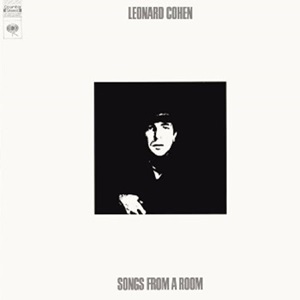
There’s a grainy photograph on the reverse of this LP sleeve showing a young woman sitting at a desk in some Mediterranean bedroom, judging by the closed window shutters, that made a young man like me think, why can’t I be Leonard Cohen. Of course there was only one Leonard Cohen, only one voice like that, the poet, the writer, the ladies’ man. If I couldn’t have one of those ladies at the bottom of my bed in some shuttered Greek Island abode, then I could have this record and all the ten fabulous songs on it. Some of these songs have become so familiar over the years, mainstays in Cohen’s repertoire in fact, right up to his sad passing back in 2016, songs like “Bird on a Wire” and “You Know Who I Am”. It all sounded so simple, basic Spanish guitar fingering, an almost spoken vocal delivery and not much else beside the odd Jew’s Harp, some down in the mix electric guitar flurries, ‘ but this is precisely what we wanted on a Cohen album. Once again, these songs came to me first by way of CBS samplers and then collecting all the albums in turn. Sadly, I never got to see Lenny live.
241 | Richard Thompson | Henry the Human Fly | Island ILPS 9197 | 1972
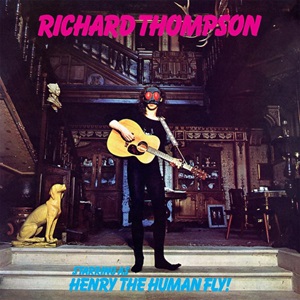
I didn’t get around to Henry the Human Fly or for that matter, any Richard Thompson albums until the early 1980s, having an early aversion to Thompson’s voice; it was one of the longest periods of taste acquisition known to man. Despite this blatant refusal to accept the voice, I couldn’t avoid the fact that what we had in Thompson, was a superb guitar player and an equally superb songwriter, whose involvement with Fairport Convention couldn’t possibly have been ignored. I would therefore return to Thompson’s solo albums and the albums he made with his then wife and musical partner Linda, and attempt to break through my own musical prejudices. I think it’s the only time I’ve really made an effort to come to terms with a voice I don’t particularly enjoy. Once Thompson’s voice slipped within my own personal taste parameters though, possibly midway through Hand of Kindness, there was no turning back. I borrowed Henry from a friend and then worked my way in. Over the next fifty years, or at least from the mid-1980s onwards, I have worked my way through all of Thompson’s albums and have grown to love his voice as well as his writing and his musicianship, and I still pop Henry on the turntable every now and then to remind me of just how important this musician was (and still is) to music appreciation. He rarely, if ever, lets me down, even when he does Britney Spears.
240 | The Flying Burrito Bros | Burrito Deluxe | A&M AMLS 983 | 1970

Having no clue as to what a burrito looked like in the early 1970s, I wasn’t sure what was going on here on the cover of the Flying Burrito Bros second album release. A burrito doesn’t look all that appetizing, even when encrusted with rhinestones. After their exceptional debut, The Gilded Palace of Sin, released the previous year, Burrito Deluxe was slightly disappointing, especially with its almost throwaway numbers such as “Man in the Fog” and the Dylan cover “If You Gotta Go”, though there are one or two fine moments, not least the Jagger/Richards masterpiece “Wild Horses”, which was in fact the first recording of the new song, up to that point only available as a demo tape. Gram Parsons apparently hated the term Country Rock, though it’s difficult to avoid, especially in these early stages of the genre. What’s “Older Guys” if it ain’t Country Rock?
239 | Crosby Stills Nash & Young | 4 Way Street | Atlantic 2400132/33 | 1971

I was a late comer to Crosby, Stills, Nash & Young, a band I only really noticed when I heard them on the triple LP Woodstock soundtrack, then a few years later on the actual Woodstock film, which I didn’t see until around 1977 on its second cinema run, at the Gaumont Theatre in Doncaster. The band was literally all over the film, not only during their impressive acoustic stage appearance, in which they performed a pretty faithful “Suite: Judy Blue Eyes”, which I later discovered was edited and overdubbed to make it sound as good as it does, making me think that it probably sounded lousy on the night, but also through the use of such tracks as “Long Time Gone”, “Wooden Ships” and a rocked-up version of Joni Mitchell’s “Woodstock”, which was played through the closing titles. This double live album is far from disappointing, with performances that really show off the talents of four individuals rather than an actual band, which CSN&Y never really was. It actually sounds like a live album should, complete with the odd audience encouragement from Graham Nash and one or two mid-song giggles. It doesn’t sound at all like a bunch of musicians who would go on to fall out and engage in infantile squabbling throughout the years to come.
238 | Caravan | The Land of Grey and Pink | Deram SDL-R1 | 1971
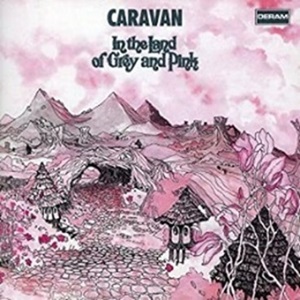
It all probably seems a little bit twee these days when we think of all the Tolkien-influenced purveyors of Prog that were around in the early 1970s. Roger Dean was all over the shop, creating his fantasy landscapes to go with Jon Anderson’s inexplicable lyrics that were undecipherable to anyone not actually from Middle Earth, while Bo Hansson was busy conjuring up music especially for Hobbits to dance to. All along, strange pastoral goings on were happening in the shadow of Canterbury’s lofty spires. Caravan’s In the Land of Grey and Pink was probably the band’s high point, an album considered by many to be the band’s best record, a band that at the time consisted of one Pye, one David and no less than two Richards (Hastings, Sinclair, Sinclair and Coughlan respectively). In good old Prog fashion, one side of this LP is a sprawling twenty-two minute piece made up of eight different sections with such titles as “Dance of the Seven Paper Hankies” and “Hold Grandad by the Nose”, something you can easily sit down and ponder over on the futon in a joss stick induced misty haze, but absolutely useless for the purposes of a jukebox. There’s Hobbit-like imagery featured on “Winter Wine” and some of the band’s noted humour on the album opener “Golf Girl”.
237 | Kevin Ayers | Sweet Deceiver | Island 9322 | 1975

The name Kevin Ayers first came to my attention after I read it on the paper inner sleeve that came with a plethora of LPs released on the Harvest label back in the early 1970s. Quite a few of those LPs had already reached my ears by 1972, including those by Pink Floyd, The Move, Edgar Broughton Band and Deep Purple, not to mention the slightly more obscure Third Ear Band, Quatermass and bizarrely, the folk siblings Shirley and Dolly Collins, but I soon found there was another host of bands and artists on the label’s roster yet to discover. Joy of a Toy, Ayers’ debut solo effort after leaving Soft Machine, was the first LP on the list, its vivid yellow sleeve beckoning me to the local record shop. It wasn’t long before the voice of this Kent-born musician became a familiar sound in the bedroom of my youth, bouncing off the poster of Brigitte Bardot and onto the one with Frank Zappa sitting on the bog. Sweet Deceiver came along a little later, his second on Harvest’s competition, Island, and sixth overall, midway through the decade, just before things changed on the music front and anyone with long hair became as welcome as a fart in a lift. In an effort to move away from the more avant-garde explorations and into a more accessible area, Sweet Deceiver straddles several musical areas, notably employing a more rock oriented feel, with Elton John lending a hand here and there. Credit really goes to Ayers’ collaborator on this project, Ollie Halsall (Ollie Haircut on the sleeve credits), whose guitar and bass work lifts the songs throughout, his sublime solo on “Toujours La Voyage” is testament to that.
236 | Procol Harum | Grand Hotel | Chrysalis 1037 | 1973

The sprawling opening title track might suggest something of a Progressive concept album to come, which could lead the listener to expect Richard Burton or David Hemmings delivering some wordy narration at any given moment, but fortunately after this grandiose eight-minute fanfare, Grand Hotel returns to the usual album format and we are spared the sort of lavish theme these early Seventies albums suffer from. All the usual Procol Harum elements are here on Grand Hotel, a prominent organ sound, especially on “A Rum Tale”, Keith Reid’s weird and wonderful lyrics, one or two lavish arrangements, together with Gary Brooker’s inimitable vocal, with the occasional choral embellishment. There was apparently some concern over the quirky “Souvenir of London”, which Aunty perceived as a reference to VD, banning the song from airplay. Dressed for the part, the band don top hats and tuxedos for the cover shot, with newcomer Mick Grabham, formerly of Cochise, superimposed over the recently departed guitarist Dave Ball, who had taken part in the photo session before the album was actually recorded. Despite some of the album’s more overblown elements, Grand Hotel is still a decent listen, over fifty years on, can’t remember when I bought it or indeed from where.
235 | Humble Pie | Rock On | A&M AMLS 2013 | 1971
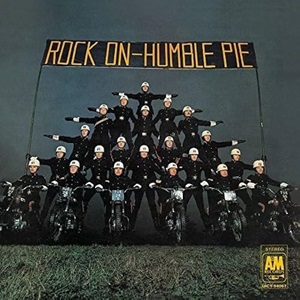
I may be a big fan of Humble Pie’s records, though I have to confess, I’m not such a big fan of their cover images, certainly this one; I’m not sure what a pyramid of 21 uniformed motorcyclists says about the band, but there again, Pink Floyd once used a cow didn’t they? The trend had been maintained through each of the band’s three earlier albums, each delivered in less than appealing sleeves, yet fortunately, the music always made up for this lack of aesthetic flair, and Rock On is no exception. Released a good eight months before the band’s double live album, Performance: Rockin’ the Fillmore, the two records share a couple of tracks, “Stone Cold Fever” and “Rollin’ Stone”, with each contrasting little between their studio and live settings. Steve Marriott spars well with Peter Frampton while the rhythm section of Greg Ridley and Jerry Shirley keep the band as tight as always. Pat Arnold, who worked with the Small Faces during their Immediate days, memorably on “Tin Soldier”, returns to provide some soulful vocals throughout this record, along with Doris Troy and Claudia Lennear (The Soul Sisters), whilst veteran bluesman Alexis Korner makes an appearance on the almost throw-away blues “Red Neck Jump”, which concludes the album. Always associated with their good rockin’ numbers, their natural born boogie credentials and that gloriously sweaty appearance at Bill Graham’s Fillmore back in the day, it’s always good to have something a little more tender, and on Rock On, it’s Marriott’s “A Song for Jenny”, written for his first wife Jenny Rylance. Not sure where I’d be without a little Humble Pie.
234 | Planxty | Planxty | Polydor 2383 186 | 1973

In 1973, the only folk music I was interested in was Fairport Convention, who I’d just seen at the Top Rank along Silver Street in Doncaster. The fiddle (or violin) was only of interest to me if it happened to be in the hands of Darryl Way of Curved Air or perhaps the bloke from the American band The Flock, that is until I saw Dave Swarbrick on stage at the Donny venue. To a dyed-in-the-wool Progger, a band like Planxty would have passed me by, my aversion to this sort of music confirmed by one of my pal’s insistence on referring to the Irish band as ‘Planxiety’. By the early 1980s though, I surprised myself, by becoming a fully paid up member of the Planxty Appreciation Society, buying all of the band’s albums in quick succession, beginning with their then current release Words and Music and then working back. Planxty’s self-titled debut LP saw the band in their early stages of development, having worked together the year before on Christy Moore’s second solo album Prosperous and therefore their arrangements had yet to develop into the superb material later found on such albums as After the Break, The Woman I Loved So Well and Words and Music. The album appeared raw and alive, and featured fine performances of such songs as “Raggle Taggle Gypsy”, “Arthur McBride” and “The Jolly Beggar”.
233 | Simon and Garfunkel | Bookends | CBS 63101 | 1968

Having been introduced to the duo in the classroom, where our English teacher had us studying the lyrics of Simon’s song “Richard Cory”, from a previous LP, Simon and Garfunkel’s inimitable sound reverberated around the house for a while in the mid to late 1960s. The duo’s penultimate offering before calling it a day with Bridge Over Troubled Water two years later, Bookends was perhaps their most adventurous album during their short existence. A ‘concept album’ of sorts, with the first side made up of a cycle of songs spanning a lifetime, from childhood to old age. Despite this, most of the numbers on the album could be taken as stand-alone songs, indeed it produced no fewer than five successful singles, “A Hazy Shade of Winter”, “At the Zoo”, “Fakin’ It”, “Mrs Robinson” and “America”. Like other such ‘concepts’, the tracks are sequenced in a manner to suggest an unbroken piece of music, together with a spoken word interlude (“Voices of Old People”). In a way, Bookends took the duo out of the realms of easy listening folk to counter cultural rock, drawing in new listeners to pop next to their Dead and Airplane records, though in all fairness the title song was closer to the epic arrangements of Burt Bacharach or Jimmy Webb than anything else. Bookends is perhaps the most played of all Simon and Garfunkel records on the shelf.
232 | Janis Ian | Between the Lines | CBS 80635 | 1975

Janis Ian was 23 when she recorded her much revered teen anthem “At Seventeen” in 1975, whereas I was in fact 17 at the time of its release. I can’t say I owned any right to the narrative, though I empathised with the sentiment, albeit from a male perspective. The single didn’t bother the UK charts at the time, despite much radio play, and neither did the album from which the song was lifted. I was actually introduced to the song by a girlfriend (also 17) who shared much of Ian’s narrative in the song, which received some measure of concern. With such lyrics as ‘..when dreams were all they gave for free to ugly duckling girls like me’, one couldn’t help but be moved to offer some words of comfort and compassion. Janis Ian found that she, together with the subject of the song, was not alone and the song would go on to find many empathetic listeners worldwide. The New Jersey-born songwriter had already released six albums before this one came along in the mid-1970s, though there had been nothing quite as spectacular as “At Seventeen”, complete with its memorable samba melody, until Between the Lines. Curiously, “At Seventeen” wasn’t the first single release from the album, “When the Party’s Over” having been released a little earlier. During this period of time, the ‘singer songwriter’ generation had begun to make its mark, with my own personal discovery of Jackson Browne, James Taylor, Carole King and Joni of course, and Janis Ian would also make her mark on my sensibilities with such other criminally ignored performers as Judee Sill, Laura Nyro and our very own Claire Hamill. Despite a prolific output, having released 23 albums between 1967 and 2023, Between the Lines remains a pretty good place to start for new listeners to Janis Ian.
231 | Bad Company | Straight Shooter | Island ILPS 9304 | 1975
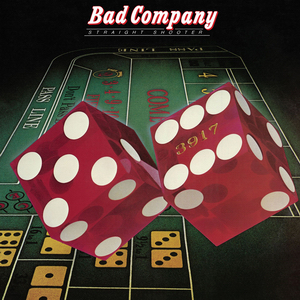
Having been an avid fan of Free, King Crimson and Mott the Hoople in the early 1970s, it was a no brainer that I should add Bad Company to my list of top bands to be invested in. With a couple of ex-Free members (Paul Rodgers, Simon Kirke), King Crimson’s bassist (Boz Burrell) and Mott the Hoople’s erstwhile guitar player (Mick Ralphs), the sound they would go on to make came as no surprise. The opening song on their debut album pointed very much in the direction the band would take, “Can’t Get Enough”, perhaps one of Ralph’s most accessible songs to date, which would be repeated here with “Feel Like Makin’ Love”, co-written with Rodgers, and both becoming better known top twenty singles. Ralphs’ “Good Lovin’ Gone Bad” didn’t fair quite as well as a single, though it made an exceptional album opener, setting the bar for the rest of the album, with a shared vocal between both Ralphs and Rodgers. Rodgers excelled with “Shooting Star”, a soft rock narrative song, said to be written in memory of one or two rock casualties, something he himself would experience first-hand with the death of ex-bandmate Paul Kossoff the following year. As with many notable albums of the earlier to mid-1970s, Straight Shooter was wrapped in a sleeve designed by those good chaps at Hipgnosis, in this case a couple of dice being thrown. Not quite as groundbreaking as the Ummagumma or Wish You Were Here designs, but striking nonetheless.
230 | Dan Hicks and His Hot Licks | Striking it Rich | Blue Thumb Records ILPS9204 | 1972

I was never sure whether the members of the little theatre group I belonged to were more into the late night music sessions we engaged in, or the plays we were writing and performing at the time, but I suspect it was the former. Another record hidden away in Paul’s box, which continued to provide a soundtrack to the late hours, once the rehearsals at a local disused church were over, came in a sleeve design resembling a book of matches. Dan Hicks and his Hot Licks’ Striking It Rich LP was completely different from anything else in the box and showcased the San Francisco-based band’s penchant for mixing gypsy jazz with cowboy folk, country, swing, bluegrass and pop, resulting in a unique sound. Jaime Leopold’s walking bass line that opens “You Got to Believe” owed more to jazz than anything else I was listening to at the time and therefore, opened up a new and exciting world of discovery, the fact that the old Hot Club of France swing style had now found its way into the repertoire of a band of fellow long hairs, despite one of the singers having the voice of Fozzy Bear (“O’Reilly’s at the Bar”). I still consider this LP a favourite to this day, in fact I play it so much, I scare myself.
229 | Frank Zappa | Apostrophe’ | Discreet K 59201 | 1974
One of the surprising things about Frank Zappa’s fifth solo album Apostrophe (’) after listening to it again after so many years, is just how short the first side is, all five selections coming in at under fifteen minutes. I seem to recall the ‘yellow snow’ section going on forever, which poses the question once again, does humour really belong in music? Midway through the first side, “St Alfonzo’s Pancake Breakfast” takes us into a variety of Zappa motifs, jazz, classical, outrageously difficult passages on both guitar and marimba, with that idiosyncratic twelfth grade humour throughout. Zappa goes for a soulful gospel feel for “Cosmik Debris”, which concludes the first fifteen minutes. Flipping over the disc, Jack Bruce makes an unexpected appearance on the title cut, an instrumental which later received uncomplimentary comments from Zappa, who basically felt a bass player should play bass and not bother competing with its the six string brother. The piano-led “Uncle Remus” remains a rather fine observation of racism decades after the song was originally written and recorded. Some fans would probably prefer more of this and less of the yellow snow. The album concludes with a meditation on man’s best friend, smelly feet, “Stink Foot”, which includes some fine wah-wah guitar noodling. The follow up to the previous years’ Overnite Sensation and recorded around the same time, the two albums could essentially have been released as an excellent double album.
228 | Led Zeppelin | Houses of the Holy | Atlantic K 50014 | 1973

When I sat in the audience at the Sheffield City Hall on January 2, 1973, no doubt wailing ‘Wally’ for no apparent reason, Houses of the Holy wasn’t even out, yet one or two songs from the band’s fifth album were performed that night. The band’s then current fourth album was still enjoying an extended residency on our respective turntables as we tried to work out the meaning of the so called ‘runes’ symbols. We were still very much into that album to be worrying ourselves about the next one. Once again, the band chose to leave their name off the new record sleeve adding to the growing mystery surrounding the band and its excesses. The striking cover was designed by top sleeve designers Hipgnosis, a collage of Aubrey Powell’s photographs of eleven distinctly fair haired children climbing Giant’s Causeway in Northern Ireland, though only two children were actually involved in the shoot. The album’s outstanding song on the album is possibly “No Quarter”, originally composed by John Paul Jones, which became a live favourite. Other notable tracks include “The Song Remains the Same”, “Over the Hills and Far Away” and “Dancing Days”. With the possible exception of Physical Graffiti, it was the last Led Zeppelin album I enjoyed to any extent. It just became incredibly dull.
227 | King Crimson | Larks’ Tongues in Aspic | Island ILPS 9230 | 1973

There’s something relatively soothing about the opening few moments of this album, perhaps a taste of the international music we would become more familiar with in the decades to come. “Lark’s Tongues in Aspic Part I” allows percussionist Jamie Muir free reign to experiment for a good three minutes before the choppy notes of David Cross’s violin come in, moving aside for something spectacular, courtesy of Robert Fripp, some of the most memorably and sneering guitar riffs ever laid down on a Crimson LP. King Crimson therefore thrilled us once again, in precisely the same manner as they did a few years earlier with “20th Century Schizoid Man”, the opening song on their self-titled debut back in 1968. Five years on, a few line-up changes and the band released this, their fifth album, effectively returning to form after one or two weaker albums, with more perplexing rhythms and curious songs. ‘Doo da de dow dow, da di de dow, d-dow, doo doo doo’ might not be the best sing-along opening line, but after a couple of runs through, “Easy Money” can be equally as infectious as ‘Da Doo Ron Ron’ or for that matter ‘Be-Bop-a-Lula’, if you allow yourself to go with the flow. John Wetton was now a bona fide member of the band, along with Muir and Cross, together with ex-Yes drummer Bill Bruford, who alongside Muir, created some fine and inventive percussive moments. The Mellotron is also still very much there, a Prog Rock essential, notable here on the sprawling “Exiles”. Lark’s Tongues probably prepared our ears for what was to follow, possibly the band’s finest moment, the following year’s extraordinary Red.
226 | The Doors | The Doors | Elektra EKL 4007 | 1967
I have to confess, a good five years had passed before I opened the doors to let this album in, while reading the Jim Morrison biography, No One Gets Out of Here Alive by Jerry Hopkins and Danny Sugarman, in the mid-1970s. Up to that point I was only really familiar with “Light My Fire”, “Riders on the Storm” and possibly “Love Me Two Times”, from hearing them on the radio. From the opening song “Break on Through”, I was hooked, not only with Morrison’s assured vocal delivery, but with Ray Manzarek’s infectious organ accompaniment, especially on the sprawling “Light My Fire” solo. If “Back Door Man” and “Soul Kitchen” demonstrated the band’s bluesy side, then “Crystal Ship” gave us an early indication as to Morrison’s poetic leanings, though to this day, I’m not sure why the Brecht/Weill song “Alabama Song” necessarily fits in. When the writer Joan Didion was asked why she was interested in The Doors, she answered, without hesitation, “bad boys!” Before the end of the decade, I found myself sitting in a local cinema treating myself to popcorn and the visual treat of Apocalypse Now, Francis Ford Coppola’s Vietnam epic, where I could only admire the director’s choice of “The End” to open the film. Spot on.
225 | Jethro Tull | Aqualung | Chrysalis CHR 1044 | 1971
The iconic six note guitar riff that opens Jethro Tull’s fourth album Aqualung managed to stay with me throughout my last year at high school, a riff that whirled around my head between Science and History classes, where I would no doubt have been learning all about the actual underwater breathing apparatus and the agronomist and inventor responsible for the seed drill. We dressed in a similar fashion to the cover character, or at least me and Graham Firth did, in second hand overcoats that had seen better days. Burton Silverman’s three watercolours evoke a mixture of religious hysteria and homelessness, featuring the band in the centre of the gatefold sleeve and Ian Anderson on both front and back, all playing their parts so convincingly. Having the word ‘snot’ in the first verse of the title song added to the interest, especially to a fourteen-year-old struggling with his algebra. Jethro Tull, the band, not seed drill bloke, would appear on the cover of all the major rock papers of the day, a colour one for Disc and Music Echo, black and white for the others, each of the heavily hirsute heads obscured by more hair than that of a Yeti convention. Aqualung had the feel of a concept album, with its references to religion, though the band always claimed otherwise. The mixture of gentle acoustic songs, “Wond’ring Aloud”, “Cheap Day Return” and “Slipstream”, and the more rock-based arrangements, “Aqualung”, “Cross Eyed Mary” and the superb “Locomotive Breath” helped to create a broad appeal. Aqualung was the last album to feature original drummer Clive Bunker, who followed bassist Glenn Cornick out of the door upon the conclusion of making this album. The album is still considered to be one of the band’s most memorable.
224 | Paul Simon | Paul Simon | CBS 69007 | 1972
Despite its title, Paul Simon was in fact Simon’s second solo album, the first being, The Paul Simon Songbook, released a good six years earlier. Those intervening years were obviously taken up with his rocky partnership with Art Garfunkel, presumably all Simon’s energy taken up with the duo’s glory days. By the time of its release, Simon had already dissolved that long time partnership, just after the release of the duo’s final album Bridge Over Troubled Water a couple of years earlier, to finally embark on his solo career. The opening song “Mother and Child Reunion”, said to be named after a chicken and egg dish on the menu in a Chinese restaurant, was released as a successful single, going immediately to the top ten in both the UK and US charts. The song is also memorable for introducing reggae (of sorts) to new audiences. The Peruvian influence found on “El Cóndor Pasa” is echoed here on the second track “Duncan”, whilst jazz violinist Stéphane Grappelli contributes an inimitable solo as a sort of coda to the McCartney like “Papa Hobo”. There’s plenty to get one’s teeth into on this album, an album possibly best remembered for the sprightly “Me and Julio Down by the Schoolyard”, which should never be underestimated. Paul Simon was the first of Simon’s solo records to find its way into my collection shortly after its release and was later joined by many others, notably There Goes Rhymin’ Simon in 1974 and the stunning Graceland in 1987.
223 | Leonard Cohen | Songs of Love and Hate | CBS S 69004 | 1971

It was quite common in the early 1970s to hear the name Leonard Cohen and ‘razor blades’ in the same sentence. This was more than likely due to the song “Dress Rehearsal Rag”, which openly discusses suicide and places the Canadian singer-songwriter, novelist, poet and ladies’ man firmly on the bleak shelf in the record shop. Of course this is nonsense and much of Cohen’s work is much more multifaceted than that of a downbeat purveyor of chronic depression. If both Cohen’s previous LPs Songs of Leonard Cohen and Songs from a Room feature the singer with a similarly stoic expression on each of the covers, then by Songs of Love and Hate, our hero is positively chuckling himself into a state of abject euphoria. If “Dress Rehearsal Rag” focuses on the hate (self hate in this case), then the love comes over in “Last Year’s Man”, “Famous Blue Raincoat” and “Joan of Arc”, albeit in entirely different contexts. Bob Johnson once again looks after production as he did on Cohen’s previous album, and guitarist Ron Cornelius provides some of his sensitive noodling. The album also features a live recording of “Sing Another Song Boys”, which was recorded at the previous year’s Isle of Wight Festival.
222 | Joni Mitchell | Song to a Seagull | Reprise 6340 | 1969

One or two of the, let’s say, more familiar songs in Joni Mitchell’s repertoire, those that had already been linked to the likes of Judy Collins, Tom Rush and others, “Both Sides Now”, “The Circle Game”, “Chelsea Morning” and “Urge for Going”, were not included on Joni’s debut LP and would have to wait for future releases. Song to a Seagull was all about capturing her new songs, “I Had a King”, “Michael From Mountains” and “Cactus Tree” for instance, an album produced by David Crosby, who attempts to capture the essence of Joni the folk singer, going for the sound that he heard while showing the young singer off to his own circle of friends. With few additional embellishments, the double tracked vocals on “Night in the City” for example, these songs are sparse and sound markedly different from any of Joni’s subsequent, yet it fittingly reminds us of what Joni Mitchell sounded like before her star rose. The only other musician to appear on the album is Crosby’s bandmate Stephen Stills, who plays a bit of bass here and there. Joni’s talent as a visual artist is also revealed here, with a lavish floral design gracing the cover, something that continued throughout her career. The album may not have the weight of such later albums as Blue, Court and Spark, Hissing of Summer Lawns and Hejira, but it’s still an essential listen.
221 | Family | Family Entertainment | Reprise 6340 | 1969
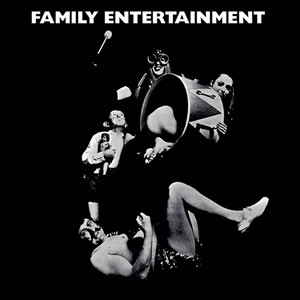
I first heard this album’s opening song, “The Weaver’s Answer”, when it was released as an EP (or Maxi-Single) in the early 1970s, which featured two other songs on the b side, “Strange Band” and “Hung Up Down”, the latter having also featured on this album. I recall picking up the single from a stall on Doncaster Market and felt as pleased as punch with the find. No one sang quite like Roger Chapman, whose throaty delivery made the listener aware of what might be lurking down the singer’s larynx, which one imagined to be something unsavoury. Family Entertainment was the band’s second album and the last to feature the original line up, before bassist Rick Grech left to join the short lived Blind Faith with Steve Winwood, Eric Clapton and Ginger Baker. Family began to experiment with several Eastern influences, certainly on the instrumental “Summer ‘67”, which owed a great deal to the George Harrison, who had made similar strides on Sgt Pepper a couple of years earlier. If “The Weaver’s Answer” demonstrates the Progressive Rock chops of Family, the opening song on side two, “Second Generation Woman”, wouldn’t be out of place on a Yardbirds or Spencer Davis album, a straight forward bluesy rocker, written by Grech, which somehow feels slightly out of place here, but possibly not as out of place as the trad jazz coda on the next song “From Past Archives”. You can’t fault the band for its variety. The sitar pops up on “Face in the Cloud”, and although not credited, the player is generally thought to have been Traffic’s Dave Mason. Alan Aldridge’s sleeve design bears a resemblance to the Doors earlier album Strange Days, with little person, strongman etc.
220 | Incredible String Band | The Hangman’s Beautiful Daughter | Elektra EKS 74021 | 1968
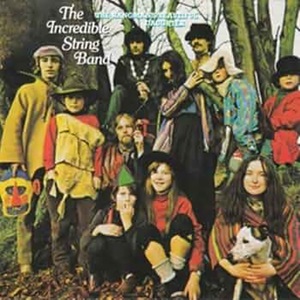
Then there was the curious look that dad would give me as we passed on the stairs, the sort of look that suggested I might actually not be the produce of his loins. This was probably after hearing the vague leakage of Mike Heron singing “Mercy I Cry City” or “A Very Cellular Song”, or Robin Williamson wishing he was a “Witches Hat”, filtering out through the cracks between the door of my bedroom only to invade his space. That same look would continue through tea time as he passed the salt over or as he peered from behind his evening newspaper, carefully scrutinising me as he checked the score draws, wondering if I might possibly have come from Venus. Why wasn’t his Shadows LP good enough for me anymore? The Incredible String Band’s mighty fine The Hangman’s Beautiful Daughter still goes around on the turntable every now and again, only this time the strange looks come from my wife, as Robin Williamson sings “Earth water fire and air, met together in a garden fair, put in a basket bound with skin, if you answer this riddle, if you answer this riddle, you’ll never begin”. I knew I should have married someone more like Licorice, had kids like that, had a dog like that and lived somewhere deep in a forest, like that!
219 | Free | Tons of Sobs | Island ILPS 9089 | 1969
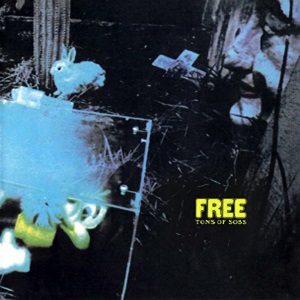
This is one of those cases in record collecting, when seeking out earlier albums after first discovering the band on a later release, became an essential pursuit. Fire and Water first came my way at a time when Free was dominating the airwaves with the hit single “All Right Now” in 1970. One of the most accessible of rock bands at the time, in that there was no squealing vocalist, no bowed sawing guitar noodling, no upended Hammond organs, no knives, no Persian carpets etc. I doubt there was even any riders at the band’s gigs, just good old sweaty blues-based rock n roll. Their star was certainly on the ascent as Free showed off a youthful energy with uncomplicated blues based riffs, led by one of the best voices in rock, Paul Rodgers. I once spoke to his son, Steve, saying in my humble opinion, his dad was probably the best rock voice in the country. “In the world” was his predictable response. Tons of Sobs was released a good year before Fire and Water and demonstrated Free’s chops from the start, with ten tracks performed by four musicians who immediately gelled, even at such a young age. Bassist Andy Fraser was still only 16 when Tons of Sobs was released. If any of the songs here signposted the direction the band was heading, it was possibly “I’m a Mover”, a steady blues-based number with a familiar guitar riff and fine vocal courtesy of Pauls Kossoff and Rodgers respectively. The unusual gatefold sleeve showed a graveyard, presumably inspired by the opening lyric on “Moonshine”, inhabited by a leopard, a rabbit and Micky Mouse in the foreground. I wonder if Disney ever caught up with Island Records?
218 | Steve Miller Band | Recall the Beginning, A Journey From Eden | Capitol EA-ST 11022 | 1972

Peer pressure might be overstating my love for all things Steve Miller, though I have to confess that an overwhelming appreciation of his band began at a time when I was surrounded by avid fans, during my time in a local hippy theatre group back in the mid Seventies. Of course I was aware of “The Joker”, both the album and the recent single release, but other than that I was pretty much in the dark. Hanging around with this particular group of people soon led to an all-consuming obsession with the band’s first handful of albums, each of which would soon stand side by side one another on my shelf, with Recall the Beginning… Journey From Eden, being a much played addition. It was the actual song “Journey From Eden”, with its haunting melody and anti-war theme that sealed the deal for me. The song was a departure from the band’s familiar funky soul and rock and doo-wop pastiches, as Miller delved into political and environmental issues, providing almost anthemic messages. By the time this album came along, the band’s psychedelic San Francisco roots were still present, though a fully-fledged rock band had begun to develop, which would later produce such successful albums as The Joker, Abracadabra and Fly Like an Eagle.
217 | Laura Nyro | Eli and the Thirteenth Confession | CBS 63346 | 1968
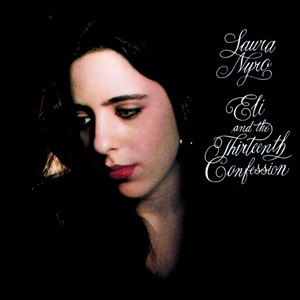
The name Laura Nyro would often appear on CBS sampler LPs released between the late 1960s and early 1970s, such as Fill Your Head With Rock, The Rock Machine Turns You On and the like. Although the acts Nyro rubbed shoulders with were pretty much known to me already, Dyan, Cohen, Joplin and such bands as Chicago, Blood Sweat and Tears and Flock, this New Yorker’s reputation had pretty much passed me by. I found more than a little of Carole King in Nyro’s voice, though her delivery was infinitely more urgent, theatrical, almost on the level of a Broadway performer. In a way, Nyro seemed a little out of place when she premiered a few of these songs at the Monterey Pop Festival in 1967, possibly lacking the same sort of appeal as Hendrix, Joplin, Redding, The Who or Jefferson Airplane. It has been suggested that Laura Nyro was ahead of her time, or indeed out of time altogether for the flower generation. Eli and the Thirteenth Confession was Nyro’s second solo album release and featured perhaps her best known song “Stoned Soul Picnic”, though Three Dog Night also had some success with “Eli’s Coming”. The album was in fact due to be titled Soul Picnic by Verve, her previous label, before she signed to Columbia prior to its release. A good few years passed before I began collection Nyro’s albums, this being the first, followed by such records as New York Tendaberry and Smile. It has been noted that we may not have necessarily had such artists as Kate Bush, Cyndi Lauper, Tori Amos or Alicia Keys without Laura Nyro’s precedent. And there’s the fabulous cover shot.
216 | Aretha Franklin | I Never Loved a Man the Way I Love You | Atlantic 587066 | 1967

We tend to forget that the Queen of Soul’s initial nine albums were more or less jazz standards, rather than the soulful fare Aretha Franklin would later become known for. For her tenth studio album, the singer changed direction and for the title song at least, changed location for her first album on the Atlantic label. Heading down to the FAME Studios in Muscle Shoals, Alabama, with the noted producer Jerry Wexler at the helm, Franklin managed to infuse her unique vocal performance with the very essence of the Mississippi River, with no small help from studio session player Spooner Oldham, whose keyboard tinkling was almost as important as Aretha’s vocal. Her stay in the South was short lived after a bit of a punch up between Aretha’s husband and a studio trumpet player. It was then back to New York City and Atlantic Records to complete the album, though some of those key southern session players joined her on the mission. This episode was described in detail on the rather excellent Muscle Shoals documentary made just prior to studio owner, Jim Hall’s death. Some critics often say that despite the album’s brilliance in terms of the quality of the performances, it lacks versatility, in other words, it’s all a bit samey. My angle on this is that any album that contains such gems as “Respect”, “Do Right Woman, Do Right Man”, “A Change is Gonna Come” and “Drown in My Own Tears”, not to mention the outstanding title track, is just fine by me.
215 | The Velvet Underground | The Velvet Underground and Nico | Verve SVLP 9184 | 1967

I was given a copy of the Velvet Underground’s second LP White Light/White Heat in 1971, an unexpected gift from the leader of my local youth club. I got the feeling he couldn’t wait to offload it on some poor unsuspecting youngster within his parish. When I placed the record on the Dansette and dropped the needle down, I realised immediately that I’d never heard a din quite like it, so much so, that it probably put me off seeking out the earlier ‘banana’ record. Once I did though, a few years later, I couldn’t quite equate the musical box sweetness of “Sunday Morning” with the raw minimalist stomping found on “White Light”. It sounded like a completely different band to me, though the second track in, “I’m Waiting for the Man”, soon returned to that unmistakable pulsating discordant din I found on White Light. “Venus in Furs” was the revelation on The Velvet Underground and Nico, a strangely unnerving piece of music, largely due to John Cale’s droning viola strokes, with guitar strings replacing the usual violin strings. Nico’s presence is felt here and there, certainly on “Femme Fatale” and “All Tomorrow’s Parties”, which closes the first side. Side two offers some wild experimentation on such as “The Black Angel’s Death Song” and “European Son”, whilst “Heroin” marks an alternative to the Summer of Love’s flowery attitude towards drugs. If the album isn’t best remembered for the changing tempos employed on that song, then it might be the eye-catching artwork, created by the pop artist Andy Warhol, a simple banana with its provocative invitation to ‘peel slowly and see’. In the intervening years, the Velvet Underground records have been played sporadically, when the mood takes.
214 | Bob Dylan | Bringing it All Back Home | CBS 62515 | 1965

The first Bob Dylan LP I held in my mit was my uncle’s copy of Bringing It All Back Home during a visit to him in the early Seventies. He was eager to play me the false start of “Bob Dylan’s 115th Dream”, a little discussed novelty outtake at the end of the first side. That first side is more notoriously remembered as being Dylan’s initial venture into his ‘electric’ transformation, while the second side maintained the familiar acoustic fare, albeit with a brand new sensibility, surrealistic stream of consciousness lyrics etc. I can’t say that I was immediately hooked, though a few months later, after seeing the Concert for Bangladesh, I was completely taken by George Harrison’s now famous introduction, “I’d like to bring on a friend of us all Mr Bob Dylan”, which was followed by thunderous applause, which to this day I suspect was ‘doctored’ to sound even greater in volume than it actually was on the night, but I could be mistaken. Nevertheless, this led to a life-long obsession with all things Dylan, though I confess, not to the extent of others; I don’t go through his bins, and I fail to see any reason to attend more than one Dylan gig a decade. The last time I saw Dylan, a few of us congregated outside the venue after the show, and with a battered old acoustic, ran through a few of his songs. More than one of the departing concert attendees was heard to say that our versions were the best of the night, which kind of sums up the Dylan myth. To this day I say the best way to experience Dylan is to buy his records, and preferably the ones released before the motorbike crash. I digress, needless to say, this was the first Dylan album I bought in around 1975, a good ten years after its official release and it remains a favourite, along with Highway 61 Revisited, Blonde on Blonde and Blood on the Tracks.
213 | Byrds | Dr Byrds & Mr Hyde | CBS 63545 | 1969
By the time of their seventh album Dr Byrds and Mr Hyde (terrible title), the band had already been though a few major changes in line-up, having shed such Byrds luminaries as David Crosby, Gene Clark and Chris Hillman, even the recently appointed Gram Parsons, who only stuck around for the one album, the previous year’s Sweetheart of the Rodeo, in fact Roger McGuinn was the only surviving original member. McGuinn’s unmistakable voice leads the opening song, a version of Dylan’s “This Wheel’s on Fire”, complete with exploding bomb at the end, presumably a political statement at the time of the ongoing war in North East Asia. The daft title was no doubt related to the differing sides of the band’s musical leanings; part country rock, part psychedelic rock, which was fitting for the times, notably on “King Apathy II”. If Gram Parsons had been a hard act to follow, then Clarence White was the closest anyone was going to get, a gifted guitar player and singer, who later became another rock casualty, killed by a drunk driver four years later. Meanwhile Hillman’s replacement came in the form of the former Sir Douglas Quintet bassist, John York, who managed to keep that bottom end in line. If Sweetheart demonstrated the band’s country leanings to good effect, “Drug Store Truck Drivin’ Man”, co-written by McGuinn and Parsons, effectively continued where “Nothing Was Delivered” left off, a song that certainly wouldn’t have been out of place on the earlier album. Closing with another Dylan song, albeit just one verse of “My Back Pages”, which segued seamlessly into a Jimmy Reed blues, Dr Byrds and Mr Hyde proved that the Byrds were not quite yet a spent force.
212 | Tom Waits | Closing Time | Asylum SD 5061 | 1973

Closing Time was the first Tom Waits album that I discovered, though not until a few years after its initial release, when I heard a local folk/blues singer called Roy Machin perform “Martha” at the Rockingham Arms in Wentworth sometime in the early 1980s. This prompted me to immediately seek out one or two of the early Waits albums, the first being this, then The Heart of Saturday Night then resting for a while on the superb double live set, Nighthawks at the Diner. Anyone coming to the music of Tom Waits post Swordfishtrombones (1983) would probably not recognise the early Waits material, which is more conventional than the experimental music that would later follow; coming to Waits at this transitional moment was somewhat challenging. Already deeply in love with such songs as “I Hope That I Don’t Fall In Love With You”, “Grapefruit Moon”, “Closing Time” as well as the aforementioned “Martha”, which I always imagined could have been played on the upright piano featured on the cover, there was always the notion of falling behind with some of Waits’ more advanced musical experiments. Witnessing him perform “16 Shells From a Thirty-Ought-Six” on The Tube one Friday night in October 1985 was both exciting and bewildering at the same time, especially to someone still romantically involved with the magnificent “Martha”.
211 | Todd Rundgren | A Wizard, A True Star | Bearsville K 45513 | 1973
Listening to A Wizard, a True Star these days, it’s not difficult to feel that it has dated somewhat, and at times feels slightly over-produced, but then again Rundgren was known to use the studio as his playground, in this case Secret Sound Studio in New York. The experimental song stylings are perfectly reflected in the cover art, a miasma of psychedelic drug-infused trips, with the music pretty much put together by himself, on his tod, so to speak, though other musicians were brought in to embellish the recordings. With each track linked together with hardly a moment to catch one’s breath, A Wizard, a True Star, demonstrates a musical genius moving ever more toward his own musical Utopia, coincidentally the name of the band he formed shortly afterwards. Partly Progressive Rock, with shades of psychedelia and the odd show tune, the album defies accurate categorisation, should such a thing be necessary. I first discovered this album at the same time as Rundgren’s earlier Something/Anything and his later Todd, in a box of records at a pal’s bedsit on night in the mid-1970s, along with albums by Little Feat, the Doobie Brothers and the Flying Burrito Bros. It was a life changing period of time and opened a series of doors.
210 | Fleetwood Mac | Bare Trees | Reprise 2080 | 1972

It’s always been fun to witness the almost feudal exchanges between the fans of Peter Green and the fans of Lindsay Buckingham, the two musicians who exemplify the polar opposite grooves of the original blues band and the later stadium rockers, who managed to get invites to the White House on occasion. I see the two as completely different bands despite each having the same rhythm section of Mick Fleetwood and John McVie throughout, who gave the two bands their name. However, there was a ‘middle period’ Fleetwood Mac that seems to be ignored by the massive. The handful of albums made between 1971 and 1974, which should be referred to as the Bob Welch albums, and which took the band on a journey through early Seventies soft rock, with Bare Trees standing as a little remembered gem. Hearing the Bob Welch song “Sentimental Lady” on the Warner Bros sampler LP Fruity, drew me to the newly vamped band, a band I had always associated with such tracks as “Oh Well”, “Albatross” and “Man of the World”, long before the chiffon and top hat shenanigans of Stevie Nicks came along. If the songs on this album don’t measure up to your expectations, then John McVie’s melancholy cover shot should make up for it; great to sling on the coffee table.
209 | Nick Drake | Bryter Layter | Island ILPS 9134 | 1971

Bryter Layter has always been my most played of Nick Drake’s trio of albums, possibly due to the fact that it’s his most cheerful. The spriteliness of such songs as “Hazy Jane II” (curiously coming before “Hazy Jane I” in the running order) and “One of These Things First”, can warm the heart, though the melancholy air of “At the Chime of a City Clock” somehow suits Drake’s demeanour a little more favourably. Ray Warleigh’s alto sax flurries bring a little soul to Drake’s performances, certainly on “Poor Boy”, which also features the bone fide soulful tonsils of both Pat (PP) Arnold and Doris Troy, no strangers to this sort of thing. I suppose the crowning glory on Drake’s second album is “Northern Sky”, a term I must have written down in one shape or another a million times and a song I’ve played almost as many times. The song, which features none other than the Velvet Underground’s John Cale on both piano and celeste, seems to be imbued with a little magic not found anywhere else in Drake’s thirty-odd other recorded songs. Cale also brings to the party his faithful viola for the gorgeous “Fly”, which shows the other side of the instrument to, let’s say, “Venus in Furs”. Robert Kirby’s lush string arrangements play a big part on this album, most notably on “Hazy Jane I”. The other notable aspect on this album is the inclusion of a couple of instrumentals, the introductory piece, the title track “Bryter Layter” and the closing “Sunday”, each highlighting Drake’s pastoral credentials. Anyone unfamiliar with the music of Nick Drake, probably someone from Venus, would do no better than to start right here.
208 | Pink Floyd | Dark Side of the Moon | Harvest SHVL 804 | 1973

The anticipation of the arrival of Pink Floyd’s latest release in the early part of 1973 was eager to say the least, certainly after the thorough fulfilment of the band’s previous two releases, Meddle and Obscured by Clouds, both of which had dominated my turntable for the two years leading up to what would later be considered the band’s masterpiece. These were the days before some bright spark suggested we all try playing the album while sitting back to marvel at its synchronicity over the Wizard of Oz visuals. Erm, no thanks. With its strong theme of madness, the album suited my young ears, at a time when going mad was not necessarily out of the question, certainly had I continued watching Monty Python, reading William Burroughs and listening to Syd Barrett. The first words spoken on Dark Side are “I’ve been mad for effin’ years”, which I related to, though never admitted it. To a fifteen year old, songs like “Breathe”, “Money” and “Brain Damage” immediately resonated, though in later years, I can be equally overwhelmed by “The Great Gig in the Sky”, my favourite track on the album, even though Clare Torry’s thirty quid fee for her involvement seems ludicrous now, despite it being the equivalent to five hundred nicker these days. Nevertheless, this record sold twenty-five million copies at the very least and her few minutes are in my mind the best on the album.
207 | Nick Drake | Pink Moon | Island ILPS 9184 | 1972

Nick Drake’s final album Pink Moon, released almost three years before his untimely death, was his shortest and most sparse. Eleven songs stripped down to their bare essentials, just voice and guitar with a few additional piano notes on the opening title track. No Fairport rhythm section, no PP Arnold vocals, no Ray Warleigh sax, no gorgeous Robert Kirby strings, just a man and his guitar. Strangely, the album had the busiest artwork, a surreal landscape, whereas the previous two featured portraits of the doomed singer. As I remember, Nick Drake first came to my attention via Island sampler LPs, though in all honesty, Nick’s tracks were largely ignored in favour of Jethro Tull, King Crimson, Traffic, Mott the Hoople and the likes. “Time Has Told Me” was certainly not the go to track on Nice Enough to Eat and neither was “Hazy Jane” on Bumpers, not when there was some good old rock n roll to choose from. I will be the first to admit, Drake’s music came to me later, at around the same time as everyone else, after his rediscovery some years later. I remember listening to Danny Thompson tell Nick’s story one Saturday afternoon on the radio in 1998, and like many others, became enchanted with the singer’s three official studio albums immediately. Shortly afterwards, original pressings of these albums began fetching three figure prices, though the retrospective Fruit Tree box helped in a time of need. Pink Moon remains uncluttered, each song beautifully delivered and each treated to Drake’s highly distinctive guitar picking. The guitar on “Know” refuses to hide its simplicity. Fittingly, a lyric from the final song on the album “From the Morning”, can be seen on Nick’s headstone near the family home in Tanworth-in-Arden, Now We Rise and We Are Everywhere. A fine conclusion, though four tracks later emerged to serve as the singer’s actual swansong.
206 | Led Zeppelin | Physical Graffiti | Swan Song SSK 89400 | 1975

I have to confess that my love affair with all things Zep had waned slightly by the arrival of the band’s sixth album. The first four seem to have done it for me, their fifth not quite living up to my over-reaching expectations. Had Physical Graffiti come before Houses of the Holy, I may have just hung on a little longer. The fact that it was a double album may also have been a factor, I’d only just picked up The Lamb Lies Down on Broadway and was perhaps feeling slightly exhausted financially. I was heading towards eighteen, but still pitifully broke. It was only later that I discovered the album was expanded in order to include previously ditched songs from the band’s previous albums, so at the time, that wasn’t a consideration. Hearing “Trampled Underfoot” on the Old Grey Whistle Test made it impossible to ignore and the 1920s dancing girls effectively sold it to me fair and square. The band had also gone to the trouble of providing a die-cut album sleeve, depicting an East Village tenement, which also had its appeal. The big number on this album remains “Kashmir”, though I still have a soft spot for the eleven-minute homage to Blind Willie Johnson, “In My Time of Dying”, which is probably my go to track. After this, I don’t think there was an awful lot more to write home about. I’d bought the albums, saw the band live, job’s done.
205 | Nitty Gritty Dirt Band | Uncle Charlie and His Dog Teddy | United Artists LBG 83345 | 1970
I became aware of many of the late 1960s and early 1970s bands from two very distinct sources, the British music press, chiefly the New Musical Express, Melody Maker, Sounds and Disc, but also from the beloved sampler album. The Nitty Gritty Dirt Band appeared on the United Artists double sampler All Good Clean Fun, which I picked up from Ken’s Swap Shop in 1972, for the princely sum of one pound sterling, an entire week’s worth of newspaper deliveries money. The song was “Yukon Railroad”, a country song with attitude and also a song that appeared on the band’s fourth album, Uncle Charlie and His Dog Teddy. As with most sampler album tracks, hearing the song led to the later purchase of this album and this one didn’t disappoint. The band, with its very definite country roots, was unafraid of utilising such flavour of the month technology as phasing on “Prodigal’s Return” and the weird sound effect at the end of the aforementioned “Yukon Railroad”. The band countered this with one or two traditional bluegrass tunes, with some informed picking on banjo, mandolin and guitar. Visually the members of the Nitty Gritty Dirt Band were just as out of step with then current fashions as The Band, as witnessed in the sepia photos included on the gatefold sleeve; prairie cowboys, civil war soldiers and gentrified plantation bossmen all, a far cry from their contemporaries, the Airplane, the Dead and Country Joe and the Fish. There’s not much in the way of original songs here, rather a potpourri of contemporary material from the pens of Randy Newman (“Livin’ Without You”), Jerry Jeff Walker (“Mr Bojangles”), Kenny Loggins (“House at Poo Corner”) and Michael Nesmith (“Some of Shelly’s Blues”) amongst others. Both Uncle Charlie and Teddy make an appearance on side two, with an interview from his home in 1964, together with a reading of the traditional “Jesse James”, a connection with the new and old, investigated further on the landmark double-LP set Will the Circle Be Unbroken.
204 | Kate Taylor | Sister Kate | Atlantic 2400 118 | 1971

The siblings of James Taylor were not backward in coming forward at the height of brother Jim’s success. Older brother Alex and younger brother Livingston had already entered the fray and by 1971, it was time for kid sister Kate to release her confident debut solo album. In contrast to her brothers, Kate relied initially on cover versions by the cream of contemporary song writers, including Carole King (“Home Again”, “Where You Lead”), Beverley Martyn (“Sweet Honesty”), Mike D’Abo (“Handbags and Gladrags”), Elton John and Bernie Taupin (“Ballad of a Well Known Gun”, “Country Comfort”), along with one or two of her brothers’ songs (“You Can Close Your Eyes”, “Be That Way”). Helping out on this Pete Asher-produced album is a veritable who’s who of contemporary talent, including Linda Ronstadt, Lee Sklar, Russ Kunkel, JD Souther, Bernie Leadon, Danny Kortchmar as well as the sweet baby himself. Taylor released another couple of albums before the end of the decade, but then dropped out of the race, only to return a couple of decades later with her fourth album Beautiful Road. The singer is still going strong, with her most recent album Why Wait! Being released in 2021.
203 | Little Feat | Little Feat | Warner Bros K 46072 | 1975
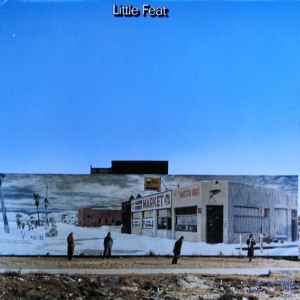
There’s only the slightest hint of what Little Feat would become over the next decade on their debut LP, released at the beginning of 1971. With its vivid blue sky dominating the cover, the four tiny band members stand several feet apart, looking not dissimilar to the Magic Band, top hat and all. Those familiar with the Captain’s buddy Frank Zappa and the Mothers would no doubt recognise the names Lowell George and Roy Estrada, though Bill Payne and Richie Hayward may just have been new to many. Before the needle had the chance to settle into its groove, a new audience was introduced to a sound that would become so familiar over the next few years, as Lowell George’s slide style electric guitar took command on the introduction to the funky “Snakes on Everything”. Despite the appearance of another noted bottleneck player, Ry Cooder, on an outstanding Merle Haggard influenced road song, “Willin’” wouldn’t really attract the attention it fully deserved until a reworking of the song on the band’s follow up album Sailing Shoes a year later. Little Feat is made up chiefly of original songs with just a nod to a couple of blues legends, a medley incorporating the old Roosvelt Sykes piano-led number “Forty-Four Blues” and Howlin’ Wolf’s “How Many More Years”, again featuring Cooder’s distinctive slide work.
202 | Alice Cooper | Billion Dollar Babies | Warner Bros K 56013 | 1973
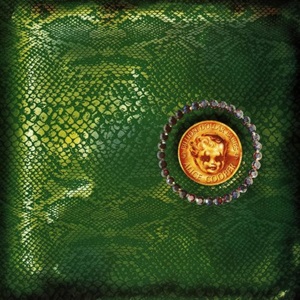
We tend to forget that for the first seven albums, Alice Cooper was in fact the name of the band rather than the moniker one Vincent Furnier would later adopt as his own. Ultra flamboyant, daring, charismatic and in some ways slightly scary, Vince used his Alice persona to his advantage for a further twenty-two albums as a solo artist, yet it’s a couple of those earlier band records that the general music fan would remember him for, those being Killer, School’s Out and Billion Dollar Babies, all three released in the early 1970s. The band was not only known for its albums, its lavish stage shows and its notoriety, but also for a handful of successful singles lifted from each of those albums, “Under My Wheels” and “Be My Lover” from Killer, the title cut from “School’s Out” and no fewer than four from this album, “Elected”, “Hello Hooray”, “No More Mr Nice Guy” and the title track. Money appeared to be the general theme of Billion Dollar Babies, it’s sleeve coming in the shape a convincing snakeskin wallet, complete with cut-outs, items you would normally find in a wallet, dollar bills, photos of the family etc., one photo reminiscent of the Beatles notorious Yesterday and Today sleeve with a real baby, rather than dolls, together with white suits and rabbits? The title refers to the band members themselves, who were somewhat astonished at their success, though it ended up being the band’s penultimate release before Alice became one.
201 | Soft Machine | Fourth | CBS S 64260 | 1971
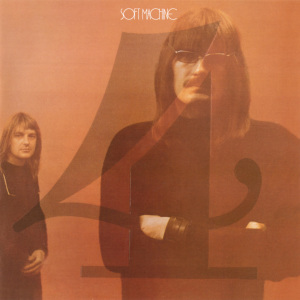
By the time of Soft Machine’s fourth album release, the Canterbury four-piece had ditched the vocal mic and was ready to serve up an entirely instrumental album, venturing into the realms of jazz rock fusion, with three lengthy pieces on the first side, followed by a suite in four parts on the other. Hints as to the direction the band was going could be heard on their previous album Third, which featured the same line-up of Mike Ratledge, Robert Wyatt, Hugh Hopper and Elton Dean, with one or two additional contributors. The opening few bars of “Teeth” immediately reveals the improvisational nature of the outfit, a flittering bass run courtesy of Hopper, interrupted by a strange discordant wah-wah guitar chord, actually played on the keyboards by Ratledge, followed by Dean’s sax flurry, before Wyatt’s snare kicks in, the first ten seconds encapsulating everything about the next thirty-nine minutes of music. Named after a Bill Burroughs book, Soft Machine was ready to do away with its psychedelic beginnings (remember “Why Are We Sleeping” from the band’s debut of just three years before?), and stretch out further into the world of John Coltrane and Ornette Coleman, with some fascinating playing throughout. Fourth was also the last album to feature Robert Wyatt, who went on to form a similar band, under the tongue-in-cheek moniker of ‘Matching Mole’, French for ‘Soft Machine’. Footage of the band from around this time shows a tightly organised unit, with the charismatic Wyatt’s high-energy stick work at its vibrant best, before he took a fall from a fourth-storey window putting an end to his drumming career for good, though invertedly paving the way for a remarkable solo career as a utterly unique songsmith.

